

My Body Isn’t Broken: A Real Story About PCOS, Loss, and Finding Hope

Have you ever felt like you’re fighting a battle with your own body that no one else understands?

Maybe for you, it was a diagnosis that seemed to come out of nowhere and changed everything. Maybe it was a long and frustrating cycle of dieting that always left you feeling worse than before. Or maybe it was a season of life—grief, stress, change—that took its toll, emotionally and physically, and you haven’t truly felt like yourself since.

If you’ve ever felt that way, I want you to know I see you. Because for me, it was all of the above. So many of you have seen my journey, but I wanted to share the real story behind it.

My Story Started Long Before the Scale

My relationship with my body was complicated from the start. Growing up, I was a product of 90s starvation diet culture, where being “skinny” was the goal, no matter how unhealthy the methods were.

In my early 20s, I was diagnosed with PCOS, and we began a long and painful journey to start our family. That journey included nine pregnancies. It’s still hard to type that number. Over several years, we experienced the heartbreak of three infant losses and six miscarriages. My body went through an absolute warzone of hormones, grief, emotional eating, and medical interventions like magnesium drips that caused insane fluid retention.

10 years ago at 30 weeks pregnant – yes THIRTY – we don’t make small babies

My Metabolism Had Officially Quit

By the time that chapter of our lives closed, my body felt completely foreign. It felt broken. My metabolism, for all intents and purposes, was non-existent. The old “calories in, calories out” formula was a joke. I once gained 20 pounds in three months from having one soda a month, with absolutely no other changes to my diet. It felt like I was being punished by my own body, and I was starting to believe I’d never have control again.

Finding Hope in Science

The turning point for me was realizing I didn’t need another diet; I needed a different set of tools. I started researching and learning about how my hormones and metabolic system were truly functioning (or not functioning). This is what led me to GLP-1 medications and peptides, like the ones I now get from Ellie MD.

For the first time, it felt like I wasn’t fighting my body anymore. Instead, I was giving it the support it needed to finally work with me. This was the useful, science-backed information I needed to finally find hope again.

This Isn’t Diet Culture – It’s Health

For the first time in my adult life, I have reached a healthy weight, and I’ve done it the HEALTHY way. There is no starvation here. In fact, I eat MORE now than I did before my journey began. The difference is that I’m making better choices, and my body is able to properly use the fuel I give it. This isn’t about fitting into a certain size; it’s about having the energy to live my life, feeling confident in my skin, and knowing I’m nourishing my body.

You’re Not Broken, and You’re Not Alone

I’m sharing all of this because I know how lonely that battle can feel. For years, I thought my body was broken beyond repair. If any part of my story sounds like your own, I just want you to know I see you, and you are not alone. Your story is valid.

If you’re curious and want to know more about the science-backed solutions that helped me, please feel free to leave a comment below. Let’s talk.
GLP-1 Therapy: The Skinny (Pun Intended) on What You Need to Know

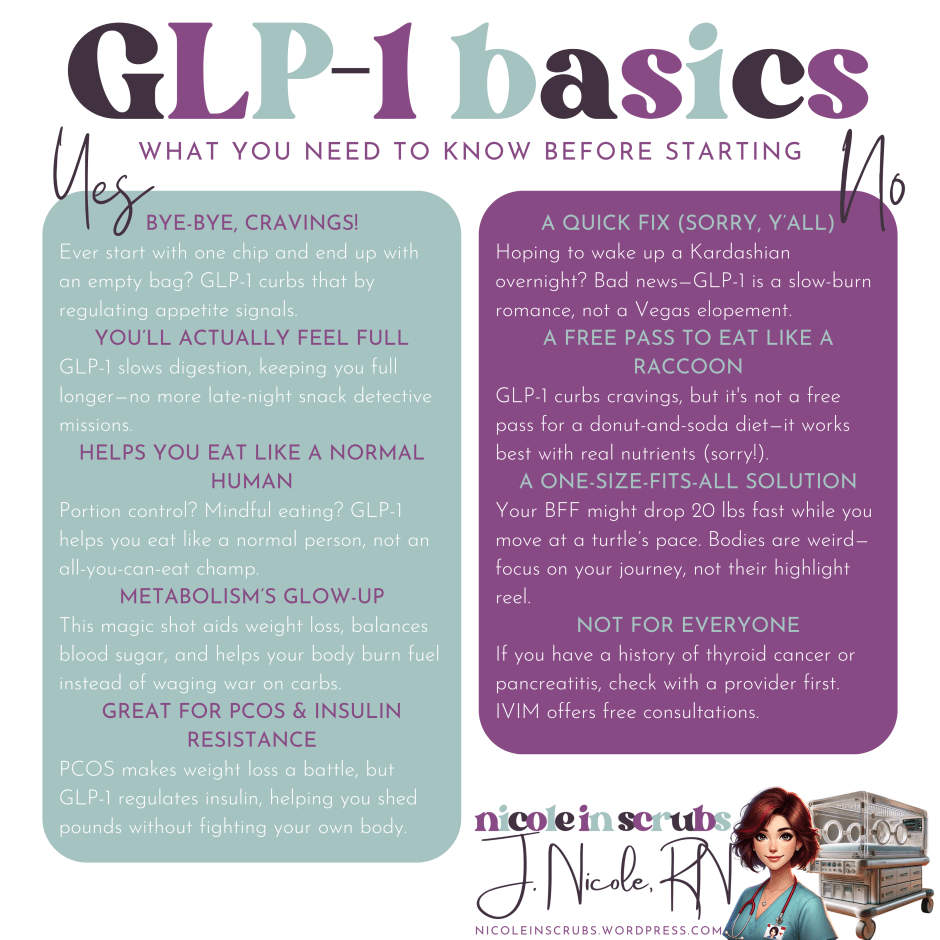
Alright, let’s talk about GLP-1 therapy—aka the little injection that could! If you’ve been battling cravings, feeling like a human garbage disposal for snacks, or just trying to get your metabolism to cooperate for once, then this might just be the tool you need.

But before you start dreaming of effortlessly shedding pounds while binging Netflix (sorry, it doesn’t work quite like that), let’s break down what GLP-1 therapy is—and more importantly, what it isn’t. Buckle up, because we’re about to get real, and a little sassy.


What Exactly Is GLP-1 Therapy?

Think of GLP-1 therapy as your metabolism’s new BFF—the one who tells you to stop texting your toxic ex (aka late-night snacks) and actually encourages you to make better choices.

Scientifically speaking, GLP-1 receptor agonists mimic the hormone glucagon-like peptide-1, which helps control appetite, slow digestion, and balance blood sugar. In non-science terms? It helps you feel full longer, reduce cravings, and stop treating your fridge like it’s the last meal on Earth.

Some of the big names in the GLP-1 world include:

  • Ozempic® – Originally for diabetes, but got famous for weight loss real quick.
  • Wegovy® – Ozempic’s cool cousin that’s officially approved for weight loss.
  • Zepbound™ – The new kid on the block making waves in the weight-loss world.
  • Mounjaro® – The overachiever that helps with both diabetes and weight loss.

These medications don’t just shrink your appetite—they help with blood sugar control, metabolic health, and kicking emotional eating to the curb.


GLP-1 Therapy: The Perks (AKA Why Everyone’s Talking About It)

✅ 1. Bye-Bye, Cravings!

Ever stare at a bag of chips and think, “Just one…” and then suddenly, it’s empty? Yeah, GLP-1 therapy helps prevent that. It regulates appetite signals in your brain, so your stomach doesn’t convince you that an entire pizza is a “light snack.”

✅ 2. You’ll Actually Feel Full

GLP-1 slows digestion, so your meals stick around longer instead of disappearing like a magic trick. This means you won’t be rummaging through the pantry an hour after dinner like a snack detective.

✅ 3. Helps You Eat Like a Normal Human

Portion control? Mindful eating? Who is she? GLP-1 therapy makes it easier to eat like someone who actually respects their hunger cues, rather than someone at an all-you-can-eat buffet.

✅ 4. Metabolism’s Glow-Up

Not only does this magic shot help with weight loss, but it also balances blood sugar and improves metabolic function. Translation: your body stops treating carbs like a sworn enemy and starts burning fuel more efficiently.

✅ 5. Great for PCOS & Insulin Resistance

If you have PCOS, you know the struggle of hormonal weight gain and sugar cravings. GLP-1 therapy helps regulate insulin, making it easier to lose weight and keep it off without feeling like you’re fighting against your own body.


What GLP-1 Therapy Isn’t

Now, before you start celebrating, let’s clear up some misconceptions because this isn’t some “eat-whatever-you-want-and-wake-up-skinny” situation (tragic, I know).

❌ 1. A Quick Fix (Sorry, Y’all)

If you’re expecting to wake up looking like a Kardashian overnight, I have some bad news. GLP-1 therapy takes time. It’s like a slow-burn romance—not a Vegas elopement.

❌ 2. A Free Pass to Eat Like a Raccoon

Yes, this med helps control cravings, but that doesn’t mean you should test its limits by living off donuts and soda. It works best when paired with actual nutrients (I know, bummer).

❌ 3. A One-Size-Fits-All Solution

Your BFF might drop 20 lbs in a month, while you see the scale move at a turtle’s pace. Bodies are weird and work at their own pace—so don’t compare your journey to someone else’s highlight reel.

❌ 4. For Everyone

Not everyone is a candidate. If you have certain medical conditions (like thyroid cancer history or pancreatitis), this might not be for you. That’s why you should talk to a provider before diving in (shoutout to IVIM’s free consultations!).


How to Actually Make GLP-1 Therapy Work for You

So you’ve got the shot, and now you’re waiting for the magic to happen. Here’s how to boost your results and make sure you’re setting yourself up for success:

1. Prioritize Protein & Fiber (Trust Me, Your Body Will Thank You)

Since GLP-1 slows digestion, protein, and fiber will keep you extra satisfied. Think chicken, eggs, beans, and leafy greens—not just a sad granola bar.

2. Hydration = Non-Negotiable

You don’t want to be that person complaining about constipation. Drink your water, add electrolytes, or grab a HydroJug (NicoleInScrubs for a discount!).

3. Move Your Body (Even a Little Counts!)

No, you don’t have to become a gym rat, but walking, yoga, or even dancing in your kitchen helps. Your body likes to move—treat it well!

4. Celebrate All Wins (Not Just the Scale)

The scale is not the only measurement of progress. Celebrate:
Clothes fitting better
More energy & confidence
Balanced blood sugar levels
Feeling in control of food choices

If your jeans fit without you having to do a full-on squat routine to get them on, that’s a win, babe.


So, Is GLP-1 Therapy for You?

If you’ve tried all the things—keto, calorie counting, intermittent fasting, sacrificing your soul to the weight loss gods—and still struggle with cravings and metabolic issues, GLP-1 therapy might be your answer.

That said, it’s not a magic wand. You still need to support it with healthy habits, patience, and some common sense. But when used correctly, it can be a game-changer for weight loss, PCOS, and metabolic health.

Thinking about trying it? Chat with a provider to see if you’re a good candidate!

✨ Have you started GLP-1 therapy or thinking about it? Drop your thoughts below—I’d love to hear your experience! ⬇️

How Did I Get Here? My Journey Through PCOS, Loss, and Finding Myself Again

Let me take you back to 2001. I was 18 years old, navigating life as best I could, and decided to switch to the Depo-Provera shot. At the time, I was at my smallest size ever—a size 0. Don’t get too impressed, though. It wasn’t healthy, and even then, I was at the upper limits of a “normal BMI.” That’s when I realized BMI is absolute nonsense. (Seriously, who came up with that?!)

What I didn’t know then was that I had undiagnosed PCOS—a condition that really doesn’t get along with Depo-Provera. Within 72 hours of my first shot, I gained 15 pounds. Not kidding. I woke up, and the shorts I had just bought two weeks earlier didn’t fit. Over the next three months, while that shot coursed through my system, I packed on another 15-20 pounds. My doctor reassured me, saying the weight would “come right off” after a few months. Spoiler alert: It didn’t.

By nine months in, I’d gained over 30 pounds and was an emotional wreck. My cycle—already chaotic—was worse than ever. So, we ditched Depo-Provera and went back to traditional birth control. The weight stayed put, and I started experiencing other symptoms of PCOS, though I wouldn’t get an official diagnosis until 2006.

The Diagnosis That Changed Everything

Fast forward to 2006. I was 22 years old, newly diagnosed with PCOS and pre-diabetes. My husband and I decided to start trying for a baby earlier than planned, knowing infertility might be an uphill battle. What we didn’t expect was my atypical version of PCOS. Instead of struggling with infertility, I had hyperfertility. It really does only take one time, folks, and birth control is not foolproof.

But PCOS wasn’t the only challenge we faced. That same year, after three heartbreaking miscarriages, we discovered a genetic condition—one that gave our babies a 50/50 chance of inheriting not one but two rare syndromes. This discovery would shape our future in ways we couldn’t have imagined.

The Losses That Shaped Me

In 2009, after a whirlwind of deployments, cross-country moves, and life transitions, we welcomed our son, Anthony Maddox, on January 4, 2010. Born at 35 weeks, he carried the weight of those two syndromes and left us too soon, soaring to heaven the same day. I turned to old, unhealthy habits to cope, dropping from 155 to 135 pounds in a haze of grief.

Over the next few years, we endured more losses, including our daughter Avery Shea, who blessed us with 12 beautiful days in 2012, and our youngest son, Richard Franklin, who fought valiantly but passed on February 18, 2016. Each loss came with its own struggles, including weight fluctuations, emotional eating, and the added challenges of gestational hypertension.

Finding My Way Back to Health

By 2022, my health had hit rock bottom. My weight peaked at 209 pounds, and my hypertension was out of control. Every attempt to lose weight was met with failure—five pounds off, ten pounds back on. Keto? Tried it. Lost 25 pounds, gained it all back. COVID and DoorDash? Yeah, they didn’t help either.

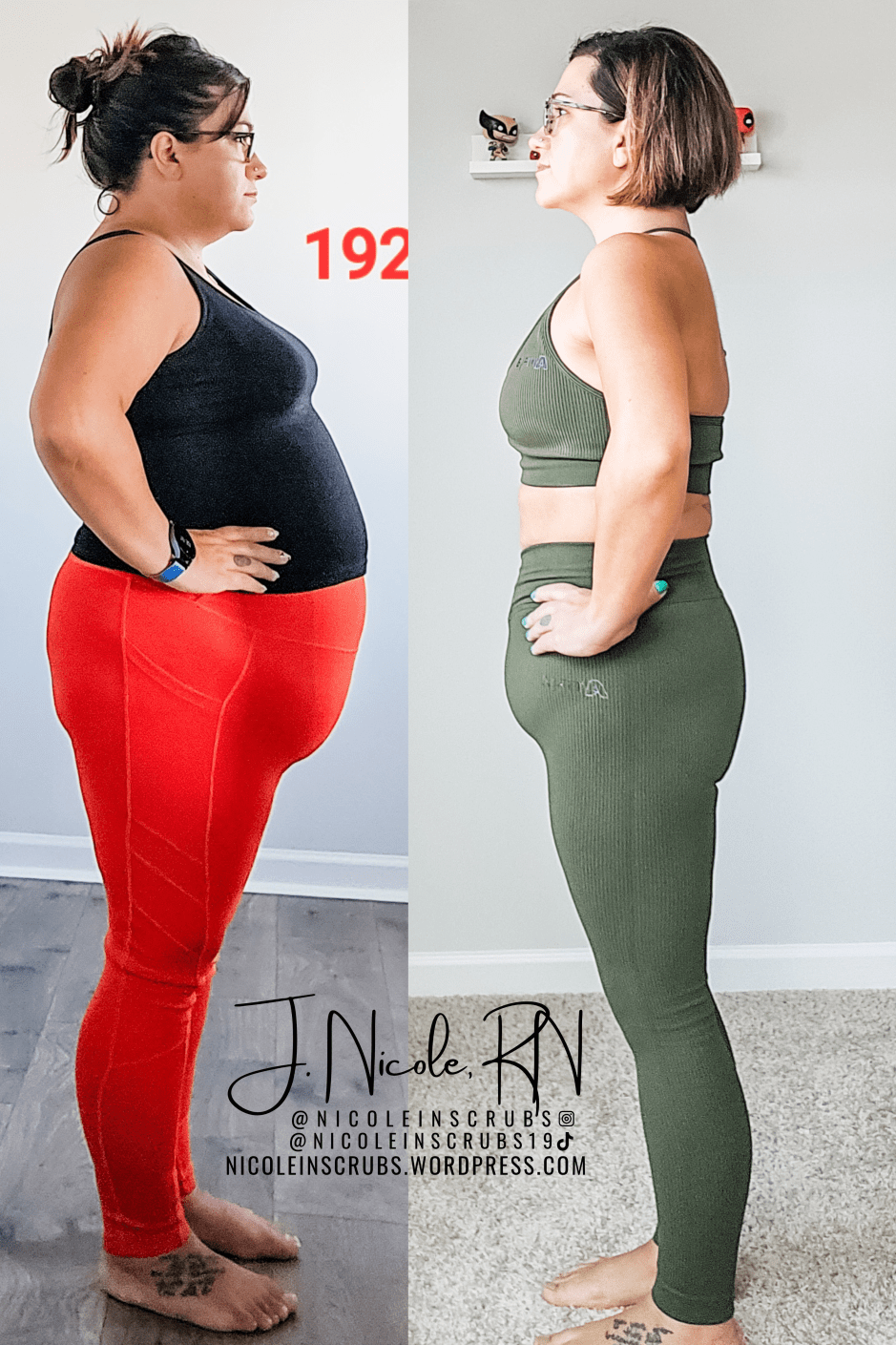
Then, in October 2023, everything changed. I started my GLP-1 journey at 192.6 pounds. For the first time in years, I felt like I had a real fighting chance. These medications, combined with lipotropic + B12 injections, Sermorelin, and a lot of determination, helped me break through the barriers PCOS had thrown my way.

Where I Am Today

Thirteen and a half months later, I’m at my lowest weight since starting the Depo-Provera shot—129.4 pounds. I’ve lost over 63 pounds, conquered my insulin resistance (bye-bye, pre-diabetes!), and finally feel like I’m in control of my health.

If you’re struggling, I want you to know you’re not alone. PCOS is a beast, but with the right tools and support, you can overcome it. If you’re curious about GLP-1 medications or need a cheerleader to help you along the way, let me know. I’m here for you!

Ready to start your journey?
Click here to learn about my secret weapon.
✨ Want a health coach who’s been through it all? Send me a message—I gotchu!

Let’s rewrite your story together.

Want to watch my face transform after losing over 63lbs? Watch the video below.

https://www.tiktok.com/t/ZTYNsV8TP/