Can You Have Insulin Resistance with a Normal A1C? What a Nurse Wants You to Know

“Your Labs Are Normal” Doesn’t Mean You’re Fine

JUMP TO:: MEDICAL + AFFILIATE LINK DISCLOSURES


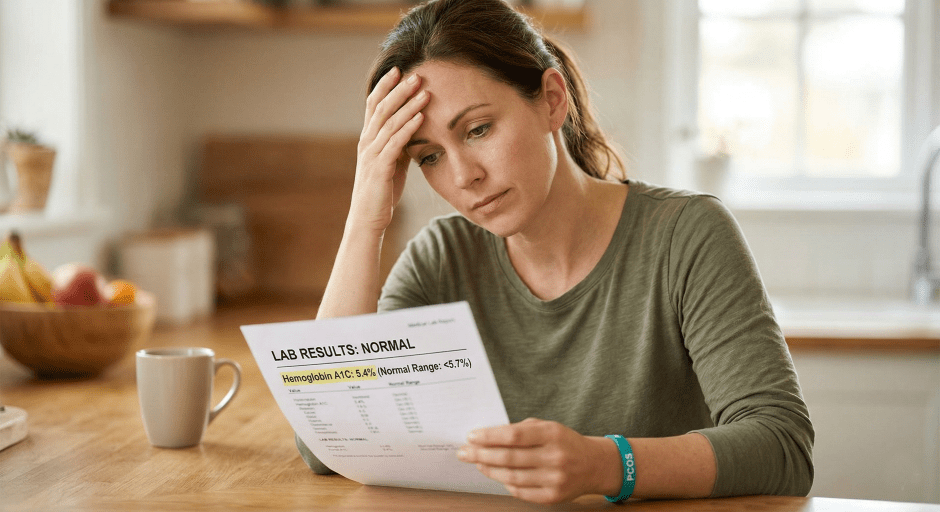
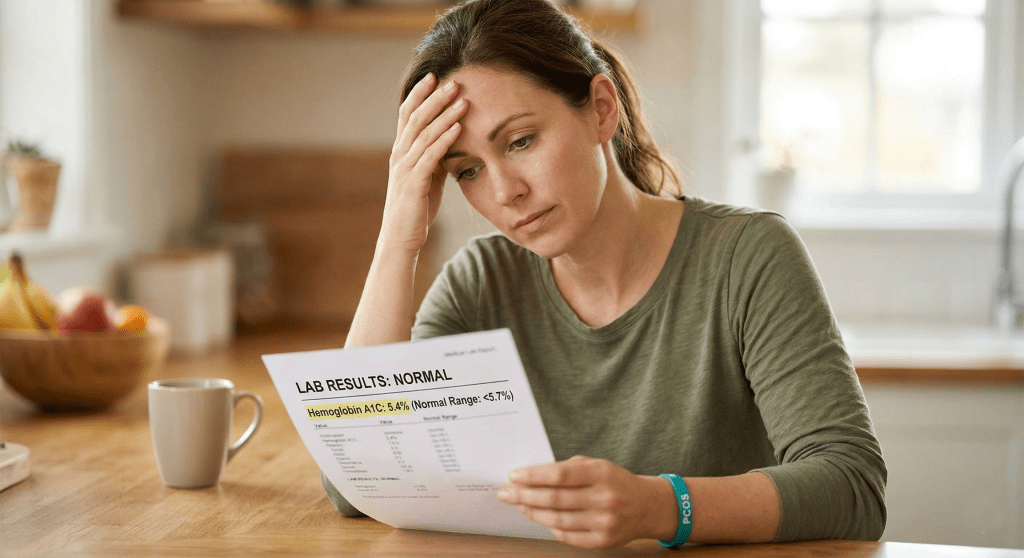
You leave your doctor’s appointment with the same answer you’ve gotten for the last five years.
“Everything looks good. Labs are normal.”

And you sit in your car and think… then why do I feel like this?
Why am I exhausted by 2pm every day? Why can’t I lose weight no matter what I do? Why does my brain feel like it’s running through fog? Why am I doing everything “right” and nothing is changing?

You’ve heard “your labs are normal” so many times that you’ve started to believe the problem must be you. Your discipline. Your effort. Your willpower.

It’s not you. And I need you to hear that.

Your labs might technically be within range. But “within range” and “optimal” are not the same thing. And the test that would actually tell you whether you have insulin resistance? There’s a very good chance your doctor never ordered it.

What Is a Fasting Insulin Test and Why Don’t Most Doctors Order It?

When you go in for your annual physical or routine bloodwork, your doctor typically checks two things related to blood sugar: your fasting glucose and your A1C (hemoglobin A1C).

Fasting glucose is a snapshot. It tells you what your blood sugar is right now, after you haven’t eaten for 8 to 12 hours. A result under 100 mg/dL is considered normal. Between 100 and 125 is prediabetes. Over 126 is diabetes.

A1C is a wider view. It measures your average blood sugar over the last 2 to 3 months by looking at how much sugar has attached to your red blood cells. Under 5.7% is normal. 5.7 to 6.4% is prediabetes. Over 6.5% is diabetes.

Both of these tests measure the same thing… glucose. They just measure it differently.

And here’s the problem: neither one tells you how hard your body is working to keep that glucose number “normal.”

Think of it this way. Imagine two women sitting in the same doctor’s office on the same day. Both have a fasting glucose of 94 mg/dL. Both A1Cs come back at 5.4%. Both get told their labs are normal.

But behind the scenes, the first woman’s pancreas is producing 5 units of insulin to maintain that glucose level. Easy. No sweat. Her metabolic system is cruising.

The second woman’s pancreas is grinding out 18 units of insulin just to hold the line at 94. Her body is working triple shifts to keep that number where it is. She’s exhausted, gaining weight she can’t explain, brain fog is constant, and she can’t stop thinking about food.

On paper, they look identical. Metabolically, they’re in completely different places.

The only way to see the difference? A fasting insulin test. And most routine bloodwork panels do not include it.

That’s not an oversight by your specific doctor. The National Institute of Diabetes and Digestive and Kidney Diseases (NIDDK) states plainly that doctors use blood tests to find out if someone has prediabetes, but they don’t usually test for insulin resistance. It’s just not part of the standard protocol. Which means millions of women are walking around with insulin resistance that nobody is looking for… because nobody is ordering the test that would find it.

What Is HOMA-IR and How Do You Calculate It?

A fasting insulin test measures how much insulin your pancreas is producing after you haven’t eaten. That number alone is helpful. But when you combine it with your fasting glucose, you can calculate something even more useful… your HOMA-IR score (Homeostatic Model Assessment of Insulin Resistance). This is essentially a number that tells you how insulin-resistant your body is.

The math is simple: (fasting glucose x fasting insulin) / 405.

Both values must come from the same fasting blood draw.

Here’s how to read your HOMA-IR score:
Under 1.0 — Optimal insulin sensitivity. Your body is using insulin efficiently.
1.0 to 2.5 — Moderate range. Worth watching, especially if you have other risk factors like PCOS, family history of diabetes, or unexplained weight gain.
Over 2.5 — Insulin resistance is likely present. Your pancreas is working harder than it should to keep your blood sugar in range.
Over 3.0 — Significant insulin resistance. This level may already be driving symptoms… fatigue, weight gain, brain fog, food noise… even if your glucose and A1C still look completely normal on paper.

So why doesn’t your HOMA-IR show up on your standard bloodwork? A few reasons. Most standard metabolic panels are built around glucose, not insulin. Time constraints in a 15-minute appointment don’t leave room for expanded testing. And many providers follow a “wait and see” approach to borderline results… meaning they don’t dig deeper until your numbers actually cross into prediabetes or diabetes territory.

By then, the damage has been building for years.

Can You Have Insulin Resistance with Normal Blood Sugar and a Normal A1C?

Yes. And this is the part that makes me want to flip a table.

Your fasting glucose can be perfect. Your A1C can be textbook. And insulin resistance can still be building behind the scenes for years because your pancreas is compensating… producing more and more insulin to keep your blood sugar in range.

According to the Cleveland Clinic, as long as your pancreas can make enough insulin to overcome the resistance, your blood sugar levels will stay in a healthy range and you won’t have any symptoms. But over time, the cells that make insulin can wear out. That’s when blood sugar finally rises. That’s when you get the prediabetes or diabetes diagnosis. But the insulin resistance? That started long before the numbers changed.

Research from a peer-reviewed study published in a PMC journal found that elevated insulin levels in the absence of impaired glucose tolerance and normal A1C may actually be a much earlier indicator of metabolic disease risk than glucose or A1C alone. In other words… insulin was waving a red flag the whole time. Nobody was watching for it.

How Many People Have Undiagnosed Insulin Resistance and Prediabetes?

According to the CDC’s most recent National Diabetes Statistics Report (January 2026), over 115 million American adults have prediabetes. And 8 in 10 of them don’t know it.

Let that sink in for a second. 80% of people with prediabetes are walking around right now being told their labs are normal.

On top of that, research published in Diabetes Care found that using A1C alone to screen for prediabetes missed about 75% of at-risk individuals. The study specifically noted that A1C was less sensitive for detecting at-risk individuals compared to fasting glucose and glucose tolerance testing… and none of those tests even measure insulin.

Meanwhile, a growing body of research shows that elevated insulin levels can appear years… and according to some researchers, potentially even decades… before blood sugar ever crosses into an abnormal range. Your pancreas is working overtime to keep your glucose normal, and nobody’s checking to see how hard it’s working.

Why Insulin Resistance Testing Matters Even More If You Have PCOS

If you have polycystic ovary syndrome, this isn’t just relevant. It may be the entire missing piece of your health puzzle.

Research estimates that insulin resistance affects between 50 and 80% of women with PCOS… including women who are not overweight. That’s not a small subset. That’s the majority. And many of those women have never had their insulin levels checked.

Insulin resistance in PCOS doesn’t just affect blood sugar. It directly drives excess androgen (testosterone) production, which can cause irregular periods, acne, hair loss, excess body hair, and difficulty getting pregnant. The cycle looks like this: insulin resistance leads to higher insulin levels, which triggers increased androgen production, which disrupts ovulation, which worsens PCOS symptoms. It feeds itself.

And the whole time, your fasting glucose and A1C may look completely normal because your pancreas is compensating.

One peer-reviewed study in the Journal of Clinical Medicine proposed that the medical community needs to shift from a “glucose-centric” approach to an “insulin-centric” model when managing PCOS… because by the time glucose rises, the metabolic damage has already been happening for years. The study emphasized that early identification of insulin resistance would enable timely intervention and could reduce the risk of long-term metabolic and reproductive complications.

If you’ve been told your labs look fine but you’re still gaining weight, still exhausted, still struggling with PCOS symptoms that nobody can explain… this may be why. The right labs were never ordered.

What Blood Tests Should You Ask Your Doctor For?

  1. Ask for a fasting insulin test at your next appointment.
    • It’s a simple blood draw done at the same time as your regular fasting labs.
    • You may need to specifically request it… many providers won’t think to order it unless you ask.
    • If your provider pushes back, you can explain that you’d like to assess insulin resistance beyond what glucose and A1C alone can show.
    • The NIDDK confirms that providers don’t usually test for insulin resistance as part of standard screening.
    • That doesn’t mean the test isn’t available or valuable. It means you may need to advocate for yourself.
  2. Know your HOMA-IR score.
    • Once you have your fasting insulin and fasting glucose from the same blood draw, you can calculate it yourself:
      • (fasting glucose x fasting insulin) / 405.
        • Under 1.0 is optimal.
        • Over 2.5 starts to suggest insulin resistance.
        • Over 3.0 is significant.
    • There are also free HOMA-IR calculators online if math isn’t your thing.
  3. Ask about a full hormone panel if you have PCOS or suspect it.
    • Fasting insulin
    • HOMA-IR
    • testosterone (total and free)
    • DHEA-S
    • LH
    • FSH
    • lipid panel
      • These give a much more complete picture of what’s happening metabolically and hormonally than glucose and A1C alone.
  4. Know the difference between “normal range” and “optimal.”
    • Lab reference ranges are based on population averages… they tell you where most people fall, not where you should be for your best health.
    • A fasting glucose of 98 is technically “normal” but it’s not optimal.
    • An A1C of 5.6 is technically “normal” but it’s one decimal point from a prediabetes diagnosis.
    • Don’t let “in range” make you stop asking questions.
  5. Trust your body.
    • If you feel like something is off, something probably is.
    • You are not imagining it.
    • You are not lazy.
    • You are not failing.
    • You may just be missing data.

If you’re currently on a GLP-1 or considering one, I put together a free checklist that walks you through what to track between appointments… the stuff most people don’t think to monitor.

GRAB IT HERE FOR FREE

The Part I Take Personally

I was the woman in the car. I had PCOS. I had high blood pressure, high cholesterol, and sleep apnea. I was labeled pre-diabetic for about eight months in 2006… and then my A1C came back down and everybody moved on. Normal. Case closed.

Except my white blood cell count kept showing chronic inflammation. Nobody connected those dots. Nobody said “hey, your A1C looks better but let’s dig deeper into WHY your body is still inflamed, WHY you can’t lose weight, WHY none of this is adding up.”

I never got the right tests. I still haven’t. What I got was a doctor who finally looked at me and said… something isn’t adding up. The calories in versus calories out math wasn’t mathing. My body wasn’t responding the way it should have been. And instead of handing me another pamphlet, he prescribed a GLP-1.

That changed everything. But I think about how many years I spent blaming myself for something that had a physiological explanation nobody bothered to look for. How many times I white-knuckled a diet and watched the scale not move and thought it was ME.

I’m a NICU nurse. I believe in evidence. I believe in labs. But I also believe that the wrong labs… or the incomplete ones… can leave you blaming yourself for something that was never your fault.

If your doctor says your labs are normal but your body is screaming that something is wrong… believe your body. Then go get the right labs. The ones I’m telling you about in this post? I wish someone had told me about them ten years ago.

Frequently Asked Questions About Insulin Resistance and Lab Testing

Can you have insulin resistance with a normal A1C?

Yes. Insulin resistance can develop years before your A1C ever moves out of the normal range. Your pancreas compensates by producing more insulin to keep blood sugar stable. As long as it can keep up, your glucose and A1C may look fine on paper while insulin resistance builds underneath. A fasting insulin test or HOMA-IR calculation can reveal what glucose-based tests miss.

What is HOMA-IR and how do I get tested?

HOMA-IR stands for Homeostatic Model Assessment of Insulin Resistance. It’s not a separate blood test… it’s a calculation using two values from a single fasting blood draw: your fasting glucose and your fasting insulin. The formula is (fasting glucose x fasting insulin) / 405. A score under 1.0 is considered optimal. Over 2.5 suggests insulin resistance. Over 3.0 is significant. You’ll need to ask your doctor to order a fasting insulin level since it’s not included in standard metabolic panels.

Does a normal fasting glucose mean I don’t have insulin resistance?

Not necessarily. Your fasting glucose measures what your blood sugar is at one moment in time. It doesn’t tell you how much insulin your body needed to get it there. Two people can have the exact same fasting glucose but very different insulin levels… and very different levels of metabolic stress happening behind the scenes.

Why doesn’t my doctor test for insulin resistance?

Most standard bloodwork panels focus on glucose, not insulin. The NIDDK notes that providers don’t usually test for insulin resistance as part of routine screening. It’s not that the test doesn’t exist or isn’t valuable. It’s that the current standard of care doesn’t include it unless you specifically ask or your provider is thinking beyond the basics.

What blood tests should I ask for if I have PCOS?

For a more complete metabolic and hormonal picture, consider asking about: fasting insulin, fasting glucose (to calculate HOMA-IR), A1C, testosterone (total and free), DHEA-S, LH, FSH, and a full lipid panel. These tests together can reveal insulin resistance, hormonal imbalances, and metabolic risk factors that glucose and A1C alone would miss.

Is it too late to test for insulin resistance in my 40s?

No. Research shows that lifestyle and medical interventions can reduce the risk of progressing from insulin resistance to type 2 diabetes significantly… even in midlife. The earlier you identify insulin resistance, the more options you have. But “earlier” doesn’t mean it has to be your 20s. It means earlier than waiting for a diabetes diagnosis.

Not sure where to start? My free Wellness Strategy Quiz can help you figure out what to focus on first based on where you are right now

TAKE MY FREE WELLNESS QUIZ NOW

Click here to view my sources:
  • CDC National Diabetes Statistics Report (January 2026) — cdc.gov/diabetes/php/data-research
  • CDC Prediabetes Statistics — cdc.gov/diabetes/communication-resources/prediabetes-statistics
  • NIDDK — Insulin Resistance & Prediabetes — niddk.nih.gov/health-information/diabetes/overview/what-is-diabetes/prediabetes-insulin-resistance
  • Lorenzo C, et al. “A1C Between 5.7 and 6.4% as a Marker for Identifying Pre-Diabetes, Insulin Sensitivity and Secretion, and Cardiovascular Risk Factors.” Diabetes Care. 2010;33(9):2104-2109.
  • Parker J. “Recognizing the Role of Insulin Resistance in Polycystic Ovary Syndrome: A Paradigm Shift from a Glucose-Centric Approach to an Insulin-Centric Model.” Journal of Clinical Medicine. 2025;14(12):4021.
  • “Hyperinsulinemia: An Early Biomarker of Metabolic Dysfunction.” PMC. 2023. pmc.ncbi.nlm.nih.gov/articles/PMC10186728
  • Cleveland Clinic — Insulin Resistance: What It Is, Causes, Symptoms & Treatment — my.clevelandclinic.org/health/diseases/22206-insulin-resistance
  • “Markers of Insulin Resistance in Polycystic Ovary Syndrome Women: An Update.” World Journal of Diabetes. 2022. pmc.ncbi.nlm.nih.gov/articles/PMC8984569
  • “Insulin Resistance, Metabolic Syndrome and Polycystic Ovaries: An Intriguing Conundrum.” Frontiers in Endocrinology. 2025.
  • Ezeh U, et al. “Detecting Insulin Resistance in Polycystic Ovary Syndrome: Purposes and Pitfalls.” PubMed. 2004.

This site contains affiliate links and/or brand partnership content. I may earn a commission at no extra cost to you.

LET’S BE CLEAR ABOUT WHO I AM (AND WHO I’M NOT).

I’m a registered nurse and health coach who shares real, BS-free information about metabolic health, PCOS, perimenopause, and weight loss, because y’all deserve better than vague wellness fluff. But here’s what I need you to know: I am not YOUR nurse. Everything I share here is for educational purposes only. It is not medical advice, it’s not a diagnosis, and it doesn’t create a provider-patient relationship between us. Nothing on this site replaces the care of a licensed provider who actually knows your full health history. The opinions and content here are my own and do not reflect the views of my employer or the hospital where I work.

SCOPE OF PRACTICE.

As a nurse health coach, I can recommend over-the-counter products and supplements that may support your wellness goals. I don’t prescribe specific prescription medications. When it comes to GLP-1s and peptides, what I can do is talk about the science, what’s available, and what may be beneficial, so you can have an informed conversation with your licensed medical provider. The decision about what’s right for your body always belongs to you and your provider. Always consult your licensed provider before starting any prescription treatment — this is not something that should be DIY’d. These statements have not been evaluated by the FDA. Products discussed on this site are not intended to diagnose, treat, cure, or prevent any disease.

TRANSPARENCY.

I only recommend things I actually trust. Most are products I personally use, some are from partners whose clinical standards I believe in. I will always let you know when it’s something I haven’t tried personally. Some links on this site are affiliate links or part of brand partnerships, which means I may earn a commission at no extra cost to you. As an Amazon Associate I earn from qualifying purchases.

RESULTS + TESTIMONIALS.

Any testimonials or results shared on this site reflect individual experiences only. Results are not guaranteed and will vary based on individual circumstances.

↑ BACK TO TOP ↑

How I Ordered DSIP From EllieMD Before Day Shift Destroys Me (A Night Owl’s Survival Plan)

JUMP TO:: MEDICAL + AFFILIATE LINK DISCLOSURES


POV: You finally fall asleep. Your brain immediately schedules a full staff meeting at 3am.

If that hit a little too close to home… hi. Pull up a chair. This one’s for you.

I Have Been a Night Owl Since Second Grade

Not exaggerating.

Since I was seven years old, my brain has simply refused to wind down before 2 or 3am. I wasn’t staying up late on purpose. I wasn’t being a rebellious kid. My body just… didn’t want to sleep when it got dark outside. It never has.

And here’s the part that always confused people… I wasn’t sleeping in late to make up for it either. I’d be up by 10 or 11am most days, bright-eyed, like I’d had a full night. Which technically I had. It just happened between 3am and 11am instead of 10pm and 6am.

As a kid, this was annoying. As an adult who chose night shift nursing? It finally made sense. Working 7pm to 7am was the first time in my life that my schedule actually matched my body. My coworkers were dragging by 4am. I was hitting my stride.

So naturally… I’m about to be forced onto day shift for three months.

I KNOW.

Why This Is Bigger Than Just Being Tired

Most people think being a night owl is just a preference. Like you just LIKE staying up late.

It’s not that simple.

Your circadian rhythm is your body’s internal clock. Think of it like a programmable thermostat; it’s set to run certain things at certain times of day. When to feel alert. When to feel sleepy. When your body temperature rises and falls. When your hormones do what they’re supposed to do.

For some people, myself included, that thermostat runs on a naturally delayed schedule. It’s called Delayed Sleep Phase, and it is as real as any other biological variation. My thermostat has been set like 5 hours late since second grade, and nobody has figured out how to change the default setting.

Forcing that onto a 3:30 am alarm doesn’t just feel bad. It’s genuinely disruptive at a hormonal level. Your stress hormones spike at the wrong time. Your sleep gets compressed and shallow. You’re not just tired… your body is confused at a level most people can’t see from the outside.

I’ve done day shift before. I’ll survive it again. But this time I’m going in with better tools than coffee and sheer stubbornness.

How I Found Out About DSIP

EllieMD, the telehealth provider I’ve partnered with since October 2025, just launched something new. DSIP. Delta Sleep-Inducing Peptide.

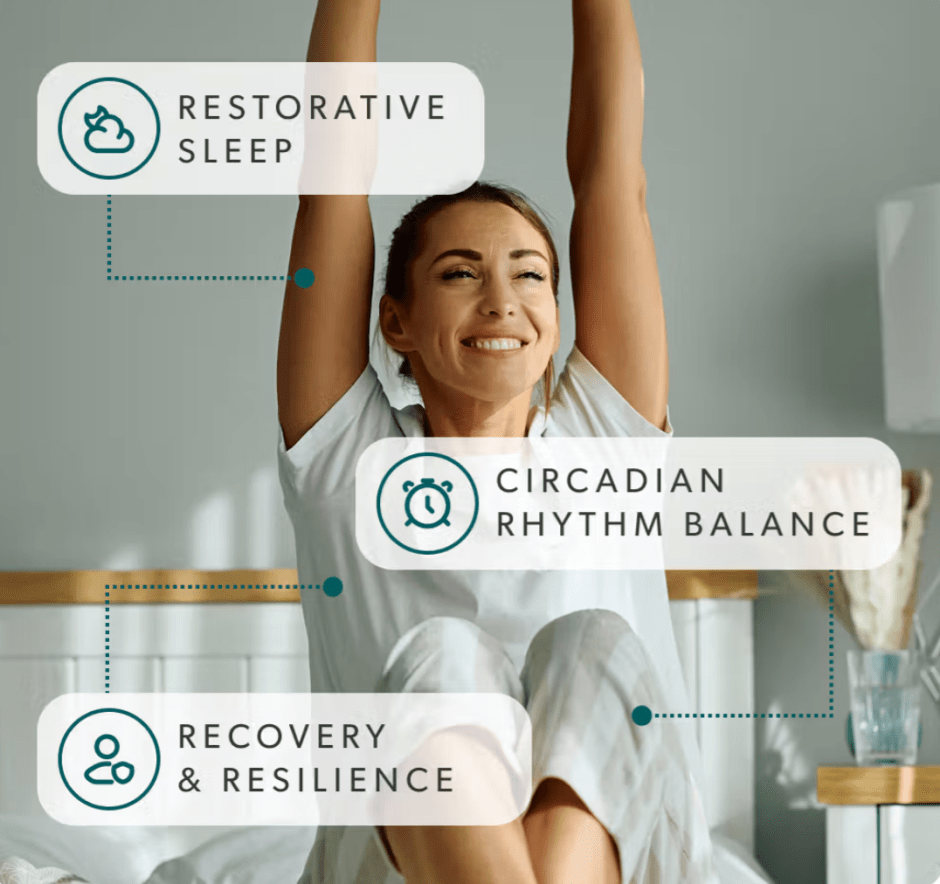
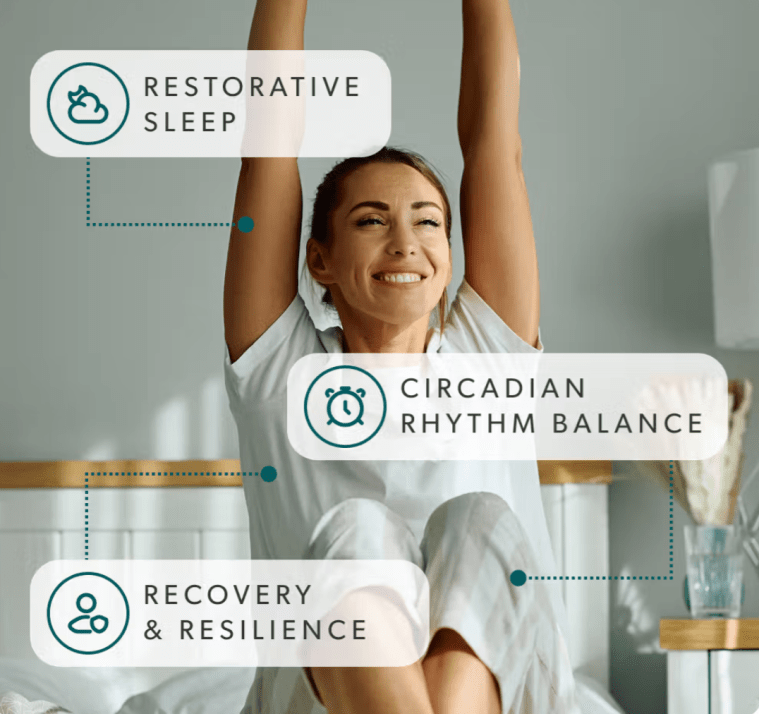
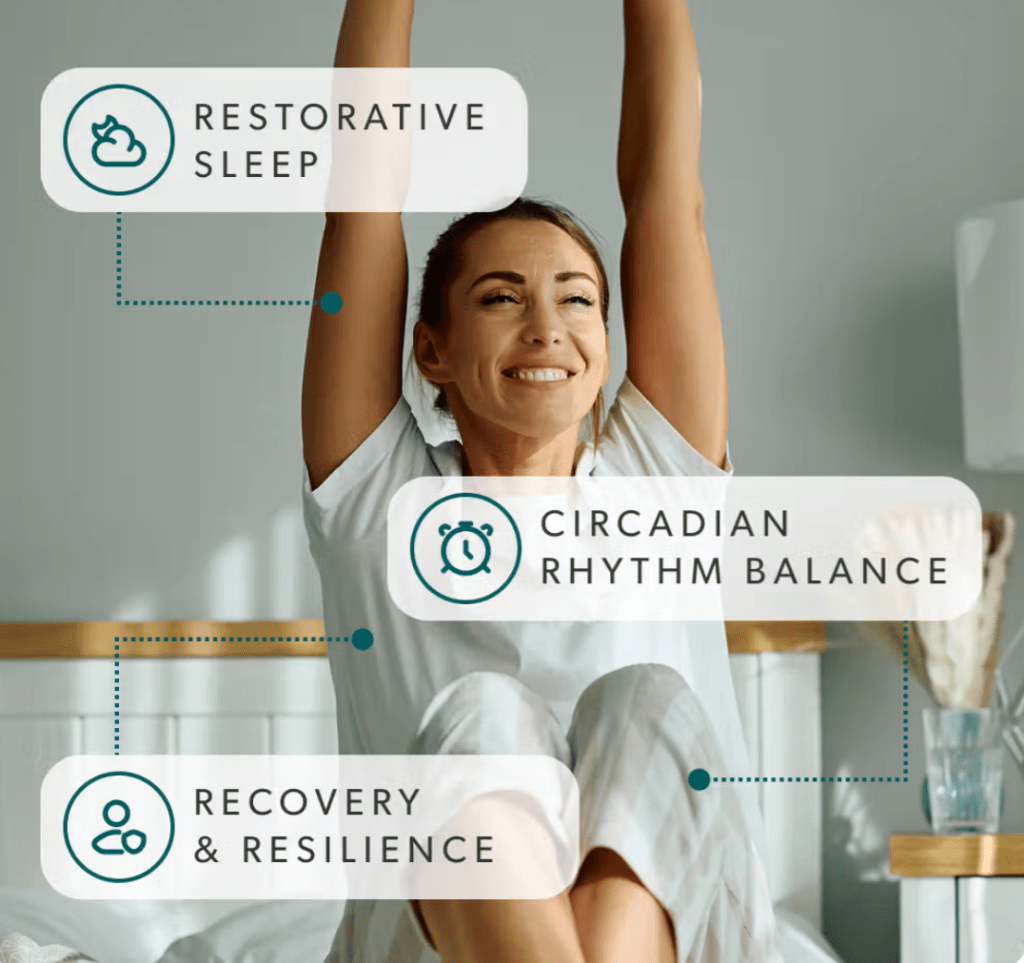
EllieMD DSIP benefits — restorative sleep circadian rhythm balance and recovery and resilience

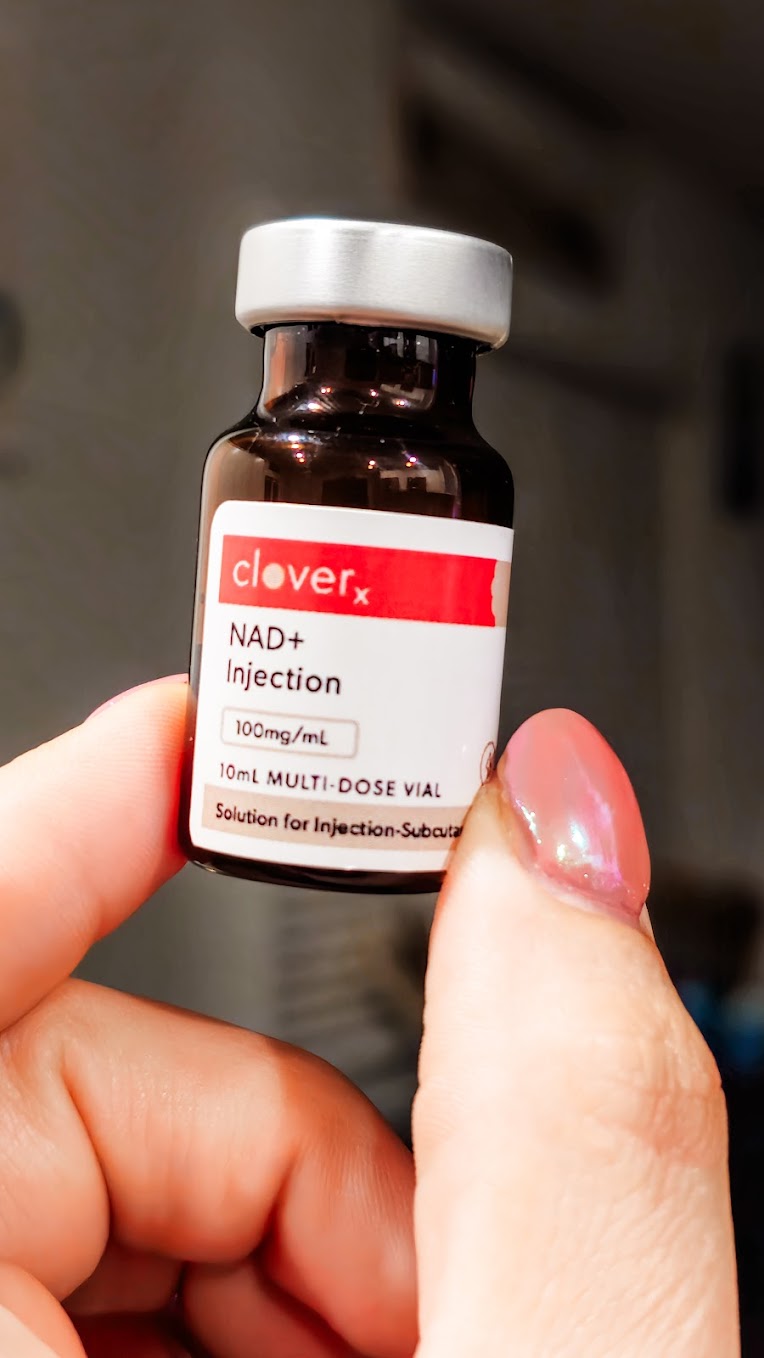
I already use their GLP-1/GIP+Glycine, NAD+, GHK-Cu, GLP-1 Support+, and B12 injections. So when something new drops from EllieMD, I pay attention. Their track record with me personally has been solid.

I read through their research materials and y’all… the timing could not have been more perfect.

DSIP is being studied specifically for circadian rhythm alignment and sleep depth support. Not just “helps you fall asleep.” The biological TIMING part. The DEPTH of sleep part. The stress-hormone-at-night part.

That is EXACTLY what a night owl being forced onto days needs.

I screamed a little. Internally. I’m a professional.

What DSIP Is

DSIP is a tiny protein your body already makes. It’s been studied for over 40 years for its role in sleep and your body’s stress response.

Here’s what makes it different from everything else in the sleep space.

Most sleep stuff works like a light switch. On or off. Either it knocks you out, or it tells your body, “hey, it’s dark, time to sleep.” That’s melatonin. That’s most sleep aids.

DSIP is being studied for something different. Think of your sleep like a staircase you go up and down all night. The bottom stair, Stage 3, also called deep or delta sleep, is where your body does all the actual repair work. Immune system. Brain. Hormones. Everything. DSIP is being studied for its role in helping you actually GET to that bottom stair… and stay there long enough for it to matter.

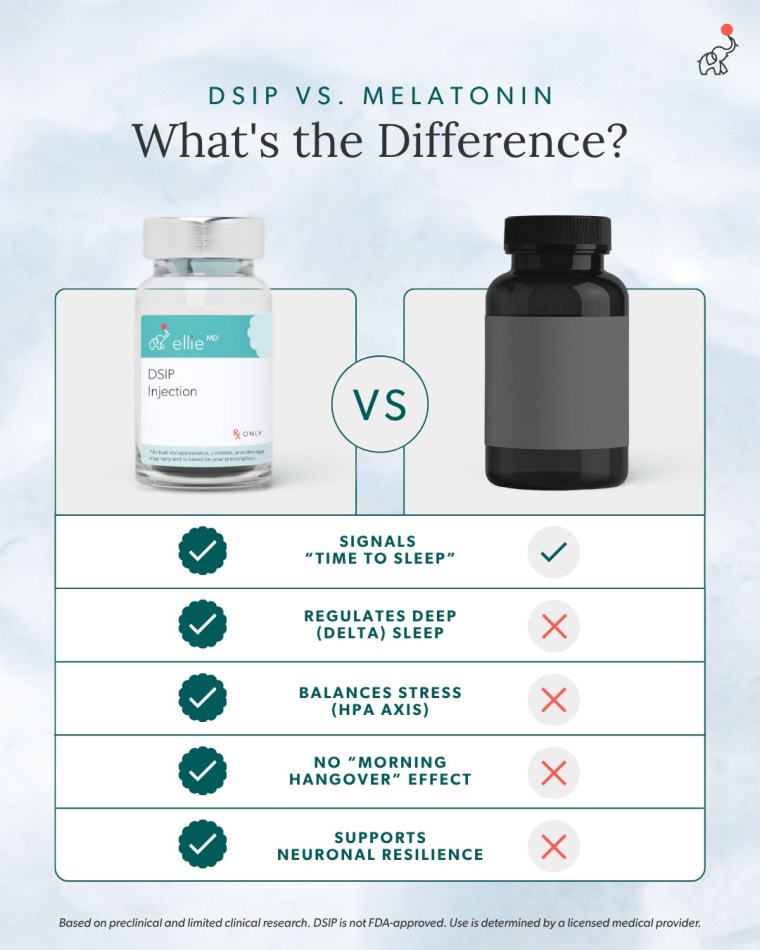
DSIP vs melatonin comparison chart showing DSIP regulates deep delta sleep, balances stress via HPA axis, has no morning hangover effect, and supports neuronal resilience

It’s also being studied for cortisol, your stress hormone. Here’s the thing about cortisol: your stress system and your sleep system are supposed to take turns. Stress runs things during the day. Then it clocks out so sleep can take over at night. When that handoff breaks down, you get “tired but wired.” Exhausted, but your brain never got the memo. DSIP may help that handoff actually happen.

And the circadian part, the biological clock stuff, is being studied too. Supporting the timing signals that tell your body when to wind down and when to wake up. For someone whose clock has been running late since second grade… THIS is the part that has me genuinely excited.

I wrote a full breakdown of all the science here if you want to go deeper — What Is DSIP? A Registered Nurse Explains

What Ordering Through EllieMD Actually Looked Like

Ordering a prescription peptide sounds intimidating if you’ve never done it. It’s really not. Here’s what it actually looked like:

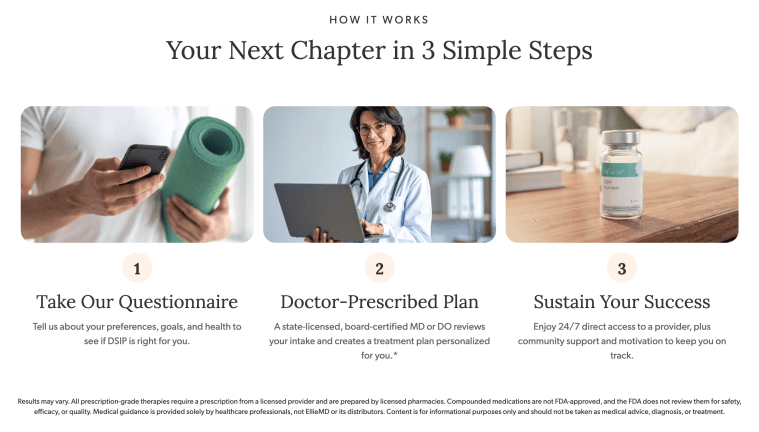
You start at elliemd.com/NicoleInScrubs and go through their intake and consultation process. A licensed physician reviews your health history and determines whether DSIP is right for you and at what dose. It’s personalized. Not a vending machine situation.

How to order EllieMD DSIP — three steps take questionnaire doctor prescribed plan sustain your success with 24 7 provider access
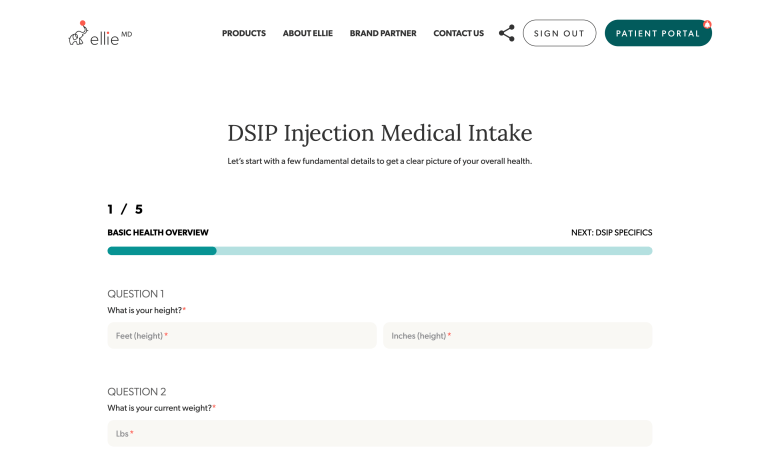
EllieMD DSIP Injection medical intake form step 1 of 5 — basic health overview questionnaire

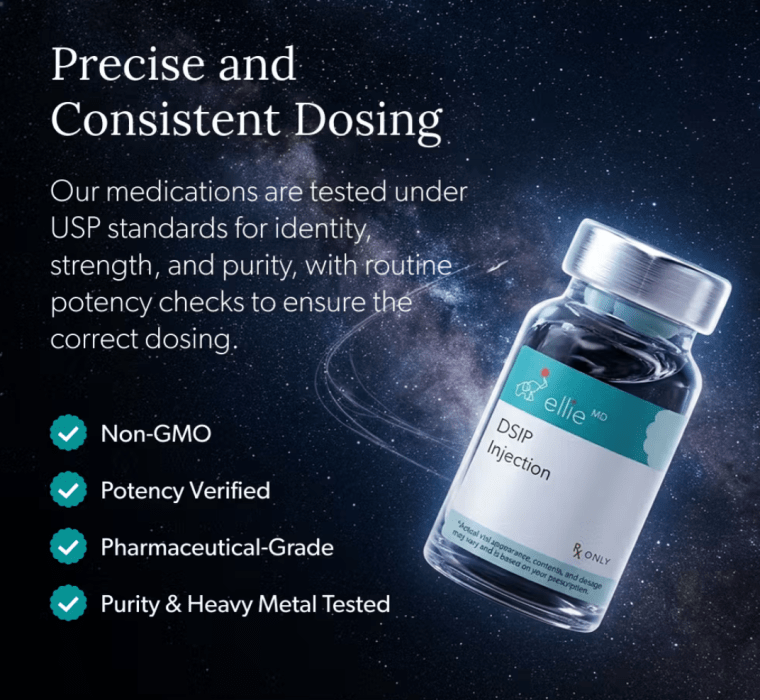
The peptide is compounded to pharmaceutical-grade standards. That distinction matters more than most people realize. And your vial arrives pharmacy-prepared and ready to use. Already reconstituted. Sterile. No home mixing, no guessing.

EllieMD DSIP injection precise and consistent dosing — non-GMO potency verified pharmaceutical grade purity and heavy metal tested

As a nurse, that last part matters to me A LOT. I’ve seen what can go wrong when people try to source and mix peptides on their own without medical oversight. The EllieMD process removes all of that. You’re getting a prescription product managed by a licensed physician. That is the standard this should be held to, and EllieMD holds it.

The whole ordering experience was smooth and way less complicated than I expected. If you’ve been curious but held back because it seemed like a lot… it’s not. Promise.

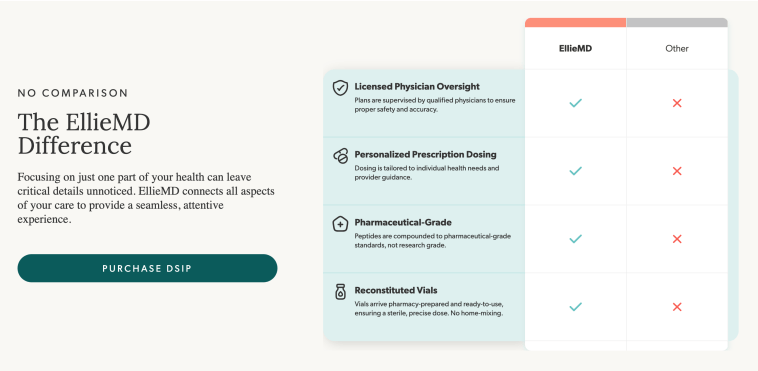
EllieMD difference comparison chart showing licensed physician oversight personalized prescription dosing pharmaceutical grade compounding and reconstituted vials versus other providers

What I’m Hoping For

I haven’t started it yet. I want to be clear about that because I will never tell you about results I don’t have.

But here’s what I’m going into this hoping for:

A smoother shift onto a schedule my body has fought my entire life. Less of that wired-at-midnight-even-though-my-alarm-is-at-5am feeling. Better quality sleep in the hours I do get even when the timing feels wrong to every cell in my body. And honestly… not feeling like a complete zombie for three months straight.

That’s not asking for a miracle. That’s asking biology for a little help.

Who I Think This Is Really For

I’m coming at this from a very specific angle… lifelong night owl, shift worker, forced schedule change. But the reach here is much wider than that.

If you’ve been waking up at 3am for two years and have quietly accepted it as just your life now… this is for you.

If you sleep eight hours and still wake up exhausted because the depth just isn’t there… this is for you.

If perimenopause has made your sleep completely unpredictable and nothing has really fixed it… this is for you.

If you’ve tried the magnesium, the melatonin, the mouth tape, the sleepy girl mocktail, the 67-degree room… and you’re still not actually RESTING… this might be the piece you’ve been missing.

You’ve tried the timing solutions. DSIP is being studied for what’s happening at a deeper level. And sometimes that’s exactly where the answer lives.

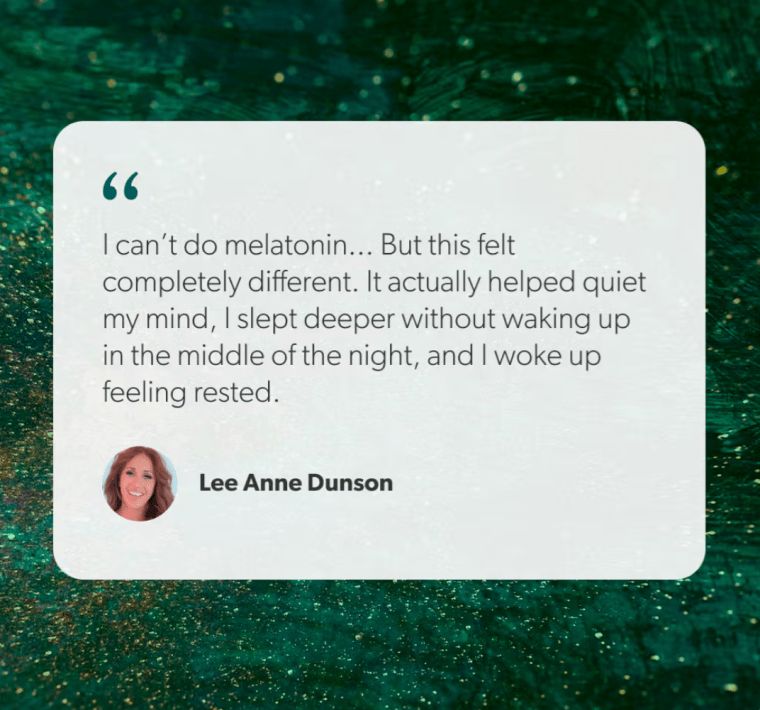
EllieMD DSIP patient testimonial — slept deeper without waking up in the middle of the night and woke up feeling rested
Testimonials reflect individual experiences. EllieMD does not guarantee similar outcomes. This product is prescribed by a licensed healthcare professional based on individual needs. Results may vary.

What Comes Next

I’m documenting all of it on my Instagram, TikTok, and Facebook. The transition to days. What I notice in the first few weeks. What changes and what doesn’t. The full honest experience… because that’s the only kind I know how to make.

Subscribe below so you don’t miss the update. And if you want to explore DSIP for yourself in the meantime, head to elliemd.com/NicoleInScrubs to start the consultation.

Stay close y’all. This one’s going to be a journey.

 ↓ Related reading ↓ 


This post contains affiliate links and/or brand partnership content. I may earn a commission at no extra cost to you.

LET’S BE CLEAR ABOUT WHO I AM (AND WHO I’M NOT).

I’m a registered nurse and health coach who shares real, BS-free information about metabolic health, PCOS, perimenopause, and weight loss, because y’all deserve better than vague wellness fluff. But here’s what I need you to know: I am not YOUR nurse. Everything I share here is for educational purposes only. It is not medical advice, it’s not a diagnosis, and it doesn’t create a provider-patient relationship between us. Nothing on this site replaces the care of a licensed provider who actually knows your full health history. The opinions and content here are my own and do not reflect the views of my employer or the hospital where I work.

SCOPE OF PRACTICE.

As a nurse health coach, I can recommend over-the-counter products and supplements that may support your wellness goals. I don’t prescribe specific prescription medications. When it comes to GLP-1s and peptides, what I can do is talk about the science, what’s available, and what may be beneficial, so you can have an informed conversation with your licensed medical provider. The decision about what’s right for your body always belongs to you and your provider. Always consult your licensed provider before starting any prescription treatment — this is not something that should be DIY’d. These statements have not been evaluated by the FDA. Products discussed on this site are not intended to diagnose, treat, cure, or prevent any disease.

TRANSPARENCY.

I only recommend things I actually trust. Most are products I personally use, some are from partners whose clinical standards I believe in. I will always let you know when it’s something I haven’t tried personally. Some links on this site are affiliate links or part of brand partnerships, which means I may earn a commission at no extra cost to you. As an Amazon Associate I earn from qualifying purchases.

RESULTS + TESTIMONIALS.

Any testimonials or results shared on this site reflect individual experiences only. Results are not guaranteed and will vary based on individual circumstances.

↑ BACK TO TOP ↑

What Is DSIP? A Registered Nurse Explains the Sleep Peptide Everyone Is About to Be Talking About

JUMP TO:: MEDICAL + AFFILIATE LINK DISCLOSURES

What Is DSIP?

DSIP — Delta Sleep-Inducing Peptide — is a tiny protein your body already makes on its own. It has been studied for over 40 years for its role in helping your body get deeper, more restful sleep. It may also help your internal clock stay on track and support your body’s response to stress.

Think of it like a conductor in an orchestra. The conductor doesn’t play an instrument. But without them, everyone is playing at the wrong time and nothing sounds right. DSIP may help coordinate the systems that are supposed to work together so you actually wake up feeling like you slept.

It is available as a prescription peptide through licensed telehealth providers under physician supervision.

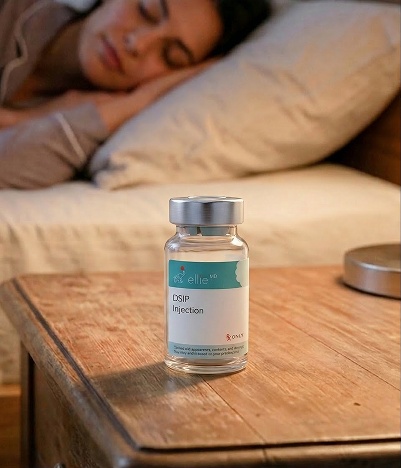
EllieMD DSIP Injection vial on nightstand next to sleeping woman

How is DSIP different from Melatonin?

This is the most important thing to understand, and most people get it wrong.

Melatonin tells your body WHEN to sleep. It’s like a “closed” sign on a store. It signals that it’s getting dark and time to wind down.

DSIP vs melatonin comparison chart showing DSIP regulates deep delta sleep, balances stress via HPA axis, has no morning hangover effect, and supports neuronal resilience

DSIP is being studied for what happens AFTER the sign goes up. Once you’re asleep, are you actually getting the deep restorative kind? Or are you just… lying there in the shallow end all night?

Melatonin handles the timing. DSIP is being studied for the depth. They’re working on completely different things. That’s why so many people take melatonin every night and still wake up exhausted. The sign said closed. But the cleaning crew never showed up.

What Does DSIP Do?

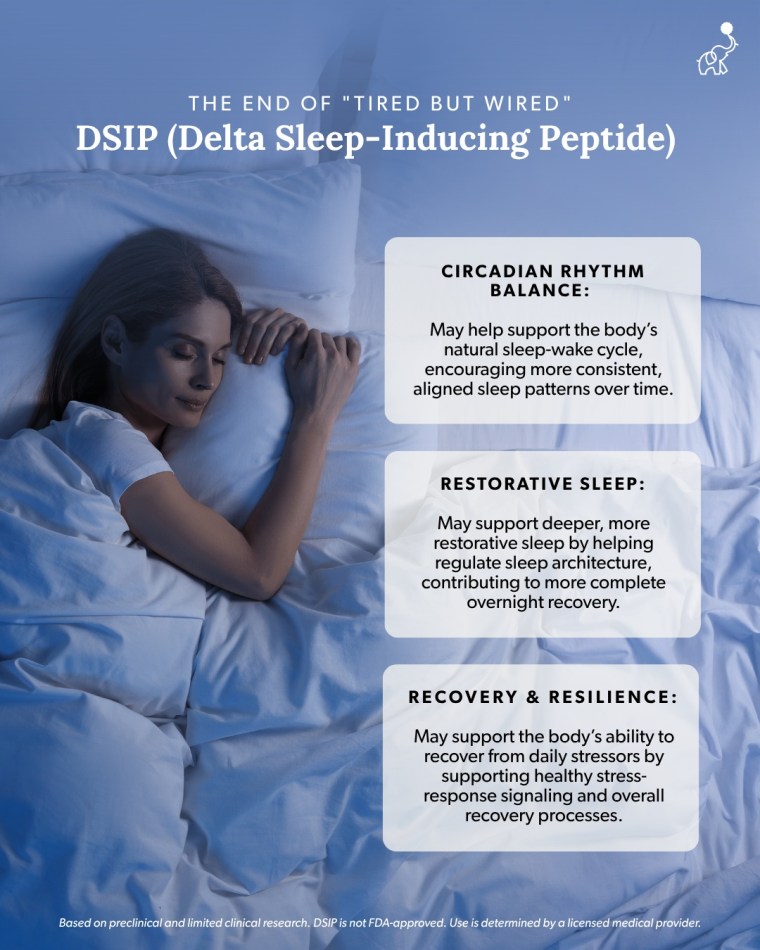
DSIP Delta Sleep-Inducing Peptide benefits graphic showing circadian rhythm balance, restorative sleep, and recovery and resilience

Sleep Cycle Restoration

Your sleep has stages. Think of it like a staircase you go up and down all night. The bottom stair, Stage 3, also called delta or deep sleep, is where your body does the actual repair work. Immune system, brain, tissue, hormones. All of it happens there. DSIP has been studied for its role in helping you spend more time on that bottom stair, especially if chronic stress or disrupted sleep has been keeping you stuck on the upper ones.

Sleep Initiation

DSIP may support your body’s natural wind-down process… the shift from “go mode” to “rest mode.” Not a crash. Not sedation. More like a dimmer switch easing down gradually the way it’s actually supposed to.

Stress Hormone Balance

Here’s a big one. Your body has a stress system (called the HPA axis) and a sleep system. They’re supposed to take turns. Stress runs the show during the day, then clocks out so sleep can take over at night. When that handoff breaks down, you get the “tired but wired” feeling. Exhausted but your brain never got the memo to stop. DSIP is being studied for its role in helping that handoff actually happen, supporting a calmer environment for sleep by influencing cortisol pathways.

Circadian Alignment

Your circadian rhythm is your body’s internal 24-hour clock. It controls when you feel awake, when you feel sleepy, when your body temperature rises and falls. When that clock gets knocked off schedule, by shift work, travel, hormonal changes, or just being a lifelong night owl, everything downstream gets messy. DSIP is being studied for its role in supporting those biological timing signals and helping the clock realign.

Neuronal Resilience

DSIP may help support your brain’s ability to handle physical and emotional stress. Think of it like keeping the generator running so the lights don’t flicker when things get hard.

Pain Modulation

Early research suggests DSIP may help support the body’s response to pain. Studies have pointed to potential reductions in migraine and stress-related symptoms. Still being explored, but worth knowing.

Why Does Deep Sleep Matter So Much?

Most people measure sleep in hours. But hours and quality are not the same thing.

You can sleep eight hours and barely touch the deep stage. It’s like being in a pool but never going below the surface. You were technically in the water all night. But you didn’t get the benefit of what’s at the bottom.

Deep sleep (Stage 3, delta sleep) is where your body runs its overnight repair crew. Tissue gets fixed. Your immune system does its work. Your brain files away memories. Key hormones get regulated. If you’re not spending enough time there, none of that happens the way it should.

And the deep stage is the first one to get disrupted by stress, hormonal shifts, irregular schedules, and age. Which means a lot of people are running on empty and don’t even know exactly why.

That’s what DSIP is being studied to address.

Who Might Relate to This Most?

DSIP research points to several groups who may benefit most:

People dealing with chronic insomnia or sleep that never feels truly restful. Anyone stuck in the “tired but wired” cycle at night. Shift workers or people with disrupted sleep-wake schedules. Frequent travelers dealing with jet lag. Women navigating perimenopause where sleep has gotten unpredictable. People managing high stress that bleeds into their sleep. And anyone who has tried the usual sleep supports, melatonin, magnesium, all of it… and still wakes up exhausted.

If that list felt personal… keep reading.

Is DSIP Safe?

DSIP has been studied for over 40 years. It is not associated with the grogginess or dependency concerns linked to conventional sleep medications. It does not directly stimulate growth hormone release. And it is not a sedative, it supports your body’s own sleep systems rather than overriding them.

That said… it is a prescription peptide. That means physician oversight, personalized dosing, and pharmaceutical-grade compounding. Not something you should be sourcing without medical supervision. The prescription requirement is a feature, not a barrier.

As with anything, individual results vary and a licensed provider should determine whether it is appropriate for you.

Where can you get DSIP?

EllieMD is the telehealth provider I partner with as a Brand Partner. They recently launched DSIP as part of their peptide offerings.

What sets EllieMD apart from other options: licensed physician oversight on every plan, personalized prescription dosing based on your individual health needs, pharmaceutical-grade compounding standards, and vials that arrive pharmacy-prepared and ready to use. No home mixing. No guessing. Sterile and precise every time.

EllieMD DSIP injection precise and consistent dosing — non-GMO potency verified pharmaceutical grade purity and heavy metal tested

You can start the consultation process at elliemd.com/NicoleInScrubs. A licensed physician will review your health history and determine whether DSIP is the right fit for you.

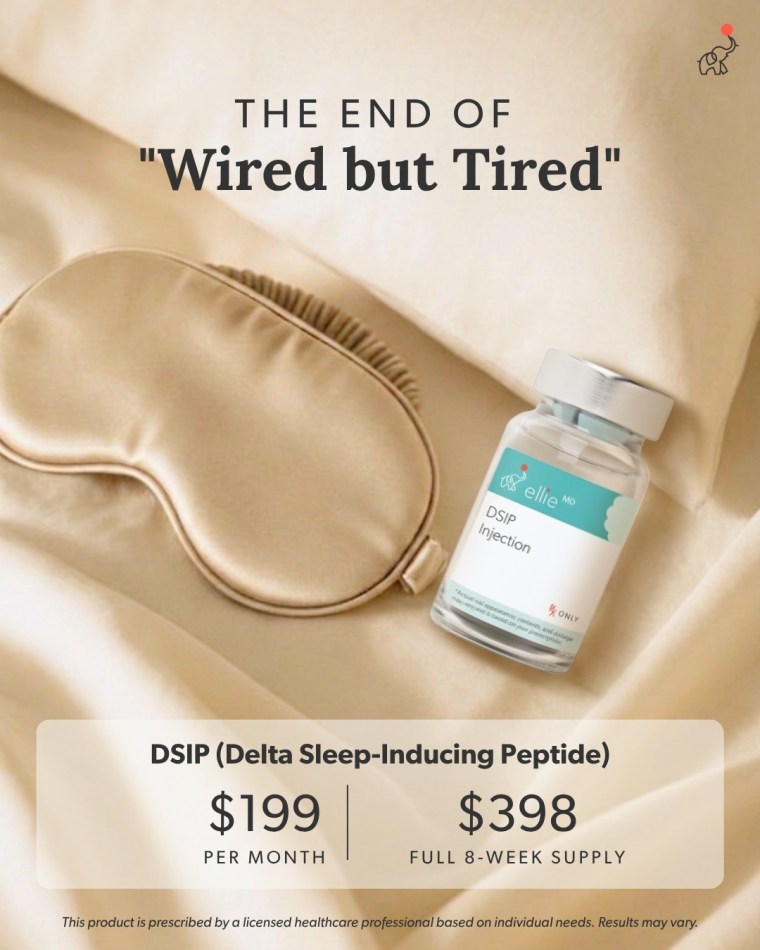
EllieMD DSIP Delta Sleep-Inducing Peptide pricing — $199 per month or $398 for full 8-week supply

Frequently Asked Questions About DSIP

What does DSIP stand for?

Delta Sleep-Inducing Peptide

Is DSIP FDA approved?

No. DSIP is not FDA-approved to diagnose, treat, cure or prevent any disease. It is available as a prescription peptide through licensed telehealth providers under physician supervision.

How is DSIP different from melatonin?

Melatonin signals when to sleep. DSIP is being studied for the depth and quality of sleep once you’re there. Different jobs entirely.

Does DSIP cause morning grogginess?

It is not associated with the morning hangover effect linked to some conventional sleep aids. It supports your body’s natural sleep systems rather than sedating you.

How is DSIP administered?

Typically via subcutaneous injection. Through EllieMD, vials arrive pharmacy-prepared, reconstituted, and ready to use.

Who should not take DSIP?

Anyone considering DSIP should go through a proper medical consultation first. A licensed physician will assess your individual health history and determine whether it is appropriate for you.

Where can I get DSIP?

Through a licensed provider. I partner with EllieMD, a telehealth provider. You can start your consultation here.

↓ Related reading ↓


This post contains affiliate links and/or brand partnership content. I may earn a commission at no extra cost to you.

LET’S BE CLEAR ABOUT WHO I AM (AND WHO I’M NOT).

I’m a registered nurse and health coach who shares real, BS-free information about metabolic health, PCOS, perimenopause, and weight loss, because y’all deserve better than vague wellness fluff. But here’s what I need you to know: I am not YOUR nurse. Everything I share here is for educational purposes only. It is not medical advice, it’s not a diagnosis, and it doesn’t create a provider-patient relationship between us. Nothing on this site replaces the care of a licensed provider who actually knows your full health history. The opinions and content here are my own and do not reflect the views of my employer or the hospital where I work.

SCOPE OF PRACTICE.

As a nurse health coach, I can recommend over-the-counter products and supplements that may support your wellness goals. I don’t prescribe specific prescription medications. When it comes to GLP-1s and peptides, what I can do is talk about the science, what’s available, and what may be beneficial, so you can have an informed conversation with your licensed medical provider. The decision about what’s right for your body always belongs to you and your provider. Always consult your licensed provider before starting any prescription treatment — this is not something that should be DIY’d. These statements have not been evaluated by the FDA. Products discussed on this site are not intended to diagnose, treat, cure, or prevent any disease.

TRANSPARENCY.

I only recommend things I actually trust. Most are products I personally use, some are from partners whose clinical standards I believe in. I will always let you know when it’s something I haven’t tried personally. Some links on this site are affiliate links or part of brand partnerships, which means I may earn a commission at no extra cost to you. As an Amazon Associate I earn from qualifying purchases.

RESULTS + TESTIMONIALS.

Any testimonials or results shared on this site reflect individual experiences only. Results are not guaranteed and will vary based on individual circumstances.

↑ BACK TO TOP ↑

How Did I Get Here? My Journey Through PCOS, Loss, and Finding Myself Again

Let me take you back to 2001. I was 18 years old, navigating life as best I could, and decided to switch to the Depo-Provera shot. At the time, I was at my smallest size ever—a size 0. Don’t get too impressed, though. It wasn’t healthy, and even then, I was at the upper limits of a “normal BMI.” That’s when I realized BMI is absolute nonsense. (Seriously, who came up with that?!)

What I didn’t know then was that I had undiagnosed PCOS—a condition that really doesn’t get along with Depo-Provera. Within 72 hours of my first shot, I gained 15 pounds. Not kidding. I woke up, and the shorts I had just bought two weeks earlier didn’t fit. Over the next three months, while that shot coursed through my system, I packed on another 15-20 pounds. My doctor reassured me, saying the weight would “come right off” after a few months. Spoiler alert: It didn’t.

By nine months in, I’d gained over 30 pounds and was an emotional wreck. My cycle—already chaotic—was worse than ever. So, we ditched Depo-Provera and went back to traditional birth control. The weight stayed put, and I started experiencing other symptoms of PCOS, though I wouldn’t get an official diagnosis until 2006.

The Diagnosis That Changed Everything

Fast forward to 2006. I was 22 years old, newly diagnosed with PCOS and pre-diabetes. My husband and I decided to start trying for a baby earlier than planned, knowing infertility might be an uphill battle. What we didn’t expect was my atypical version of PCOS. Instead of struggling with infertility, I had hyperfertility. It really does only take one time, folks, and birth control is not foolproof.

But PCOS wasn’t the only challenge we faced. That same year, after three heartbreaking miscarriages, we discovered a genetic condition—one that gave our babies a 50/50 chance of inheriting not one but two rare syndromes. This discovery would shape our future in ways we couldn’t have imagined.

The Losses That Shaped Me

In 2009, after a whirlwind of deployments, cross-country moves, and life transitions, we welcomed our son, Anthony Maddox, on January 4, 2010. Born at 35 weeks, he carried the weight of those two syndromes and left us too soon, soaring to heaven the same day. I turned to old, unhealthy habits to cope, dropping from 155 to 135 pounds in a haze of grief.

Over the next few years, we endured more losses, including our daughter Avery Shea, who blessed us with 12 beautiful days in 2012, and our youngest son, Richard Franklin, who fought valiantly but passed on February 18, 2016. Each loss came with its own struggles, including weight fluctuations, emotional eating, and the added challenges of gestational hypertension.

Finding My Way Back to Health

By 2022, my health had hit rock bottom. My weight peaked at 209 pounds, and my hypertension was out of control. Every attempt to lose weight was met with failure—five pounds off, ten pounds back on. Keto? Tried it. Lost 25 pounds, gained it all back. COVID and DoorDash? Yeah, they didn’t help either.

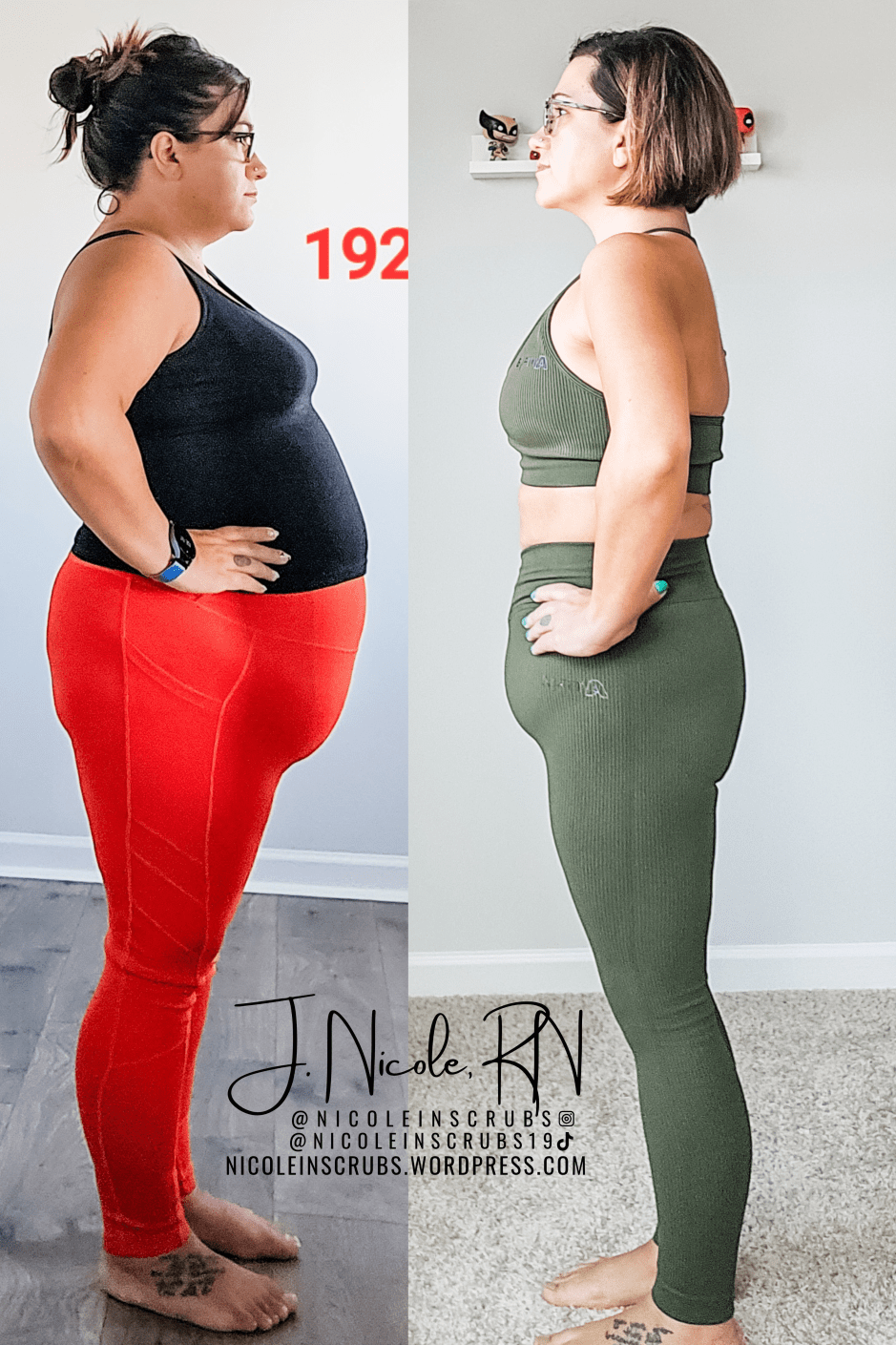
Then, in October 2023, everything changed. I started my GLP-1 journey at 192.6 pounds. For the first time in years, I felt like I had a real fighting chance. These medications, combined with lipotropic + B12 injections, Sermorelin, and a lot of determination, helped me break through the barriers PCOS had thrown my way.

Where I Am Today

Thirteen and a half months later, I’m at my lowest weight since starting the Depo-Provera shot—129.4 pounds. I’ve lost over 63 pounds, conquered my insulin resistance (bye-bye, pre-diabetes!), and finally feel like I’m in control of my health.

If you’re struggling, I want you to know you’re not alone. PCOS is a beast, but with the right tools and support, you can overcome it. If you’re curious about GLP-1 medications or need a cheerleader to help you along the way, let me know. I’m here for you!

Ready to start your journey?
Click here to learn about my secret weapon.
✨ Want a health coach who’s been through it all? Send me a message—I gotchu!

Let’s rewrite your story together.

Want to watch my face transform after losing over 63lbs? Watch the video below.

https://www.tiktok.com/t/ZTYNsV8TP/


Professional Disclosure: I provide BS-free metabolic education as a registered nurse and health coach for women navigating PCOS, perimenopause, and stubborn weight loss. While I share evidence-based research and nurse-informed support, please remember that I am not your nurse. The content shared here is for educational purposes only. It does not constitute medical advice, diagnosis, or treatment, and it does not establish a provider-patient relationship. Nothing on this site is a substitute for care from a licensed provider who knows your full health history. All opinions and content shared on this platform are my own and do not reflect the views or endorsements of my employer or the hospital where I am employed.

Scope of Practice and FDA: Per professional coaching guidelines, I may recommend over the counter (OTC) medications or supplements to support your wellness goals. However, I do not prescribe or recommend specific prescription medications. For prescription options, including GLP-1 tools, my role is to help you understand the available science so you can have an informed discussion with your licensed healthcare provider. These statements have not been evaluated by the Food and Drug Administration. Products discussed are not intended to diagnose, treat, cure, or prevent any disease, and medical treatments require professional oversight.

Trust and Transparency: I only recommend products I trust. Most are items I use personally, while others are shared based on my professional trust in the clinical standards of partners like Ellie MD. Some links are affiliate links or part of brand partnerships, which means I may earn a commission at no extra cost to you. As an Amazon Associate I earn from qualifying purchases.