The Nurses’s RX no. 8: I used to dread summer…

The Nurse's RX newsletter header - Everything your doctor didn't have time to explain

Okay sooooo……

Summer is fast approaching.

And a couple years ago? I dreaded it.

There were summers I didn’t even own a bathing suit that fit.
I refused to buy shorts.
I lived in long dresses and leggings because they felt safer.

Pool invites stressed me out.
Beach trips felt exposing.
Photos? Absolutely not.

I kept telling myself I just needed more discipline.
More willpower.
Another fad diet.

So I counted calories.
Tracked every bite.
Tried whatever new fad diet was trending that month.

And every time it didn’t “stick,” I blamed myself.

What actually changed everything?

started GLP-1 therapy under medical supervision.

And I stopped dieting.

I stopped counting calories.
I stopped chasing fad diets.
I started eating intelligently.

Protein first.
Fiber daily.
Balanced meals.
No extremes.

The food noise quieted.
My body finally had metabolic support.
And everything else began to fall into place.

This past summer?

I had a whole drawer of bathing suits.
An actual drawer.
And yes… a whole drawer of shorts too.

That didn’t come from trying harder.
It came from upgrading the strategy.

If you’re exhausted from white-knuckling another summer, maybe it’s time to stop fighting your biology.

Summer is coming either way. ☀️
You get to decide how you walk into it.

You can BOOK A FREE 15 MIN CALL WITH ME to ask questions and talk through your thoughts and concerns. Or, if you already know you’re ready, you can GET STARTED THROUGH MY SITE now.

XOXO,
NIKI, RN

PCOS. Perimenopause. Metabolic health. The real stuff. Not just “eat less, move more.”

Not sure where to start? Take my free quiz and I’ll send you a custom plan.
WHAT’S RIGHT FOR MY BODY?
P.S. Missed the previous editions of The Nurse’s RX?
↓ Catch up here ↓
READ PAST EDITIONS

↓ LET’S CONNECT ↓


Let’s be clear about who I am (and who I’m not)

I’m a registered nurse and health coach who shares real, BS-free information about metabolic health, PCOS, perimenopause, and weight loss, because y’all deserve better than vague wellness fluff. But here’s what I need you to know: I am not YOUR nurse. Everything I share here is for educational purposes only. It is not medical advice, it’s not a diagnosis, and it doesn’t create a provider-patient relationship between us. Nothing here replaces the care of a licensed provider who actually knows your full health history. The opinions and content here are my own and do not reflect the views of my employer or the hospital where I work.

Scope of practice

As a nurse health coach, I can recommend over-the-counter products and supplements that may support your wellness goals. I don’t prescribe specific prescription medications. When it comes to GLP-1s and peptides, what I can do is talk about the science, what’s available, and what may be beneficial, so you can have an informed conversation with your licensed medical provider. The decision about what’s right for your body always belongs to you and your provider. Always consult your licensed provider before starting any prescription treatment. These statements have not been evaluated by the FDA. Products discussed are not intended to diagnose, treat, cure, or prevent any disease.

Transparency

I only recommend things I actually trust. Most are products I personally use, some are from partners whose clinical standards I believe in. I will always let you know when it’s something I haven’t tried personally. Some links in this email are affiliate links or part of brand partnerships, which means I may earn a commission at no extra cost to you. As an Amazon Associate, I earn from qualifying purchases.

Results + Testimonials

Any testimonials or results shared here reflect individual experiences only. Results are not guaranteed and will vary based on individual circumstances.

Read the full fine print at nicoleinscrubs.com/disclosure

Is Your Telehealth Company Pharmacy Hopping With Your GLP-1? Here’s Why That Matters

JUMP TO:: MEDICAL + AFFILIATE LINK DISCLOSURES


If you’re on a compounded GLP-1 medication through a telehealth company, there’s something you need to know… and most people have no idea it’s even happening.

It’s called pharmacy hopping. And it could be putting you at risk.

What Is GLP-1 Pharmacy Hopping?

Pharmacy hopping is when your telehealth company sends your prescription to a different compounding pharmacy each month. Not because anything is wrong with your prescription. Not because your dose changed. Just because of whatever deal or arrangement they have going on that month.

Here’s why that’s a problem. Every compounding pharmacy concentrates their GLP-1 medications differently. So even if your prescription says the exact same milligrams from one month to the next, the units, or volume, you draw up in your syringe could be completely different. Same dose on paper. Completely different injection in reality.

That’s exactly how dosing errors happen.

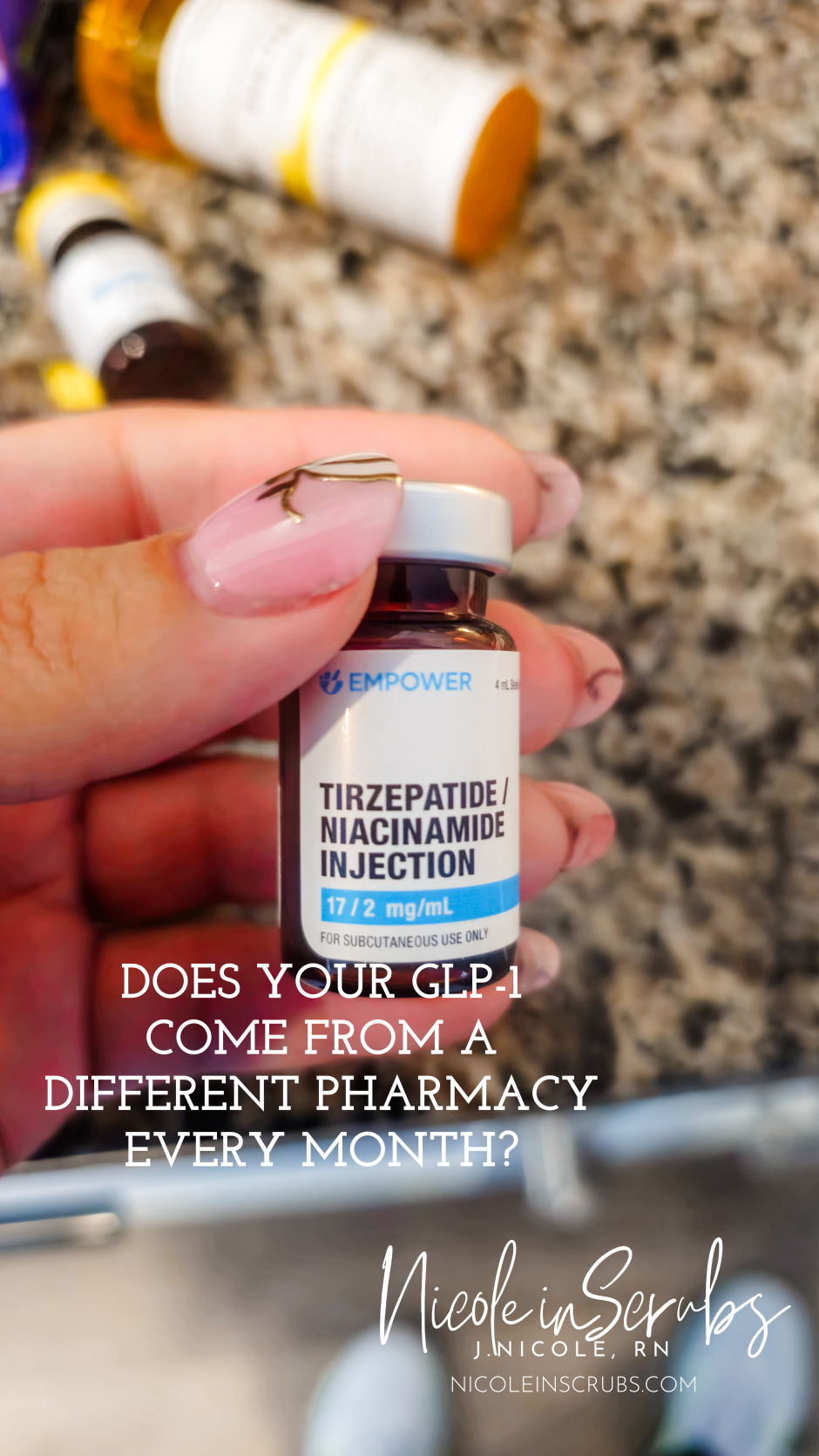
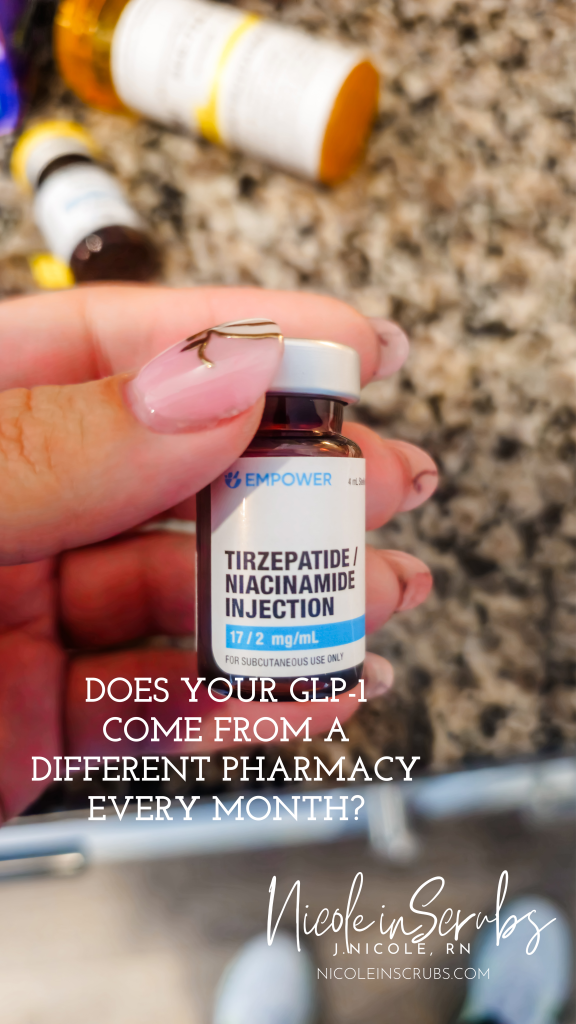
Hand holding an Empower compounding pharmacy tirzepatide niacinamide injection vial at 17/2 mg/mL with multiple other compounded GLP-1 vials visible in the background showing pharmacy variation
Different concentrations. Same prescription. This is what pharmacy hopping actually looks like.

What the FDA Is Actually Saying About This

This isn’t just my opinion as a nurse. The FDA has been raising the alarm on compounded GLP-1 safety for a while now.

As of April 2025, the FDA had received over 500 adverse event reports related to compounded semaglutide and nearly 500 reports concerning compounded tirzepatide. And that number is almost certainly higher because most state-licensed compounding pharmacies aren’t even required to submit adverse event reports.

The FDA has received multiple reports of adverse events, some requiring hospitalization, linked to dosing errors associated with compounded injectable semaglutide. These weren’t errors because people were careless. Many of them were errors because the concentration changed, and nobody clearly explained that.

The FDA estimates that 10 deaths and 100 hospitalizations may be linked to the use of compounded GLP-1 medications. And their responses are often reactive, meaning action is usually taken only after something has already gone wrong.

That last part is the part that keeps me up at night as a nurse.

A Real Example of What Can Go Wrong

I know someone personally who accidentally took four times her dose. Four times. It happened because her pharmacy changed, and she drew up the volume exactly the same as what she was used to… but the concentration was completely different. She felt absolutely awful.

And here’s the thing that really got me. I’m a NICU nurse. Dosage calculations are literally what I do every single day. Tiny babies depend on my accuracy. And I STILL panicked after my own pharmacy changed. I had to go back to my written notes to confirm I’d taken the right dose. I had gone over it so many times in my head that I couldn’t remember what I’d actually done.

If it can happen to me… it can happen to anyone.

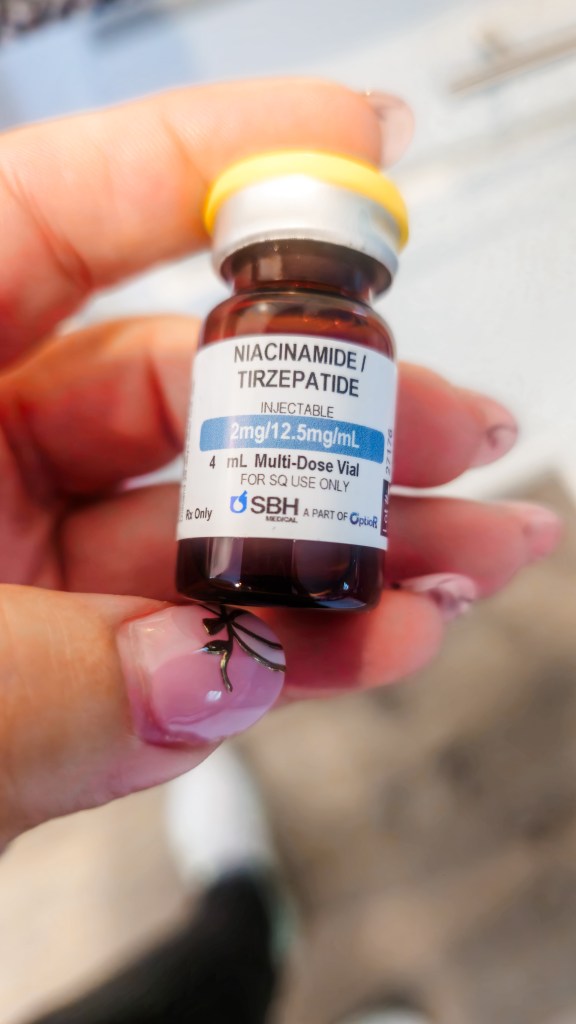
Hand holding an SBH Medical niacinamide tirzepatide injectable vial at 2mg/12.5mg/mL showing a different compounding pharmacy concentration than other providers
Same medication. Different pharmacy. Different concentration. This is exactly what pharmacy hopping looks like in real life.

What to Look For in a Compounded GLP-1 Provider

Not all telehealth companies operate the same way. Here’s what actually matters when it comes to safety:

Pharmacy consistency. Your medication should come from the same pharmacy every single month. No exceptions. If your provider can’t tell you exactly which pharmacy fills your prescription, that’s a red flag worth paying attention to.

Standardized dosing. As your dose increases, your units should stay the same. Simple, consistent, easy to follow instructions reduce the risk of errors. If the math changes every time your dose changes, that’s unnecessary confusion and unnecessary risk.

Transparency. A trustworthy provider will tell you where your meds come from, how they’re compounded, and what quality standards their pharmacy follows. You have every right to ask those questions.

Why I Made the Switch

This is a big part of why I moved to EllieMD. One pharmacy, always the same one, every single month. Standardized dosing so the units stay consistent no matter what milligram you’re on. Simple. Clear. And a whole lot less room for the kind of errors that send people to the hospital.

Cheaper isn’t always better y’all. Sometimes what you’re actually paying for is consistency, safety, and peace of mind. And when it comes to injectable medications… that is absolutely worth it.

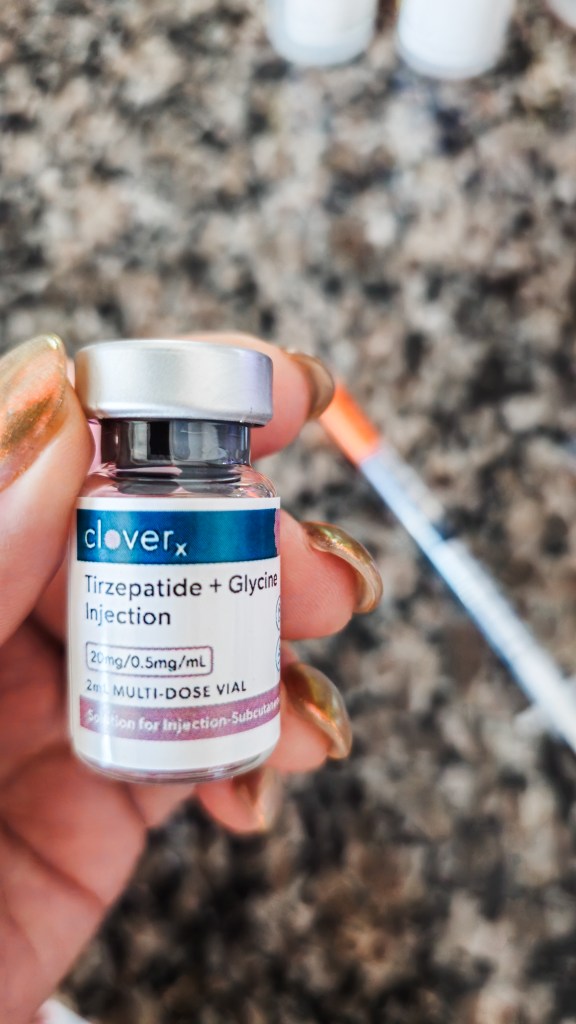
Hand holding a CloverRx compounding pharmacy tirzepatide plus glycine injection vial at 20mg/0.5mg/mL with a syringe visible in the background — EllieMD's dedicated compounding pharmacy
This is what consistency looks like. Same pharmacy. Every single month.

Questions to Ask Your Telehealth Provider Right Now

Before your next injection, it’s worth picking up the phone or sending a message to ask:

Where is my prescription being filled? Is it always the same pharmacy? How is my dosing calculated and does that change if my concentration changes? What quality standards does your compounding pharmacy follow?

You deserve clear answers. If you’re not getting them, that tells you something too.


This post contains affiliate links and/or brand partnership content. I may earn a commission at no extra cost to you.

LET’S BE CLEAR ABOUT WHO I AM (AND WHO I’M NOT).

I’m a registered nurse and health coach who shares real, BS-free information about metabolic health, PCOS, perimenopause, and weight loss, because y’all deserve better than vague wellness fluff. But here’s what I need you to know: I am not YOUR nurse. Everything I share here is for educational purposes only. It is not medical advice, it’s not a diagnosis, and it doesn’t create a provider-patient relationship between us. Nothing on this site replaces the care of a licensed provider who actually knows your full health history. The opinions and content here are my own and do not reflect the views of my employer or the hospital where I work.

SCOPE OF PRACTICE.

As a nurse health coach, I can recommend over-the-counter products and supplements that may support your wellness goals. I don’t prescribe specific prescription medications. When it comes to GLP-1s and peptides, what I can do is talk about the science, what’s available, and what may be beneficial, so you can have an informed conversation with your licensed medical provider. The decision about what’s right for your body always belongs to you and your provider. Always consult your licensed provider before starting any prescription treatment — this is not something that should be DIY’d. These statements have not been evaluated by the FDA. Products discussed on this site are not intended to diagnose, treat, cure, or prevent any disease.

TRANSPARENCY.

I only recommend things I actually trust. Most are products I personally use, some are from partners whose clinical standards I believe in. I will always let you know when it’s something I haven’t tried personally. Some links on this site are affiliate links or part of brand partnerships, which means I may earn a commission at no extra cost to you. As an Amazon Associate I earn from qualifying purchases.

RESULTS + TESTIMONIALS.

Any testimonials or results shared on this site reflect individual experiences only. Results are not guaranteed and will vary based on individual circumstances.

↑ BACK TO TOP ↑

How to Handle Snack Cravings and Maintain Weight Loss on a GLP-1

If you’re like me and find yourself stuck in the house for a few days, you might be feeling a little extra snacky! I know I definitely do. That is totally my M.O. though. I always snack way more when I am chillin at home than when I’m at work on a busy shift in the NICU or out running errands.

Healthy Snacks for Your GLP-1 Weight Loss Journey

The biggest difference for me now, especially after losing 94 pounds, is that I don’t eat the massive quantities I used to. I also typically reach for healthier options. My go-to snacks include That’s It fruit bars, protein bars that actually taste like candy, protein chips, and granola bars.

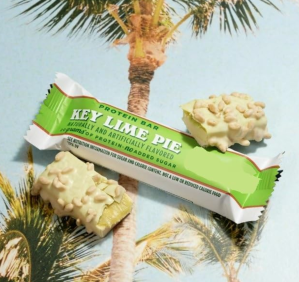
Key Lime Pie protein bar by Barebells on a tropical background, a healthy snack idea for GLP-1 maintenance.
This Key Lime Pie protein bar by Barebells actually tastes like dessert. It is one of my favorite go to snacks when I am stuck at home and feeling snacky.

Do I still cave and have a fun-size Snickers?

You bet I do!

But I don’t eat the whole bag. And I absolutely do not feel guilty over wanting and having a Snickers once in a blue moon now. That is exactly what happens when you use these medications as a tool and not just a quick fix.

Navigating GLP-1 Maintenance: How to Taper Off GLP-1 Medication

This is also a huge part of where I am on my own wellness journey right now. I am well into maintenance, but I’m also slowly decreasing my dosing to allow for a slightly higher food intake than when I was actively losing weight. Finding yourself stuck at home for a few days can really test that balance! I’m in that tricky spot between increasing my intake & decreasing my dose, making sure not to do either one too quickly or too slowly.

I don’t want to lose any more weight, but I also don’t want to gain more than a few pounds in the process, so I can maintain my other health goals, like my lower blood pressure.

Maintenance isn’t always as easy as it looks on the gram. But I have amazing tools and resources at my fingertips with EllieMD to keep it going!

Will I Gain Weight if I Stop Taking My GLP-1?

It’s completely normal to worry about the weight coming right back the second you stop your medication. This is a super common question!

If you start or continue your GLP-1 journey with me, I will be your ultimate nurse hype girl. I will help you learn how to make better choices that keep you full longer so you can continue these healthy habits when you are ready to come off the meds.

It’s totally okay to do a slow taper off if that makes you feel more comfortable. You can ease into doing it all on your own by planning your taper doses directly with your doctor. If you notice the scale creeping up during your taper, that’s when we will plan the right diet and activity adjustments to help you maintain your current weight. Then, if the weight starts creeping back up after you are completely off the medications, you can talk to your provider about how a short-term microdose might be beneficial.

Depending on your personal health history, like mine with PCOS, it’s also completely fine if you need to be on these medications long term. It is totally up to you and your doctor to decide if that is the right choice for your body.

Want to talk about this with me?

CLICK HERE TO BOOK A FREE 15 MIN CALL WITH ME

OR YOU CAN JUST TEXT ME YOUR QUESTIONS


Professional Disclosure: I provide BS-free metabolic education as a registered nurse and health coach for women navigating PCOS, perimenopause, and stubborn weight loss. While I share evidence-based research and nurse-informed support, please remember that I am not your nurse. The content shared here is for educational purposes only. It does not constitute medical advice, diagnosis, or treatment, and it does not establish a provider-patient relationship. Nothing on this site is a substitute for care from a licensed provider who knows your full health history. All opinions and content shared on this platform are my own and do not reflect the views or endorsements of my employer or the hospital where I am employed.

Scope of Practice and FDA: Per professional coaching guidelines, I may recommend over the counter (OTC) medications or supplements to support your wellness goals. However, I do not prescribe or recommend specific prescription medications. For prescription options, including GLP-1 tools, my role is to help you understand the available science so you can have an informed discussion with your licensed healthcare provider. These statements have not been evaluated by the Food and Drug Administration. Products discussed are not intended to diagnose, treat, cure, or prevent any disease, and medical treatments require professional oversight.

Trust and Transparency: I only recommend products I trust. Most are items I use personally, while others are shared based on my professional trust in the clinical standards of partners like Ellie MD. Some links are affiliate links or part of brand partnerships, which means I may earn a commission at no extra cost to you. As an Amazon Associate I earn from qualifying purchases.

Protein After Weight Loss: What Actually Matters (and What’s Just Flavored Air)

After losing 94 pounds, I’ve learned a few things about protein.

Some protein is actually good.
Some is… questionable.
And some makes you pause mid-sip and think, wait. Was that even protein???

For a long time, I thought protein was mostly for gym bros trying to bulk up & flex in the mirror. You know the vibe. Giant tubs. Aggressive labels. Shakers that smell suspicious even after washing.

Turns out, protein is way more important than I ever realized, especially during weight loss.

Why protein matters way more than you think

Protein isn’t about getting huge. It’s about protecting what you already have.

When you’re losing weight, especially if you’re in a calorie deficit, your body doesn’t just burn fat. It also breaks down muscle if it doesn’t have enough protein to work with. And muscle matters more than people realize.

Muscle helps keep your metabolism humming. Less muscle can mean a slower metabolism, lower energy, and weight loss that feels harder and harder to maintain.

Protein helps prevent that. It gives your body the building blocks it needs to repair and rebuild instead of breaking things down.

It also keeps you full longer. Not “I just ate and I’m still thinking about snacks” full. Actual, satisfied, walk-away-from-the-pantry full.

And yes, it supports your metabolism even when you’re doing very important activities like sitting on the couch scrolling TikTok.

The nerdy nurse explanation you didn’t get in health class.

When calories drop, your body looks for fuel. Fat is one source. Muscle is another. If protein intake is too low, muscle loss happens faster. That muscle loss can slow your metabolism, which makes continued weight loss and maintenance harder over time.

Protein helps signal to your body, hey, we need this muscle. Please don’t toss it.

This is especially important if you’re losing weight with medication, lifestyle changes, or a combination of both. The goal isn’t just a smaller number on the scale. It’s feeling strong, energized, and able to keep the results long-term.

Not all protein is created equal

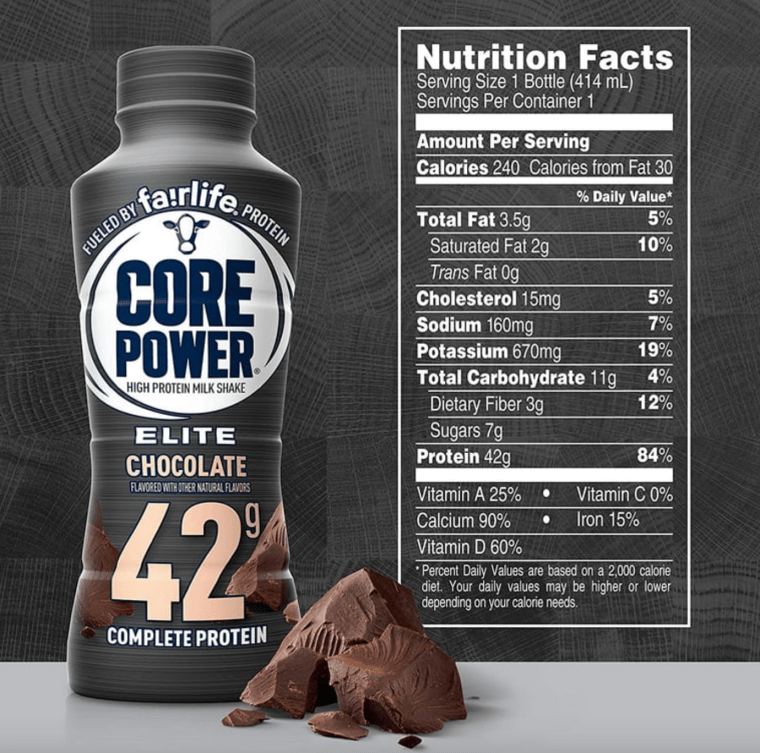
Just because something says “high protein” on the label does not mean it’s doing anything helpful for your body. Some options are high quality and easy to absorb. Others are basically flavored air with a side of digestive regret.

Over the past couple years, I’ve tried a lot. Powders. Ready-to-drink shakes. Bars. And a few things that can only be described as science experiments that should’ve stayed on the shelf.

Some tasted fine but didn’t keep me full.
Some had great macros but wrecked my stomach.
Some were so chalky they made me question my life choices.

Through trial, error, and a whole lot of label reading, I’ve figured out which ones are actually worth your time. Not perfect. Not magic. Just solid options that taste decent, digest well, and actually support a weight loss journey.

So what should you look for?

You don’t need perfection. You need consistency.

A protein source that:

  • Keeps you full longer
  • Doesn’t upset your stomach
  • Fits into your real life, not an influencer meal plan
  • Helps you hit your daily protein without feeling like a chore

Protein should make your life easier, not more complicated.

My real-life protein ratings

I’ve rounded up the proteins I actually use and enjoy. Not the ones that just photograph well. The ones I’ve gone back to again and again.

You can check out my full ratings and breakdowns here 👇
I rated my favorite proteins and shared the honest details

No hype. No fake enthusiasm. Just what worked for me after losing 94 pounds and trying… a lot.

Hitting reset without punishment

If the holidays left you feeling off track, tired, or frustrated with your body, this is your reminder that you don’t need extremes.

You don’t need to start over perfectly.
You don’t need to punish yourself.
You don’t need to survive on protein sludge and willpower.

Sometimes a reset just looks like fueling your body better and letting things feel easier again.

Protein is one of those quiet tools that makes everything else work better.

Your post-holiday reset doesn’t have to be dramatic.
It just has to be sustainable.

And feeling good again is a pretty solid place to start.


Professional Disclosure: I provide BS-free metabolic education as a registered nurse and health coach for women navigating PCOS, perimenopause, and stubborn weight loss. While I share evidence-based research and nurse-informed support, please remember that I am not your nurse. The content shared here is for educational purposes only. It does not constitute medical advice, diagnosis, or treatment, and it does not establish a provider-patient relationship. Nothing on this site is a substitute for care from a licensed provider who knows your full health history. All opinions and content shared on this platform are my own and do not reflect the views or endorsements of my employer or the hospital where I am employed.

Scope of Practice and FDA: Per professional coaching guidelines, I may recommend over the counter (OTC) medications or supplements to support your wellness goals. However, I do not prescribe or recommend specific prescription medications. For prescription options, including GLP-1 tools, my role is to help you understand the available science so you can have an informed discussion with your licensed healthcare provider. These statements have not been evaluated by the Food and Drug Administration. Products discussed are not intended to diagnose, treat, cure, or prevent any disease, and medical treatments require professional oversight.

Trust and Transparency: I only recommend products I trust. Most are items I use personally, while others are shared based on my professional trust in the clinical standards of partners like Ellie MD. Some links are affiliate links or part of brand partnerships, which means I may earn a commission at no extra cost to you. As an Amazon Associate I earn from qualifying purchases.

Is It Normal to Not Lose Weight Before Your Period on GLP-1 Medication? 🤔🩸

Hey everyone! 🌟 Welcome back to the blog. Today, we’re diving into a topic that’s on the minds of many women: weight fluctuations during the menstrual cycle, especially for those on GLP-1 medications like Ozempic or Wegovy. 📉💊

So, What’s the Deal? 🤷‍♀️

You’ve been cruising along your weight loss journey, thanks to the help of GLP-1 medications, seeing consistent progress on the scale. But then, a week before your period, it’s like everything comes to a screeching halt. No weight loss?! 😳 Is this normal?

The Short Answer: Yes, It Is! ✅

@nicoleinscrubs19

Replying to @nanieag I hope this answers your question about not losing around your period while on GLP1! If you have any other questions, let me know!!! #healthjourney #healthandwellness #periods answering your questions about glp1 do you gain while on your period on glp1 glp1 side effects

♬ original sound – J. Nicole, RN

First things first, let’s bust a myth. It’s completely normal to experience a plateau or even a slight weight gain leading up to your period. Here’s why:

1. Hormones at Play 🔄

Your body undergoes hormonal changes throughout your cycle. The week before your period, levels of estrogen and progesterone fluctuate. These hormonal changes can cause your body to retain water, leading to temporary weight gain or a standstill in weight loss. 💦

2. Cravings and Appetite Changes 🍫😋

Many experience increased cravings and a higher appetite during this time. You might find yourself reaching for comfort foods more often. While GLP-1 medications can help curb hunger, cravings driven by hormonal shifts can still occur. Remember, it’s okay to listen to your body and honor those cravings within reason. 🥰

3. Bloating and Digestion 🚫🥦

Bloating is another common symptom due to water retention and possible digestive slowdowns. This added bloating can make you feel like you’ve gained weight, even if it’s just temporary water weight. Rest assured, it’s not a reflection of your actual progress. 🌊

What Can You Do? 🤔

  • Stay Hydrated: Drink plenty of water to help reduce bloating and water retention. 💧
  • Mindful Eating: Focus on nutrient-dense foods to help manage cravings and keep you feeling full. 🥗
  • Gentle Exercise: Engaging in light physical activity like walking or yoga can help alleviate bloating and boost your mood. 🧘‍♀️
  • Be Kind to Yourself: Remember that fluctuations are normal. Your weight is just one measure of your overall health. 🌈

In Conclusion 🏁

It’s totally normal to not lose weight—or even see a slight gain—the week before your period while on GLP-1 medication. Remember, your body is going through natural hormonal changes that can affect weight. Stick to your healthy habits, and your body will find its balance. Trust the process, and don’t let temporary fluctuations discourage you from your path! 💪❤️

Thank you for reading! If this resonated with you, feel free to share your experiences in the comments or reach out with more questions. Until next time, keep shining and rocking your journey! 🌟🎥


Professional Disclosure: I provide BS-free metabolic education as a registered nurse and health coach for women navigating PCOS, perimenopause, and stubborn weight loss. While I share evidence-based research and nurse-informed support, please remember that I am not your nurse. The content shared here is for educational purposes only. It does not constitute medical advice, diagnosis, or treatment, and it does not establish a provider-patient relationship. Nothing on this site is a substitute for care from a licensed provider who knows your full health history. All opinions and content shared on this platform are my own and do not reflect the views or endorsements of my employer or the hospital where I am employed.

Scope of Practice and FDA: Per professional coaching guidelines, I may recommend over the counter (OTC) medications or supplements to support your wellness goals. However, I do not prescribe or recommend specific prescription medications. For prescription options, including GLP-1 tools, my role is to help you understand the available science so you can have an informed discussion with your licensed healthcare provider. These statements have not been evaluated by the Food and Drug Administration. Products discussed are not intended to diagnose, treat, cure, or prevent any disease, and medical treatments require professional oversight.

Trust and Transparency: I only recommend products I trust. Most are items I use personally, while others are shared based on my professional trust in the clinical standards of partners like Ellie MD. Some links are affiliate links or part of brand partnerships, which means I may earn a commission at no extra cost to you. As an Amazon Associate I earn from qualifying purchases.