
Not sure where to start? Take my free quiz and I’ll send you a custom plan.
WHAT’S RIGHT FOR MY BODY?
P.S. Missed the previous editions of The Nurse’s RX? ↓ Catch up here ↓
READ PAST EDITIONS
↓ LET’S CONNECT ↓

Let’s be clear about who I am (and who I’m not)
I’m a registered nurse and health coach who shares real, BS-free information about metabolic health, PCOS, perimenopause, and weight loss, because y’all deserve better than vague wellness fluff. But here’s what I need you to know: I am not YOUR nurse. Everything I share here is for educational purposes only. It is not medical advice, it’s not a diagnosis, and it doesn’t create a provider-patient relationship between us. Nothing here replaces the care of a licensed provider who actually knows your full health history. The opinions and content here are my own and do not reflect the views of my employer or the hospital where I work.
Scope of practice
As a nurse health coach, I can recommend over-the-counter products and supplements that may support your wellness goals. I don’t prescribe specific prescription medications. When it comes to GLP-1s and peptides, what I can do is talk about the science, what’s available, and what may be beneficial, so you can have an informed conversation with your licensed medical provider. The decision about what’s right for your body always belongs to you and your provider. Always consult your licensed provider before starting any prescription treatment. These statements have not been evaluated by the FDA. Products discussed are not intended to diagnose, treat, cure, or prevent any disease.
Transparency
I only recommend things I actually trust. Most are products I personally use, some are from partners whose clinical standards I believe in. I will always let you know when it’s something I haven’t tried personally. Some links in this email are affiliate links or part of brand partnerships, which means I may earn a commission at no extra cost to you. As an Amazon Associate, I earn from qualifying purchases.
Results + Testimonials
Any testimonials or results shared here reflect individual experiences only. Results are not guaranteed and will vary based on individual circumstances.
If you’re like me and snowed in for a few days, you might be feeling a little extra snacky! I know I am. That’s my M.O. though. I always snack more at home than when at work or out running errands.
EVEN ON A GLP-1
The difference now… I don’t eat as large of quantities of anything as I used to, and I also typically reach for healthier options – That’s It fruit bars, protein bars that taste like candy, protein chips, granola bars, etc…
Do I still cave in and have a fun size snickers? You bet I do!
But I don’t eat a whole bag of them. And I don’t feel guilty over wanting and having a Snickers once in a blue moon now.
That’s what happens when you’ve used these medications as a TOOL and not a quick fix.
This is also a part of where I am on my wellness journey. I’m well in maintenance, but also slowly decreasing my dosing to allow for slightly higher intake than when I was actively losing…. and the snow fell right at the perfect time for me to get snacky. I take my injection tonight, and I’ve now been snowed in since yesterday morning lol. I’m in that balancing act between increasing my intake and decreasing my dose, and not doing either one too quickly or too slowly. I do not want to lose any more, but I also don’t want to gain more than a few pounds in the process, to maintian my other health goals such as lower blood pressure.
Maintenance is not as easy as it looks… but I have amazing tools and resources at my fingertips with EllieMD to keep it up!
If you’ve been thinking about starting a GLP-1 but you’re worried that you’ll gain all the weight back when you stop, keep reading…
If you start, or continue your GLP-1 journey with me, I will help you learn how to make better choices that keep you full longer, so that you can continue these healthy habits when you’re ready to come off the meds.
It’s ok to do a slow taper off if that makes you feel more comfortable. Ease into doing it all on your own. Just plan the taper doses with your doctor, and plan to adjust your diet accordingly to maintain your current weight. Then, if the weight does start creeping back, we can talk about how a microdose for a short term might be beneficial.
Depending on your personal health history, like mine with PCOS, it’s also ok if you need to be on these medications long-term. It’s up to you and your doctor if this is the right choice.
Not sure where to start? Take my free quiz and I’ll send you a custom plan.
WHAT’S RIGHT FOR MY BODY?
P.S. Missed the previous editions of The Nurse’s RX? ↓ Catch up here ↓
READ PAST EDITIONS
↓ LET’S CONNECT ↓

Let’s be clear about who I am (and who I’m not)
I’m a registered nurse and health coach who shares real, BS-free information about metabolic health, PCOS, perimenopause, and weight loss, because y’all deserve better than vague wellness fluff. But here’s what I need you to know: I am not YOUR nurse. Everything I share here is for educational purposes only. It is not medical advice, it’s not a diagnosis, and it doesn’t create a provider-patient relationship between us. Nothing here replaces the care of a licensed provider who actually knows your full health history. The opinions and content here are my own and do not reflect the views of my employer or the hospital where I work.
Scope of practice
As a nurse health coach, I can recommend over-the-counter products and supplements that may support your wellness goals. I don’t prescribe specific prescription medications. When it comes to GLP-1s and peptides, what I can do is talk about the science, what’s available, and what may be beneficial, so you can have an informed conversation with your licensed medical provider. The decision about what’s right for your body always belongs to you and your provider. Always consult your licensed provider before starting any prescription treatment. These statements have not been evaluated by the FDA. Products discussed are not intended to diagnose, treat, cure, or prevent any disease.
Transparency
I only recommend things I actually trust. Most are products I personally use, some are from partners whose clinical standards I believe in. I will always let you know when it’s something I haven’t tried personally. Some links in this email are affiliate links or part of brand partnerships, which means I may earn a commission at no extra cost to you. As an Amazon Associate, I earn from qualifying purchases.
Results + Testimonials
Any testimonials or results shared here reflect individual experiences only. Results are not guaranteed and will vary based on individual circumstances.
Let’s talk about the absolute most frustrating thing in weightloss: the feeling that your body is a total energy hog. You’re moving your tushie, you’re eating your protein, drinking your water, and eating that fiber to stay running smooth (IYKYK), but when you look in the mirror, your fat stores are just waving back at you like, “Nope, still here!”
You are NOT failing. This is simply a matter of chemistry. This is why I’m breaking down L-Carnitine today, it’s the chemical assistant your system may be missing.
L-Carnitine Can Help
The Energy Crash::
You feel constantly drained because your cells aren’t getting the right fuel.
The Muscle Hangover::
You are totally wiped out and sore for days after a good workout.
The Stubborn Fat::
Your body isn’t using its stored fat for energy, so it just sits there.
I know we've covered this, but quick refresher: Amino acids are the basic building blocks of your body. Think of them as the individual beads on a long necklace, all working together to create the necklace. Lose one and it all falls apart. L-Carnitine is one of those crucial beads, and it has the most important job in your cell's engine room.
Your fat is your cells’ most powerful fuel, but the engine that burns everything up (your mitochondria) is tiny.
It’s like having a giant frozen pizza (your fat fuel), but all you have is a toaster oven. The oven will only fit one slice at a time!
L-Carnitine is your specialized tool. It’s like your pizza cutter, it cuts the bulky fat down into individual slices, ready to cook and use for massive energy.
L-Carnitine makes sure your body is working smarter, not harder.
Because L-Carnitine makes fat a better fuel source, it helps your body prioritize burning fat for energy. This is super important because it reduces the need to break down other valuable energy sources, like your muscle tissue. It helps keep your muscle strong while you lose the weight.
Not sure where to start? Take my free quiz and I’ll send you a custom plan.
WHAT’S RIGHT FOR MY BODY?
P.S. Missed the previous editions of The Nurse’s RX? ↓ Catch up here ↓
READ PAST EDITIONS
↓ LET’S CONNECT ↓

Let’s be clear about who I am (and who I’m not)
I’m a registered nurse and health coach who shares real, BS-free information about metabolic health, PCOS, perimenopause, and weight loss, because y’all deserve better than vague wellness fluff. But here’s what I need you to know: I am not YOUR nurse. Everything I share here is for educational purposes only. It is not medical advice, it’s not a diagnosis, and it doesn’t create a provider-patient relationship between us. Nothing here replaces the care of a licensed provider who actually knows your full health history. The opinions and content here are my own and do not reflect the views of my employer or the hospital where I work.
Scope of practice
As a nurse health coach, I can recommend over-the-counter products and supplements that may support your wellness goals. I don’t prescribe specific prescription medications. When it comes to GLP-1s and peptides, what I can do is talk about the science, what’s available, and what may be beneficial, so you can have an informed conversation with your licensed medical provider. The decision about what’s right for your body always belongs to you and your provider. Always consult your licensed provider before starting any prescription treatment. These statements have not been evaluated by the FDA. Products discussed are not intended to diagnose, treat, cure, or prevent any disease.
Transparency
I only recommend things I actually trust. Most are products I personally use, some are from partners whose clinical standards I believe in. I will always let you know when it’s something I haven’t tried personally. Some links in this email are affiliate links or part of brand partnerships, which means I may earn a commission at no extra cost to you. As an Amazon Associate, I earn from qualifying purchases.
Results + Testimonials
Any testimonials or results shared here reflect individual experiences only. Results are not guaranteed and will vary based on individual circumstances.
If you’re on a compounded GLP-1 medication through a telehealth company, there’s something you need to know… and most people have no idea it’s even happening.
It’s called pharmacy hopping. And it could be putting you at risk.
What Is GLP-1 Pharmacy Hopping?
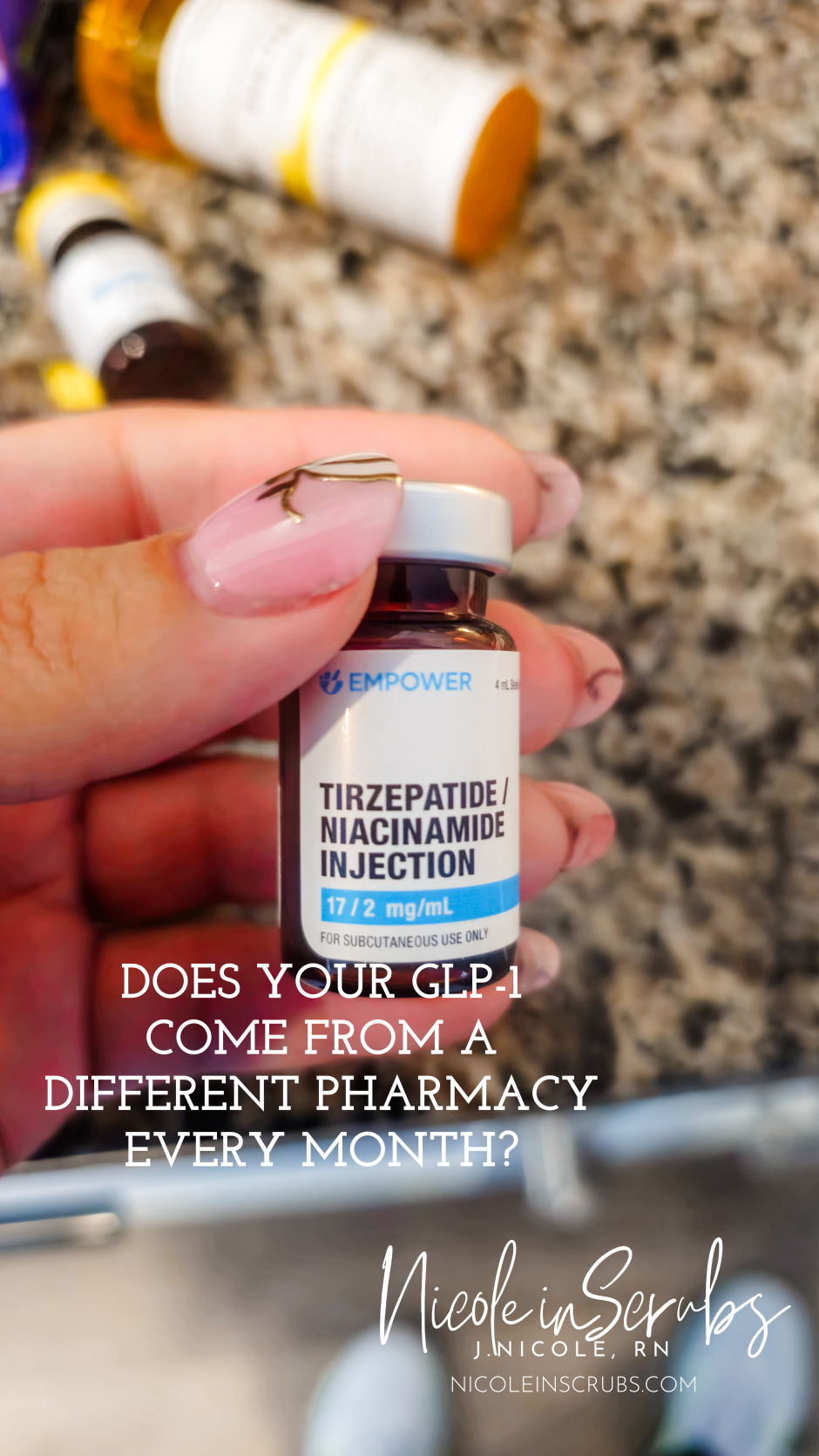
Pharmacy hopping is when your telehealth company sends your prescription to a different compounding pharmacy each month. Not because anything is wrong with your prescription. Not because your dose changed. Just because of whatever deal or arrangement they have going on that month.
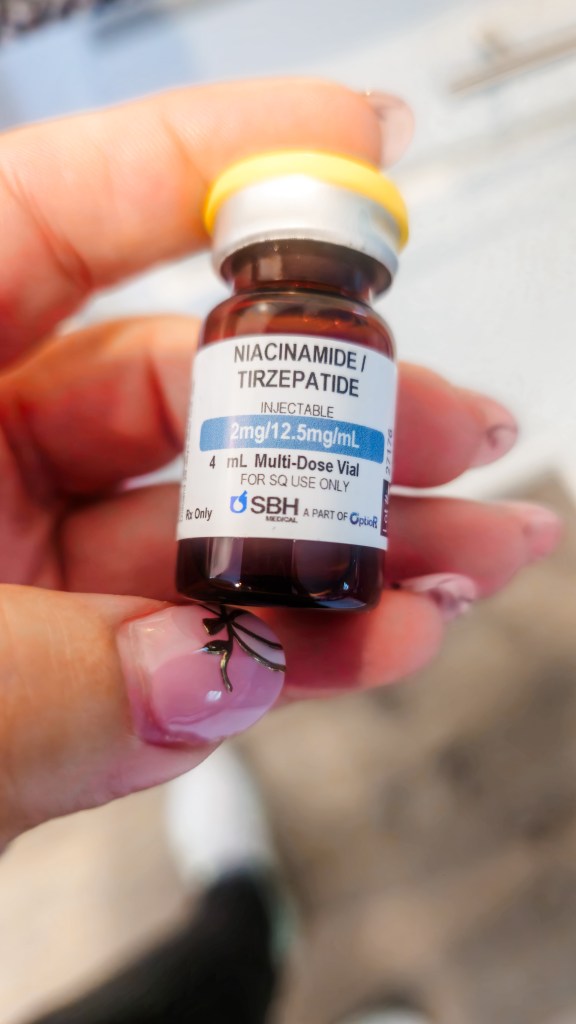
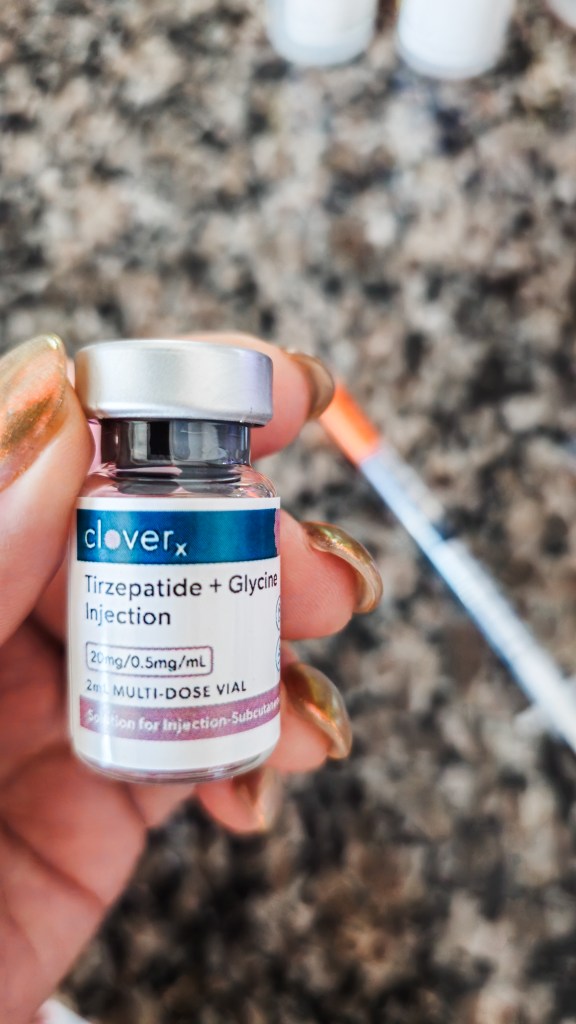
Here’s why that’s a problem. Every compounding pharmacy concentrates their GLP-1 medications differently. So even if your prescription says the exact same milligrams from one month to the next, the units, or volume, you draw up in your syringe could be completely different. Same dose on paper. Completely different injection in reality.
That’s exactly how dosing errors happen.
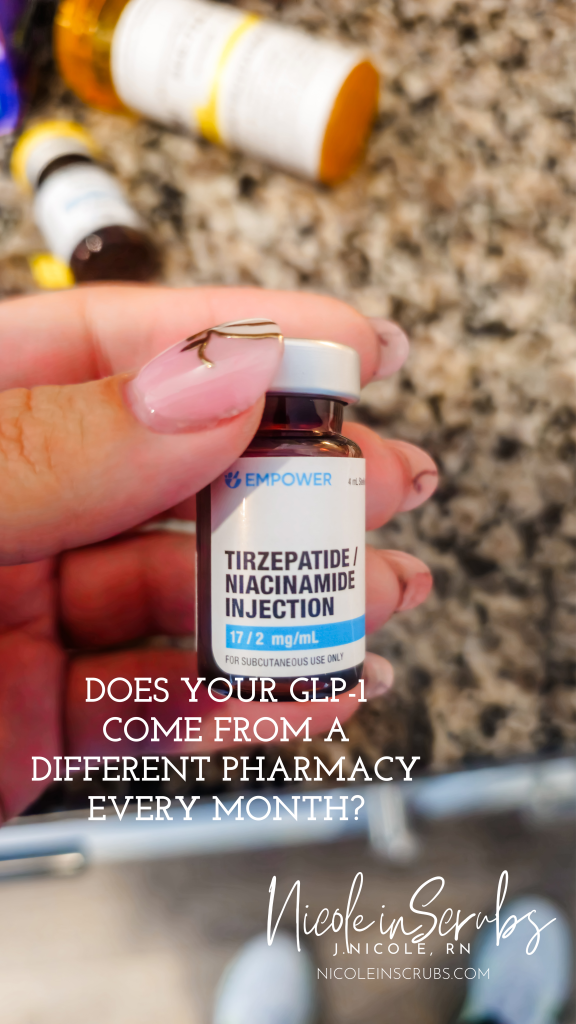
Different concentrations. Same prescription. This is what pharmacy hopping actually looks like.
What the FDA Is Actually Saying About This
This isn’t just my opinion as a nurse. The FDA has been raising the alarm on compounded GLP-1 safety for a while now.
As of April 2025, the FDA had received over 500 adverse event reports related to compounded semaglutide and nearly 500 reports concerning compounded tirzepatide. And that number is almost certainly higher because most state-licensed compounding pharmacies aren’t even required to submit adverse event reports.
The FDA has received multiple reports of adverse events, some requiring hospitalization, linked to dosing errors associated with compounded injectable semaglutide. These weren’t errors because people were careless. Many of them were errors because the concentration changed, and nobody clearly explained that.
The FDA estimates that 10 deaths and 100 hospitalizations may be linked to the use of compounded GLP-1 medications. And their responses are often reactive, meaning action is usually taken only after something has already gone wrong.
That last part is the part that keeps me up at night as a nurse.
A Real Example of What Can Go Wrong
I know someone personally who accidentally took four times her dose. Four times. It happened because her pharmacy changed, and she drew up the volume exactly the same as what she was used to… but the concentration was completely different. She felt absolutely awful.
And here’s the thing that really got me. I’m a NICU nurse. Dosage calculations are literally what I do every single day. Tiny babies depend on my accuracy. And I STILL panicked after my own pharmacy changed. I had to go back to my written notes to confirm I’d taken the right dose. I had gone over it so many times in my head that I couldn’t remember what I’d actually done.
If it can happen to me… it can happen to anyone.
Same medication. Different pharmacy. Different concentration. This is exactly what pharmacy hopping looks like in real life.
What to Look For in a Compounded GLP-1 Provider
Not all telehealth companies operate the same way. Here’s what actually matters when it comes to safety:
Pharmacy consistency. Your medication should come from the same pharmacy every single month. No exceptions. If your provider can’t tell you exactly which pharmacy fills your prescription, that’s a red flag worth paying attention to.
Standardized dosing. As your dose increases, your units should stay the same. Simple, consistent, easy to follow instructions reduce the risk of errors. If the math changes every time your dose changes, that’s unnecessary confusion and unnecessary risk.
Transparency. A trustworthy provider will tell you where your meds come from, how they’re compounded, and what quality standards their pharmacy follows. You have every right to ask those questions.
Why I Made the Switch
This is a big part of why I moved to EllieMD. One pharmacy, always the same one, every single month. Standardized dosing so the units stay consistent no matter what milligram you’re on. Simple. Clear. And a whole lot less room for the kind of errors that send people to the hospital.
This is what consistency looks like. Same pharmacy. Every single month.
Questions to Ask Your Telehealth Provider Right Now
Before your next injection, it’s worth picking up the phone or sending a message to ask:
Where is my prescription being filled? Is it always the same pharmacy? How is my dosing calculated and does that change if my concentration changes? What quality standards does your compounding pharmacy follow?
You deserve clear answers. If you’re not getting them, that tells you something too.
This post contains affiliate links and/or brand partnership content. I may earn a commission at no extra cost to you.
LET’S BE CLEAR ABOUT WHO I AM (AND WHO I’M NOT).
I’m a registered nurse and health coach who shares real, BS-free information about metabolic health, PCOS, perimenopause, and weight loss, because y’all deserve better than vague wellness fluff. But here’s what I need you to know: I am not YOUR nurse. Everything I share here is for educational purposes only. It is not medical advice, it’s not a diagnosis, and it doesn’t create a provider-patient relationship between us. Nothing on this site replaces the care of a licensed provider who actually knows your full health history. The opinions and content here are my own and do not reflect the views of my employer or the hospital where I work.
SCOPE OF PRACTICE.
As a nurse health coach, I can recommend over-the-counter products and supplements that may support your wellness goals. I don’t prescribe specific prescription medications. When it comes to GLP-1s and peptides, what I can do is talk about the science, what’s available, and what may be beneficial, so you can have an informed conversation with your licensed medical provider. The decision about what’s right for your body always belongs to you and your provider. Always consult your licensed provider before starting any prescription treatment — this is not something that should be DIY’d. These statements have not been evaluated by the FDA. Products discussed on this site are not intended to diagnose, treat, cure, or prevent any disease.
TRANSPARENCY.
I only recommend things I actually trust. Most are products I personally use, some are from partners whose clinical standards I believe in. I will always let you know when it’s something I haven’t tried personally. Some links on this site are affiliate links or part of brand partnerships, which means I may earn a commission at no extra cost to you. As an Amazon Associate I earn from qualifying purchases.
RESULTS + TESTIMONIALS.
Any testimonials or results shared on this site reflect individual experiences only. Results are not guaranteed and will vary based on individual circumstances.
Before we even talk about glycine, we need to talk about amino acids.
Amino acids are your body’s basic building blocks. Think of them like individual beads on a necklace. One bead by itself does not look like much. But string enough of them together in the right order, and suddenly you have a necklace that actually does something.
That is how proteins work in your body. Proteins are long chains made from amino acids, and proteins are responsible for almost everything happening behind the scenes.
Hormones. Muscle repair. Healing. Immune support. Neurotransmitters that decide whether you feel calm or wired. Skin. Joints. Metabolism. All of it starts with these tiny building blocks.
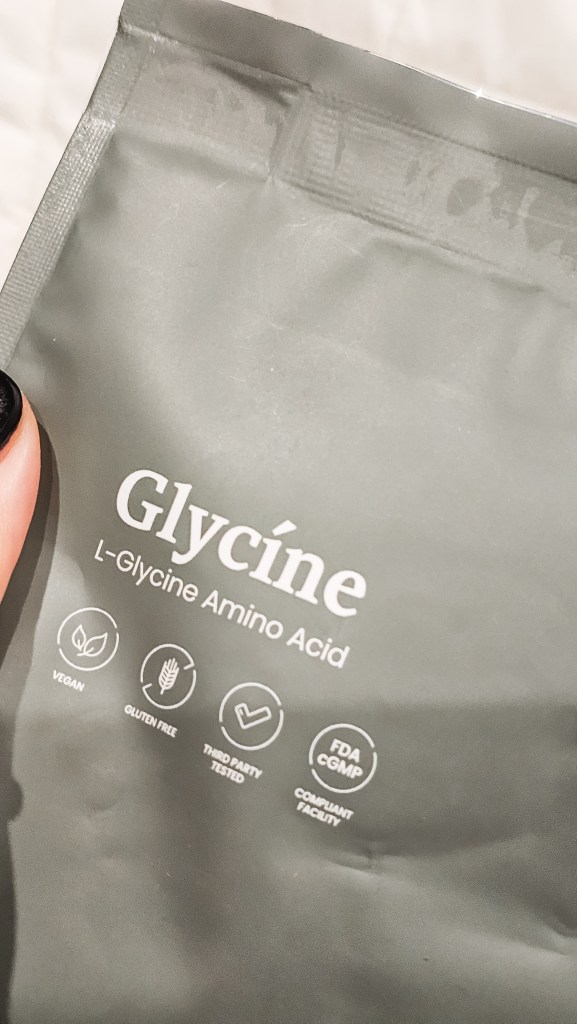
Glycine as an oral amino acid supplement, often used for sleep and recovery support.
Glycine is one of those amino acids. It is small, simple in structure, and often underestimated, but it plays an important role in several systems that matter during weight loss, maintenance, and overall metabolic health.
Glycine is often used as part of GLP-1 treatment plans to support sleep, recovery, and overall metabolic health during weight loss and maintenance.
What Glycine Does in the Body (Sleep, Recovery, and Nervous System Support)
Glycine is classified as a non-essential amino acid, which means the body can produce it on its own. That does not mean the body always produces enough to meet demand, especially during periods of stress, calorie restriction, poor sleep, illness, or increased physical demands.
It plays a role in calming the nervous system. Glycine acts as an inhibitory neurotransmitter in the brain, which means it helps quiet things down rather than rev them up. That is one reason it is commonly associated with deeper, more restorative sleep.
It supports collagen production. Collagen is a major structural protein in skin, joints, connective tissue, and the gut lining. Glycine makes up a large portion of collagen’s amino acid structure, so having adequate levels matters for recovery and tissue health.
It contributes to recovery and repair. Glycine is involved in protein synthesis and cellular repair processes. These processes are especially important during weight loss, when the body is adapting to metabolic changes and repairing tissue while using stored energy.
It supports metabolic and inflammatory balance. Glycine has been studied for its role in supporting insulin sensitivity and reducing oxidative stress. These effects are supportive in nature and vary between individuals.
This is why glycine tends to feel subtle. You do not take it and feel a dramatic jolt of energy. Instead, people often notice better sleep quality, smoother recovery, and a calmer, more regulated nervous system over time.
Glycine as a Standalone Supplement
L-glycine supplement used as needed for sleep, stress, or recovery support.
The key thing to understand here is flexibility. Oral glycine is something you can adjust based on how you feel. You can take it occasionally or more consistently, depending on your needs and your provider’s guidance.
It is supportive, not forceful. It works with your system rather than pushing it.
Glycine Added to a GLP-1 or GLP-1/GIP Injection
When glycine is compounded into a GLP-1 or GLP-1/GIP injection, it is not something you take “as needed.” It becomes part of a once-weekly dosing routine, providing consistent exposure over time rather than symptom-based use.
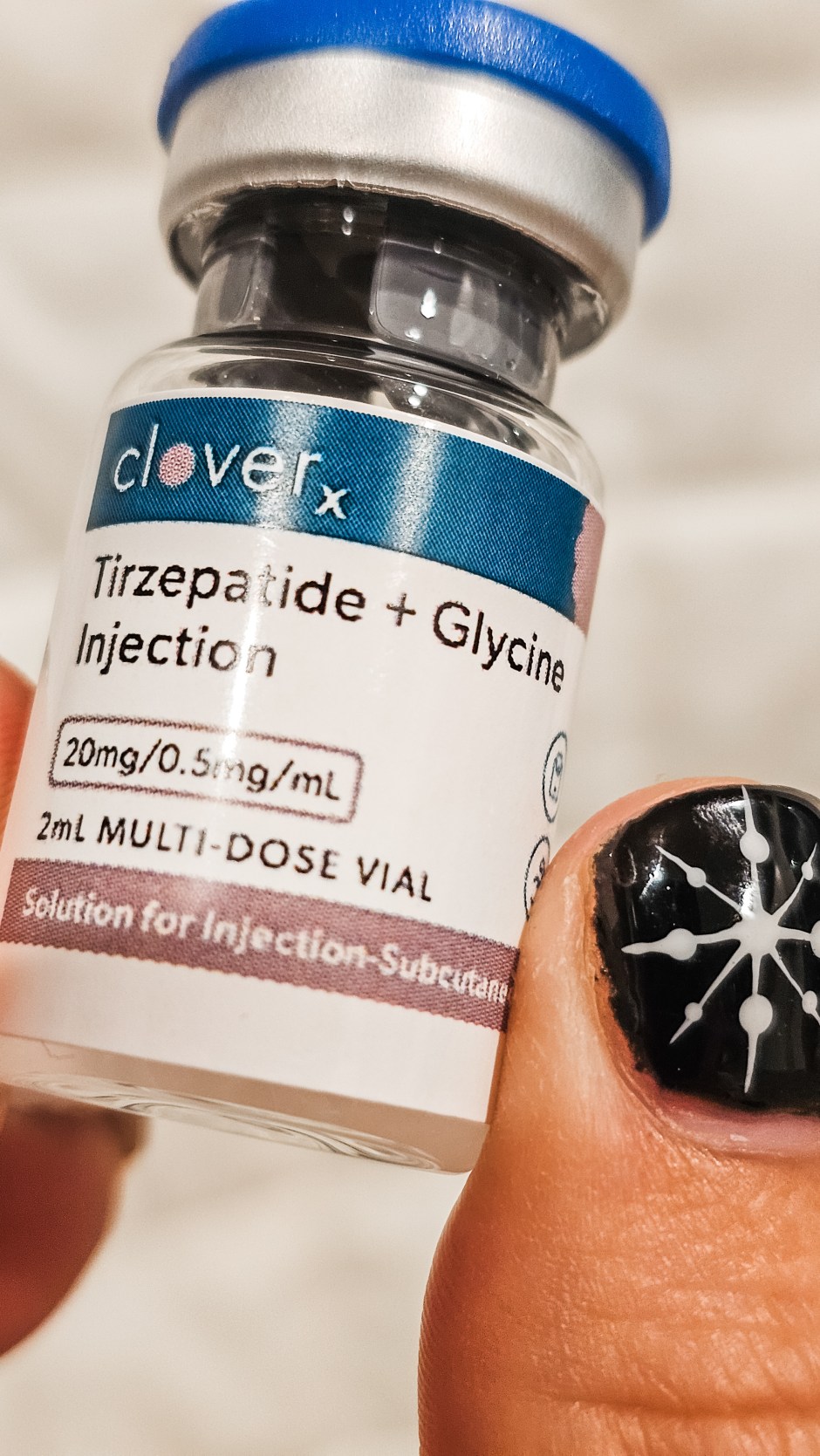
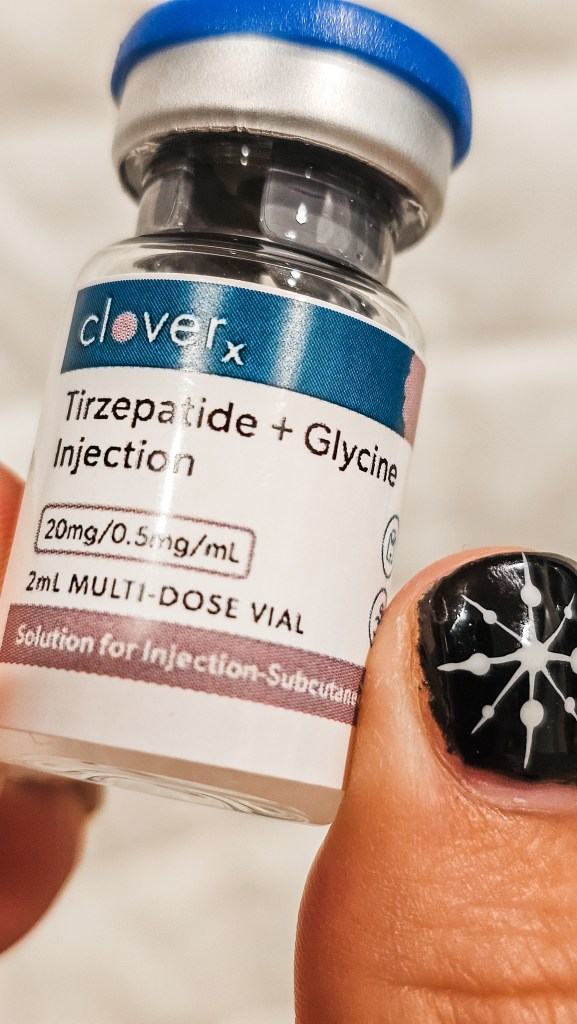
Compounded GLP-1/GIP medication with glycine added for supportive benefits.
Instead of responding to symptoms in the moment, this approach provides your body with a steady, predictable level of glycine week after week. That consistency allows your system to use it as background support rather than a quick fix.
During active weight loss, the body is under increased physiological demand. Hormones are shifting. Metabolism is adapting. Tissues are repairing. Muscle needs support. Sleep quality often takes a hit. The nervous system can feel stressed even when weight loss is going well.
This is where glycine quietly earns its keep.
By supporting sleep quality and recovery, glycine helps your body handle the demands of weight loss more smoothly. Better sleep supports appetite regulation, stress hormones, and overall metabolic health. Recovery support matters when your body is pulling from stored energy and adapting to change.
Glycine does not directly cause weight loss. Instead, it supports the systems that help the body tolerate and sustain the process more effectively.
Glycine in Maintenance and Long-Term Regulation
Maintenance is where glycine often shines the most.
Glycine supports these goals by promoting calmer nervous system activity, supporting recovery, and contributing to overall regulation rather than stimulation.
People in maintenance often care less about pushing and more about feeling regulated. Sleeping better. Recovering more easily. Feeling calmer in their body. Glycine supports those systems without adding stimulation or stress.
For many people, maintenance is where glycine’s steady, non-disruptive support becomes most noticeable.
Weekly Glycine vs As-Needed Glycine
Weekly GLP-1 injection with glycine included for consistent background support.
This is where the two approaches can work together rather than compete.
The glycine in a weekly injection provides consistent baseline support. It is always there, quietly doing its job.
Oral glycine can be layered in as needed. Think of it as situational support for sleep disruptions, stressful weeks, or extra recovery needs.
One approach is structured and routine. The other is flexible and responsive. Together, they can support different needs at different times.
Both serve a purpose, depending on where you are in your journey and what your body is asking for.
The Takeaway
Glycine is not flashy. It does not promise overnight transformations. It does not come with dramatic sensations or instant feedback.
What it offers instead is steadiness.
Better sleep quality. Smoother recovery. Nervous system support. Structural support through collagen. Quiet metabolic assistance while your body does the heavy lifting.
Whether it is built into a weekly GLP-1 or GLP-1/GIP injection or used as an oral supplement when needed, glycine works best when you let it be what it is.
Consistent. Supportive. Calm.
Professional Disclosure: I provide BS-free metabolic education as a registered nurse and health coach for women navigating PCOS, perimenopause, and stubborn weight loss. While I share evidence-based research and nurse-informed support, please remember that I am not your nurse. The content shared here is for educational purposes only. It does not constitute medical advice, diagnosis, or treatment, and it does not establish a provider-patient relationship. Nothing on this site is a substitute for care from a licensed provider who knows your full health history. All opinions and content shared on this platform are my own and do not reflect the views or endorsements of my employer or the hospital where I am employed.
Scope of Practice and FDA: Per professional coaching guidelines, I may recommend over the counter (OTC) medications or supplements to support your wellness goals. However, I do not prescribe or recommend specific prescription medications. For prescription options, including GLP-1 tools, my role is to help you understand the available science so you can have an informed discussion with your licensed healthcare provider. These statements have not been evaluated by the Food and Drug Administration. Products discussed are not intended to diagnose, treat, cure, or prevent any disease, and medical treatments require professional oversight.
Trust and Transparency: I only recommend products I trust. Most are items I use personally, while others are shared based on my professional trust in the clinical standards of partners like Ellie MD. Some links are affiliate links or part of brand partnerships, which means I may earn a commission at no extra cost to you. As an Amazon Associate I earn from qualifying purchases.
I hear it every single day. You are exhausted, you are experiencing brain fog, and you feel like your body is fighting against you. You tell yourself you will prioritize your health “after the holidays” or “in January.”
But as a nurse, I am here to tell you that exhausted is not a personality trait. And accepting that feeling drained is “just a part of aging” is not an option.
If you have been curious about the buzz surrounding GLP-1s but are hesitant because you don’t want to just “lose weight”—or if you are in that perimenopause transition and looking for a way to feel like yourself again—it is time to look at the science of microdosing.
This isn’t about a quick fix. It is about longevity science. And right now, there is a special opportunity to start this protocol with a massive advantage (more on that at the end).
Think of microdosing as whispering to your metabolism instead of screaming at it. We aren’t trying to completely silence your appetite or force rapid changes. We are supporting the body’s natural functions to correct metabolic dysfunction.
11 Benefits of Microdosing GLP-1s (That Have Nothing to Do with the Scale)
While weight management is a fantastic side effect, the systemic benefits of this peptide therapy are what truly excite me as a healthcare provider.
1mproved Insulin Sensitivity It helps regulate blood sugar levels, making it easier to support insulin sensitivity. This is vital for reducing the risk of metabolic syndrome, which becomes much more common during perimenopause.
Hormonal Balance Support For my perimenopause and menopause ladies, this is huge. It can help manage the hormonal imbalances related to insulin and estrogen. It can also positively influence cortisol levels, reducing the toll chronic stress takes on your body.
Brain Health & Cognitive Function Brain fog is one of the biggest complaints I hear from women in midlife. GLP-1s have neuroprotective benefits that support cognitive function and mental clarity.
Cardiovascular Health It improves lipid profiles by supporting healthy cholesterol levels and reducing blood pressure by improving vascular function.
Quiet the “Food Noise” Microdosing helps suppress that constant mental chatter about food. It promotes satiety so you can make conscious, healthy eating habits without feeling deprived.
Gut Health By slowing gastric emptying, it improves digestion and nutrient absorption. A healthier gut microbiome is linked to better immunity and reduced inflammation.
Anti-inflammatory Effects Systemic inflammation is a root cause of so many chronic issues, including arthritis and skin aging. Lowering inflammation supports your whole body.
Muscle Maintenance Unlike aggressive dieting, microdosing helps preserve muscle mass. This is essential for longevity and strength as we age.
Metabolic Health Boost It enhances overall metabolic function, teaching your body to use fat as an energy source more efficiently.
Emotional Well-Being Stabilizing blood sugar levels has a direct impact on your mood. This can help reduce the anxiety and stress often associated with feeling out of control of your health.
Long-Term Prevention This is a proactive tool. It supports longevity by addressing core health issues that become prevalent in midlife, promoting overall vitality.
NAD+ is a vital coenzyme that fuels your cells. As we age, our natural levels drop, leading to fatigue and slower cellular repair. Supplementing with NAD+ provides a “cellular battery” boost.
It boosts energy by converting nutrients into ATP.
It supports DNA repair to slow the aging process.
It improves metabolism to assist with weight management.
The “Nurse’s RX” Synergy
Why do I recommend these two together? Because they solve the puzzle from two different angles. A common struggle when changing your metabolism is temporary fatigue. NAD+ directly counteracts this by boosting your cellular energy. While the Microdose regulates your hormones and insulin, the NAD+ optimizes the cellular machinery that burns the fuel. It is the ultimate “Metabolic Momentum.”
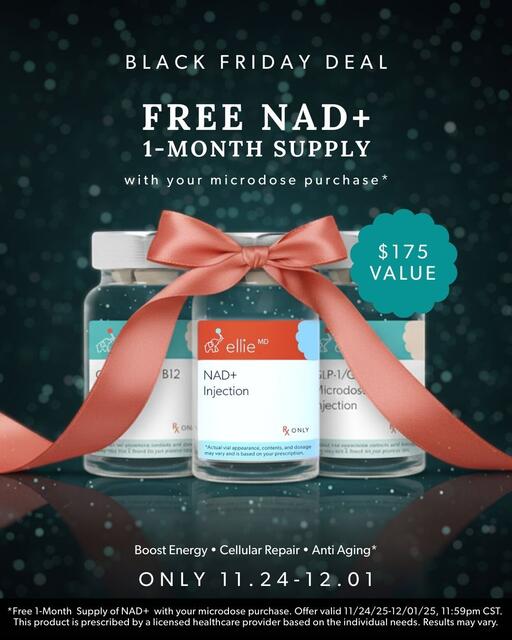
Don’t miss the biggest wellness deal of the year: Get a free month of NAD+ ($175 value) when you start your longevity microdose protocol. Valid Nov 24 – Dec 1.
You do not have to go “all in” to see changes. You just have to start. This is your chance to get a massive boost while dipping your toes into a protocol that addresses the root causes of how you feel.
Six months from now, you will be so glad you didn’t wait for January.
Professional Disclosure: I provide BS-free metabolic education as a registered nurse and health coach for women navigating PCOS, perimenopause, and stubborn weight loss. While I share evidence-based research and nurse-informed support, please remember that I am not your nurse. The content shared here is for educational purposes only. It does not constitute medical advice, diagnosis, or treatment, and it does not establish a provider-patient relationship. Nothing on this site is a substitute for care from a licensed provider who knows your full health history. All opinions and content shared on this platform are my own and do not reflect the views or endorsements of my employer or the hospital where I am employed.
Scope of Practice and FDA: Per professional coaching guidelines, I may recommend over the counter (OTC) medications or supplements to support your wellness goals. However, I do not prescribe or recommend specific prescription medications. For prescription options, including GLP-1 tools, my role is to help you understand the available science so you can have an informed discussion with your licensed healthcare provider. These statements have not been evaluated by the Food and Drug Administration. Products discussed are not intended to diagnose, treat, cure, or prevent any disease, and medical treatments require professional oversight.
Trust and Transparency: I only recommend products I trust. Most are items I use personally, while others are shared based on my professional trust in the clinical standards of partners like Ellie MD. Some links are affiliate links or part of brand partnerships, which means I may earn a commission at no extra cost to you. As an Amazon Associate I earn from qualifying purchases.
Every time I share about my GLP-1 journey, the comments flood in. Some supportive. Some curious. Some skeptical.
And almost every time, someone says it:
“But isn’t that cheating?”
Let’s talk about that.
Because if we don’t call glasses cheating for eyesight 👓 or insulin cheating for diabetes 💉 then why do we treat GLP-1s any differently?
I’m Niki — NICU nurse, wellness advocate, and creator behind Nicole in Scrubs. 💜 I’ve seen how often people blame themselves for health struggles that are really rooted in biology. That’s why I share my GLP-1 journey so openly — to show what happens when science and self-compassion finally meet.
As a nurse, I’ve seen this over and over again. People blaming themselves for biology that’s been quietly working against them.
When hormones like GLP-1 (glucagon-like peptide-1) are out of balance, your hunger cues, fullness signals, and blood sugar control all get mixed up. The result? A body that constantly fights to regain weight no matter how much you “eat less and move more.”
GLP-1 medications help restore communication between your gut, brain, and pancreas. They allow your body to do what it was always meant to do. That’s not cheating. That’s science helping your body function the way it should.
💜 Why I Chose to Partner with Ellie MD
When I started sharing my own journey online, I kept getting one question: “How do I even get started?”
Professional Disclosure: I provide BS-free metabolic education as a registered nurse and health coach for women navigating PCOS, perimenopause, and stubborn weight loss. While I share evidence-based research and nurse-informed support, please remember that I am not your nurse. The content shared here is for educational purposes only. It does not constitute medical advice, diagnosis, or treatment, and it does not establish a provider-patient relationship. Nothing on this site is a substitute for care from a licensed provider who knows your full health history. All opinions and content shared on this platform are my own and do not reflect the views or endorsements of my employer or the hospital where I am employed.
Scope of Practice and FDA: Per professional coaching guidelines, I may recommend over the counter (OTC) medications or supplements to support your wellness goals. However, I do not prescribe or recommend specific prescription medications. For prescription options, including GLP-1 tools, my role is to help you understand the available science so you can have an informed discussion with your licensed healthcare provider. These statements have not been evaluated by the Food and Drug Administration. Products discussed are not intended to diagnose, treat, cure, or prevent any disease, and medical treatments require professional oversight.
Trust and Transparency: I only recommend products I trust. Most are items I use personally, while others are shared based on my professional trust in the clinical standards of partners like Ellie MD. Some links are affiliate links or part of brand partnerships, which means I may earn a commission at no extra cost to you. As an Amazon Associate I earn from qualifying purchases.