What Is KLOW? Peptide FAQs from a Registered Nurse | BPC-157, TB-500, KPV, GHK-Cu

Some links on my site are affiliate and brand partner links. I may earn a commission at no extra cost to you. Nothing here is medical advice.
JUMP TO:: MEDICAL, BRAND PARTNER, & AFFILIATE LINK DISCLOSURES

• • •

SKIP TO:: GLOW | GUT | RECOVER | HOW IT WORKS

I’m J. Nicole, RN… but my friends and family call me Niki. This page exists because comment sections and captions are a terrible place to explain anything that matters. Every answer I can put on a webpage is on this page. The ones I can’t (pricing, your specific situation, the stuff that deserves an actual conversation) are one text away. Read what I can answer publicly, and text me the rest. I answer every text myself, usually within 24 hours, unless I’m at the hospital keeping tiny humans alive.


: : : GLOW : : :

What Is KLOW? (BPC-157, TB-500, KPV + GHK-Cu for Skin Renewal)

Can peptides improve skin quality?

Your skin is an organ. It repairs itself from the inside, using resources your body either has or doesn’t have. And that “lit from within” thing everyone is chasing? It’s a repair process. Not a serum. Not a treatment. A process your body is either supported in doing… or quietly failing at while you buy more products.

What is KLOW and how is it prescribed?

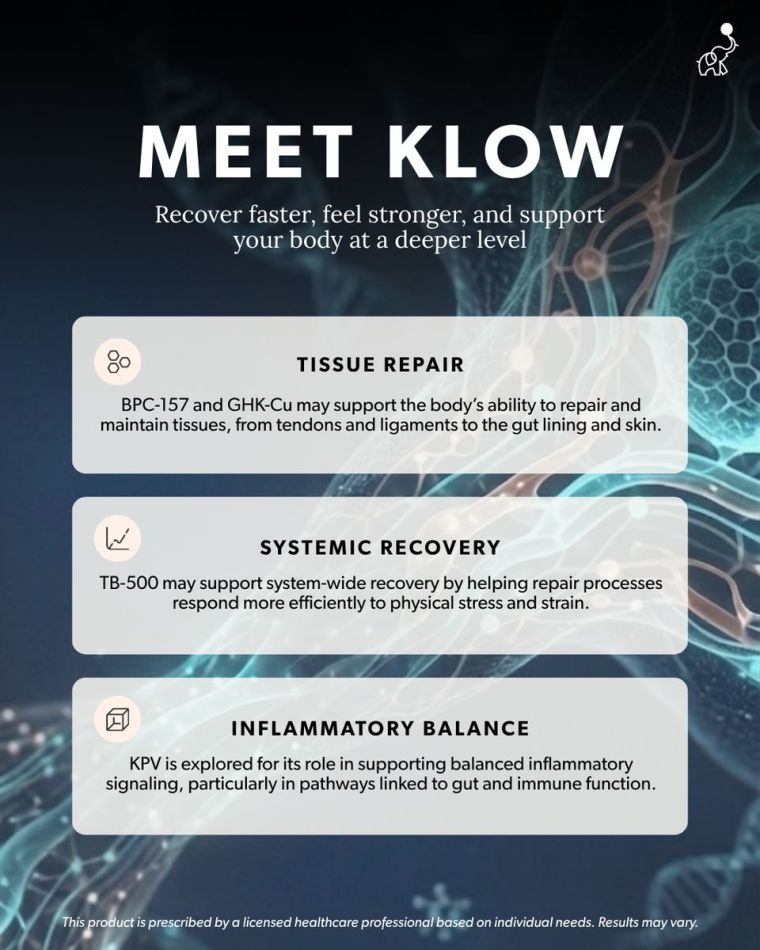
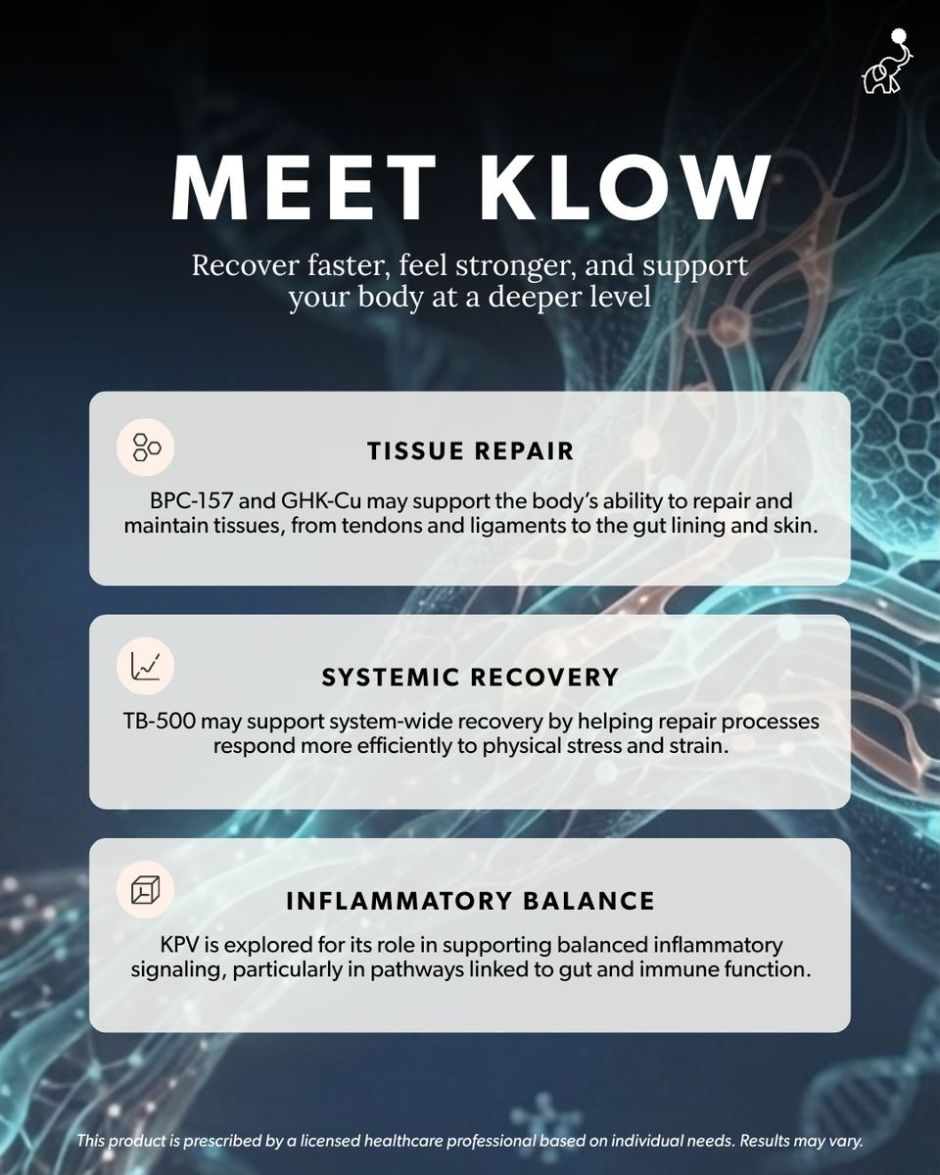
It’s a physician-prescribed compounded formulation through EllieMD. It contains four peptides: BPC-157, TB-500, KPV, and GHK-Cu (a naturally occurring copper peptide). Together they’re being studied for their roles in the body’s natural renewal processes… skin repair pathways, gut lining support, and overall recovery. This is a prescription. A licensed physician reviews your intake and decides if it’s appropriate for you. I don’t sell it, I can’t hand it to you, and you should be suspicious of anyone online who acts like they can.

Peptides vs. med spa treatments: what’s the difference?

Almost everything on the menu there works from the outside in. Peels, lasers, injectables… surface down. This is inside out. It’s supporting what your body uses to do its own repair work. I’m not telling you to cancel your appointments (I have a standing one with my nail tech, I get it). I’m telling you there’s an entire layer underneath all of it that nobody at the front desk is going to bring up.

Are prescription peptides legitimate?

Peptides sound like something from a bodybuilding forum. Your skepticism is correct; please keep it. Here’s what separates this from the sketchy corners of the internet: a medical intake, reviewed by a licensed physician, filled by a dedicated compounding pharmacy, shipped to your door, with the provider making every medical decision. Compounded medications are not FDA-approved, and anyone who won’t say that sentence to you plainly is someone to walk away from. No physician approval, no product. That’s the whole reason I partnered with this platform and not the “research use only” websites.

How is KLOW taken, and for how long?

Protocols typically run in cycles over a few months. Your exact plan comes from the physician, not from me and definitely not from a webpage.

What results can I expect from KLOW?

I’m not going to promise you anything, and I need you to hear that with respect. Individual results vary, and anyone guaranteeing outcomes is lying to you. What I can do: tell you what these peptides are being studied for, walk you through the process, and share my own experience over text.

Text Me About GLOW
Text me, and you’ll get a response from a real human… usually within 24 hours, sometimes longer if I’m at the hospital keeping tiny humans alive.

BACK TO TOP OF PAGE


: : : GUT : : :

KLOW for Gut Health: How Peptides Support the Gut Lining

Why do gut symptoms persist after elimination diets and probiotics?

Let me guess how it’s gone so far. You cut gluten. Then dairy. You did the elimination diet, the food journal, the fancy probiotics, the gut powder from the influencer who swore by it. You have spent REAL money. And you still feel puffy, bloated, and vaguely off, and your doctor’s big contribution was “try more fiber.” Sooo… has anyone, at any point, talked to you about the gut lining itself? The actual tissue doing the work? No? Just more yogurt recommendations? Cool. Sit down, y’all, this section is for you.

What is gut barrier support?

What’s the different angle here? Gut barrier support. Not what goes through your gut… the lining it all passes through. There’s a growing body of research on supporting gut barrier integrity directly, and that is a completely different conversation than the diet-and-probiotic loop you’ve been stuck circling. The product I point people to is called KLOW, through EllieMD.

What is KLOW and how is it prescribed?

It’s a physician-prescribed compounded formulation through EllieMD. It contains four peptides: BPC-157, TB-500, KPV, and GHK-Cu (a naturally occurring copper peptide). Together they’re being studied for their roles in the body’s natural renewal processes… skin repair pathways, gut lining support, and overall recovery. This is a prescription. A licensed physician reviews your intake and decides if it’s appropriate for you. I don’t sell it, I can’t hand it to you, and you should be suspicious of anyone online who acts like they can.

Is KLOW for skin or gut? (Both)

Same product, and no, you didn’t catch me in something. KLOW contains BPC-157, TB-500, KPV, and GHK-Cu. BPC-157 was actually first identified in gastric juice (your stomach makes something like it on its own, which is the part that got me reading in the first place) and has been explored in gastrointestinal research for its role in gut lining integrity. KPV is being studied for its role in inflammatory signaling. So gut support and skin renewal aren’t two products with one name… they’re one formulation being studied across connected systems. Your gut and your skin were never separate departments. Nobody just told you that.

Will KLOW help my bloating or food reactions?

I honestly can’t tell you, and I mean can’t. I haven’t seen your labs, I don’t know your history, and I’m a nurse, not your prescribing provider. What actually happens: you complete a medical intake, a licensed physician reviews your whole picture, and they decide if this is appropriate for you. Annoying? Maybe. But it’s the correct answer, and you’ve been burned by enough people selling certainty.

How is this different from gut supplements?

Because every supplement you’ve ever bought was you, alone, guessing at 11 pm. This has TWO layers of screening between you and the product: the medical intake itself will stop you before purchase if certain flags come up, and then a licensed provider personally reviews your whole picture… and if they decide it’s not right for you, you get a full refund. Which, let’s be real, is more than the supplement aisle ever did for you.

How is KLOW taken, and for how long?

Cycles, typically over a few months, with the plan set by the physician. Text me, and I’ll walk you through what it actually looks like week to week.

Text Me About GUT
Text me, and you’ll get a response from a real human… usually within 24 hours, sometimes longer if I’m at the hospital keeping tiny humans alive.

BACK TO TOP OF PAGE


: : : RECOVER : : :

What Is the Wolverine Stack? (BPC-157 + TB-500 for Recovery)

Who is the Wolverine Stack for?

The one still doing all the things… golf, lifting, chasing kids, the 10K steps… whose bounce-back keeps getting slower. The knee with opinions. The shoulder that never fully forgave you for 2019. Sore on Tuesday from something you did Saturday. You’re not fragile, and you are not done. Your recovery just needs actual support instead of another foam roller you’ll use twice.

What peptides are in the Wolverine Stack?

The Wolverine stack, through EllieMD, is a physician-prescribed compounded protocol combining two peptides, BPC-157 and TB-500, being studied for their roles in the body’s natural recovery pathways… connective tissue, tissue remodeling, physical stress response. The nickname tells you the theme.

AVAILABLE IN BOTH INJECTIONS AND CAPSULES

Is the Wolverine Stack only for athletes?

Recovery is not an athlete thing. It’s a body thing. Every workout, every long shift, every weekend project ends with your body doing repair work overnight, and how well that repair goes is quietly deciding how you age. Athletes just talk about it more because someone pays them to.

Will peptides heal an injury?

Will it fix my knee/shoulder /old injury? No one should tell you that, including me, including anyone on the internet. This is not a replacement for physical therapy, orthopedics, or a real diagnosis… if something is injured, please go get it looked at. What this is: support for your body’s own recovery processes, prescribed by a licensed physician who reviews your intake first and decides if it’s appropriate.

KLOW vs. Wolverine Stack: which is right for me?

Depends on your whole picture, which is exactly what text is for. Short version: the Wolverine stack is BPC-157 and TB-500, focused on recovery. KLOW is those same two peptides plus KPV and GHK-Cu, so it covers the recovery foundation plus gut and skin renewal support. A lot of people walk in through the recovery door and realize mid-conversation that their picture is bigger than one achy knee. Text me what your body’s been loudest about lately, and I’ll send you both so you can compare…

How does the Wolverine Stack protocol work?

Cycled over months, more than one form available, exact plan set by your physician. The day-to-day details are a text conversation.

Text Me About RECOVER
Text me, and you’ll get a response from a real human… usually within 24 hours, sometimes longer if I’m at the hospital keeping tiny humans alive.

BACK TO TOP OF PAGE


: : : HOW IT WORKS : : :

How Peptide Telehealth Works: Intake, Physician Review & Prescription

What is the process from start to finish?

Text me. I answer your questions first… no script, no pressure, no “hey girl” energy, I promise. When you’re ready, I send you the link to complete a medical intake, and from there your health history gets reviewed TWICE. First, the intake form itself has built-in checkpoints… certain flags will stop you right there and won’t even let you purchase. That’s not a glitch; that’s the system protecting you. Second, a licensed provider personally reads through everything, looking for anything that might have slipped past the form’s checkpoints. If the provider decides you’re not a candidate at that stage, you get a full refund. If you are a candidate, your provider messages you directly with your dosing and injection instructions and your planned protocol. Everything ships from our dedicated 503A compounding pharmacy straight to your door in reusable, environmentally friendly cold packaging, with all the supplies you need for injecting included. And you’re not on your own after that: you get unlimited messaging with your dedicated provider for the entire duration of your protocol, access to our customer community, and 1:1 messaging with me as your personal health coach.

Can a registered nurse prescribe peptides?

No. Only a nurse who is a nurse practitioner (NP) can. I’m a registered nurse and a brand partner… I educate, I share my own experience, and I point you toward a platform I trust. A licensed physician makes every single prescribing decision. If anyone in a position like mine ever implies otherwise, run.

Who should not take peptides?

Is this for everyone? No, and I want to be loud about this one: the physician screens EVERY intake, and there are people these aren’t appropriate for, including anyone pregnant or breastfeeding and people with certain health conditions. I don’t screen you, and I don’t decide. That’s the provider’s job, and the fact that someone can be told no is exactly what makes the whole thing trustworthy.

What if the physician says I’m not a candidate?

Then it’s no, and that no means the system works. A platform that approves everybody isn’t healthcare; it’s a checkout page with a stethoscope logo. If you get a no, text me anyway… There may be other directions worth talking through.

How much does KLOW & The Wolverine Stack cost?

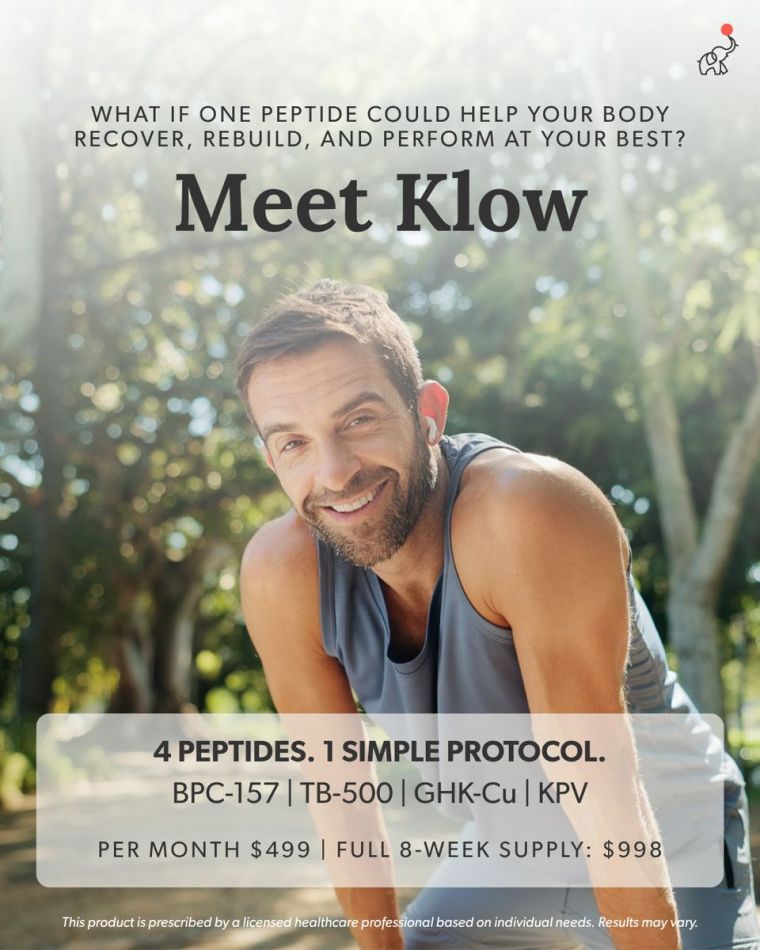
Straight answer: they have clear, listed pricing. No hidden fees, no “call for a quote” games. But you won’t find price tags on my website, and here’s the actual reason: there’s a line between a nurse educating you about something and a nurse advertising prescription products… and posting prices next to product names would put this page on the wrong side of it. My site exists to answer your questions. Pricing lives with the platform that sets it (they set it, not me, so anything I posted here could go stale anyway). Text me, and I’ll send you exactly where to see current pricing, plus the things a price tag can’t tell you… Payment options exist, and HSA/FSA works. Real numbers from a real human, usually within 24 hours, sometimes longer if I’m at the hospital keeping tiny humans alive.

Text me your questions!

BACK TO TOP OF PAGE

What Are Peptides? A Nurse Explains Why Everyone Is Suddenly Talking About Them

Some links on my site are affiliate and brand partner links. I may earn a commission at no extra cost to you. Nothing here is medical advice.
JUMP TO:: MEDICAL, BRAND PARTNER, & AFFILIATE LINK DISCLOSURES

If you’ve been seeing people talk about peptides, peps, peppers, pepper gardens, or some weird version of the word peptide typed like it came from a ransom note, and you’ve been wondering what in the actual wellness internet is going on, you aren’t alone. It’s come to my attention that a lot of people are watching us talk about peptides like we have two heads because they have no clue what we’re even talking about or why they seem to be everywhere right now. And honestly? Fair.

Before I became more involved in the wellness side of things, I understood the basic science of peptides, but I didn’t fully understand how they were being used in longevity, skin health, energy support, recovery, metabolic health, or the newer wellness conversations happening online. I knew peptides existed in the body. I knew they mattered. But I wasn’t sitting around casually talking about peptide therapy over coffee like that was a normal Tuesday.

Why is everyone talking in code about peptides?

Before we even get into what peptides are, we need to talk about why you might see people calling them peps, peppers, pepper garden, 🌶️🌊, or some bizarre character version like Pɛp+ḷꝺΣ. It can look ridiculous from the outside, and to be clear, sometimes it IS ridiculous. But there’s a reason for it.

Social media platforms are not great at telling the difference between someone in the healthcare or wellness space providing legitimate educational content and someone selling gray market research peptides like they’re selling illegal drugs on the corner. So the people who are trying to talk about this responsibly often end up getting creative with language because platform filters can flag the topic before even getting to the context.

That doesn’t mean every coded post is trustworthy, and it definitely doesn’t mean every person using normal wording is unsafe. It just means the online peptide conversation has gotten weird because the internet made it weird. Shocking, I know.

So what are peptides?

Peptides are already in your body. They’re not some random wellness invention someone cooked up because they ran out of collagen powder to sell. Peptides are short chains of amino acids, and amino acids are the building blocks your body uses to make proteins.

Think of it like language. Amino acids are the letters. Peptides are short words or phrases made from those letters. Proteins are the longer sentences, paragraphs, or full instruction manuals made from those same letters arranged in more complex ways. That’s the simplest way to understand the relationship without turning this into a biochemistry class, which I promise nobody asked for today.

Peptides can act like messengers in the body. Depending on the peptide, that message may relate to skin health, collagen support, recovery, metabolic signaling, appetite signaling, cognitive function, tissue support, immune signaling, or cellular repair. That’s why the phrase “I take peptides” is honestly not very specific. It’s kind of like saying, “I take medication.” Okay… which one? For what? Through what route? Under whose guidance? For what goal?

What Are Peptides Used For? It Depends on the Peptide

This is one of the biggest things people miss when they first start hearing about peptides. Peptides aren’t all the same. They don’t all do the same job, and they aren’t all used for the same reason.

Some peptides are talked about for energy and cellular function. Some are being explored for skin, collagen, and tissue support. Some come up in conversations around muscle recovery, joint comfort, or workout recovery. Some are discussed in cognitive wellness. Others are connected to metabolic health and appetite signaling. Even within the same general category, two different peptides may work through completely different mechanisms in the body.

That’s why I don’t love when people ask, “What peptide should I take?” as if there is one universal answer. The better question is, “What am I trying to support, and what does my health history actually look like?” Because the peptide conversation for a woman who’s exhausted but sleeping fine may look very different from the peptide conversation for a woman dealing with skin changes, hair thinning, workout recovery issues, brain fog, or metabolic changes.

Why Women Over 40 Are Interested in Peptide Therapy for Energy, Skin, and Recovery

A lot of women aren’t peptide curious because they want another trendy wellness thing. They’re curious because something changed, and the old tools aren’t working the way they used to.

Maybe your skincare routine used to be enough, and now your skin still looks tired no matter how consistent you are. Maybe the Botox still smooths the lines, but it doesn’t fix the dullness, the skin laxity, the crepey texture, the volume loss, or the fact that your face still looks tired underneath it all. Maybe you’re working out, eating well, sleeping okay, and still dragging by 2pm. Maybe your recovery from workouts feels slower than it used to. Maybe your hair feels thinner, your body composition is changing, your brain feels foggy, or maybe your skin just doesn’t bounce back the way it used to. It’s annoying as hell because you’re still doing the skincare, the SPF, the appointments, all of it.

Then you go to your doctor, get the usual labs, and hear, “Everything looks fine.” Which is frustrating because “fine” does not explain why you feel exhausted, your skin looks different, your workouts take longer to recover from, and your body responds differently, even though your routine hasn’t changed.

That is where a lot of women start researching peptides. Not because they’re trying to become one of the bodybuilding biohacker bros. Not because they want to chase every shiny wellness trend. They’re trying to understand what’s happening under the surface and whether there are smarter options than just doing more of the same.

Are peptides FDA approved?

This is where we need to be specific, because “peptides are not FDA approved” is too broad.

Some FDA approved medications are peptide based or peptide related, like GLP-1s. But many of the peptides being discussed online in the wellness, longevity, recovery, skin, and performance spaces are not FDA approved medications. Compounded medications are also not FDA approved, which means the FDA does not evaluate them for safety, effectiveness, or quality before use.

That can sound scary, but it doesn’t automatically mean something is bad or unsafe. It means the details matter a lot. It means you need to care about who is evaluating you, where the medication is coming from, whether the pharmacy is licensed and regulated, whether testing is being used to verify quality, whether the instructions are clear, and whether there is actual support if you have questions or concerns.

This isn’t the category where I want anyone playing mystery vial roulette because a website had sophisticated branding and a price that looked too good to be true.

I know “not FDA approved” can sound scary, so let’s put that phrase in context. Dietary supplements, including many vitamins, minerals, and wellness products people buy every day, are also not FDA approved for safety and effectiveness before they hit the market. That doesn’t automatically make them bad, but it does mean the quality, sourcing, claims, testing, and company behind them matter.

The same general idea applies here, but with an important distinction: many peptides being discussed in wellness are not supplements. They are often compounded medications, which means they belong in a more medically guided lane. Compounded medications are not FDA approved, and that is exactly why provider review, a licensed pharmacy, clear instructions, and testing standards matter so much.

How to Choose a Peptide Source: Provider Review, Licensed Pharmacies, and Quality Testing

You can find almost anything online. That doesn’t mean you should put it in your body.

One of the biggest issues with peptides right now is that a lot of people don’t understand the difference between medically guided options and research grade gray market products. Some websites look polished. Some use medical language. Some have branding that feels legitimate at first glance. But clean branding doesn’t automatically mean provider oversight, proper pharmacy standards, clear dosing instructions, sterility, potency, purity, or support.

My green flag list is boring on purpose. I want licensed provider review. I want a licensed and regulated compounding pharmacy. I want third party testing for potency and purity. I want clear instructions. I want actual support if I have questions or concerns. I want transparency around what is compounded and what isn’t FDA approved. I want the process to feel medically guided, not like someone tossed you into the internet wilderness with a vial and a prayer.

That is the difference between “this exists online” and “this is a source I’d actually be comfortable putting my name next to.”

Why I Use EllieMD for Provider-Reviewed Peptide and Wellness Options

I personally use EllieMD, and I’m also a brand partner with them. That means yes, I may earn from qualifying orders through my link. It also means I’m putting my name, my nursing background, and my personal standards next to the company I’m choosing to talk about publicly.

The reason I talk about EllieMD isn’t because peptides are trendy. It’s because I wanted a source that checked the boxes I care about as a nurse and as a woman using some of these tools myself. And I wanted to have a trusted source to be able to recommend when I’m asked questions about peptides. Licensed provider review matters. A regulated pharmacy process matters. Clear instructions matter. Support matters. Quality standards matter. And not making people feel like they have to decode this entire category alone matters too.

For the woman who is already investing in skincare, med spa treatments, wellness tools, supplements, fitness, and better health, this is not about finding the cheapest option. It’s about asking whether the next investment actually makes sense, whether it is medically guided, and whether it is addressing the thing you’re actually trying to support.

Do peptides replace your doctor, labs, skincare, nutrition, or strength training?

No. And anyone making it sound that simple is already making me nervous.

Peptides are not a replacement for medical care. They are not a replacement for appropriate labs, nutrition, strength training, sleep, hormone evaluation, skincare, or an actual provider who understands your health history. They are one category of tools that may be worth discussing depending on your goals, medications, history, labs, budget, and what you are actually willing to do consistently.

The right conversation depends on the person. One woman may be looking at peptides because she’s sleeping fine but still exhausted. Another may be more focused on skin changes, collagen support, hair thinning, slower workout recovery, brain fog, libido, sleep, or metabolic support.

And for some people, peptides may not be the right fit at all. That is exactly why provider review matters.

That is why provider review matters. That is why your health history matters. And that is why I will never be the person telling everyone on the internet to take the same thing because one person had a good experience.

How to Know Which Peptide Might Fit Your Wellness Goals

If you’re new to peptides, I wouldn’t start with, “What is the best peptide?” I’d start with, “What am I actually trying to support?”

Are you looking for help with energy? Skin texture? Collagen support? Hair changes? Workout recovery? Brain fog? Metabolic health? Sleep? Libido? Joint comfort? Inflammation? Are you already taking medications or supplements? Do you have recent labs? Do you have a medical history that needs to be reviewed? Are you willing to give yourself injections, or do you need a nasal spray, capsule, or troche option? What are you actually going to use consistently?

Those questions matter more than whatever peptide is getting the most attention online this week.

Peptide Therapy for Women: What to Understand Before You Start

Peptides are not new. They aren’t magic internet dust. They’re not all the same. And they are definitely not something I’d recommend buying from a random research use only website because the pricing looked shockingly good.

Peptides are short chains of amino acids that can act like messengers in the body. Different peptides have different jobs, and some are being used or studied in wellness areas like energy, skin health, collagen support, recovery, tissue support, metabolic health, and cognitive function.

But the source matters. The provider matters. Your health history matters. Your goals matter. And whether this actually makes sense for you matters more than whatever the internet is screaming about this week.

If you want help narrowing down what might fit your goals, start with this peptide quiz. It will give you a personalized plan based on your unique goals and history. And if you get your results and you still want to talk through your options in more detail with me, I’m always available to help.