What Is KLOW? Peptide FAQs from a Registered Nurse | BPC-157, TB-500, KPV, GHK-Cu

Some links on my site are affiliate and brand partner links. I may earn a commission at no extra cost to you. Nothing here is medical advice.
JUMP TO:: MEDICAL, BRAND PARTNER, & AFFILIATE LINK DISCLOSURES

• • •

SKIP TO:: GLOW | GUT | RECOVER | HOW IT WORKS

I’m J. Nicole, RN… but my friends and family call me Niki. This page exists because comment sections and captions are a terrible place to explain anything that matters. Every answer I can put on a webpage is on this page. The ones I can’t (pricing, your specific situation, the stuff that deserves an actual conversation) are one text away. Read what I can answer publicly, and text me the rest. I answer every text myself, usually within 24 hours, unless I’m at the hospital keeping tiny humans alive.


: : : GLOW : : :

What Is KLOW? (BPC-157, TB-500, KPV + GHK-Cu for Skin Renewal)

Can peptides improve skin quality?

Your skin is an organ. It repairs itself from the inside, using resources your body either has or doesn’t have. And that “lit from within” thing everyone is chasing? It’s a repair process. Not a serum. Not a treatment. A process your body is either supported in doing… or quietly failing at while you buy more products.

What is KLOW and how is it prescribed?

It’s a physician-prescribed compounded formulation through EllieMD. It contains four peptides: BPC-157, TB-500, KPV, and GHK-Cu (a naturally occurring copper peptide). Together they’re being studied for their roles in the body’s natural renewal processes… skin repair pathways, gut lining support, and overall recovery. This is a prescription. A licensed physician reviews your intake and decides if it’s appropriate for you. I don’t sell it, I can’t hand it to you, and you should be suspicious of anyone online who acts like they can.

Peptides vs. med spa treatments: what’s the difference?

Almost everything on the menu there works from the outside in. Peels, lasers, injectables… surface down. This is inside out. It’s supporting what your body uses to do its own repair work. I’m not telling you to cancel your appointments (I have a standing one with my nail tech, I get it). I’m telling you there’s an entire layer underneath all of it that nobody at the front desk is going to bring up.

Are prescription peptides legitimate?

Peptides sound like something from a bodybuilding forum. Your skepticism is correct; please keep it. Here’s what separates this from the sketchy corners of the internet: a medical intake, reviewed by a licensed physician, filled by a dedicated compounding pharmacy, shipped to your door, with the provider making every medical decision. Compounded medications are not FDA-approved, and anyone who won’t say that sentence to you plainly is someone to walk away from. No physician approval, no product. That’s the whole reason I partnered with this platform and not the “research use only” websites.

How is KLOW taken, and for how long?

Protocols typically run in cycles over a few months. Your exact plan comes from the physician, not from me and definitely not from a webpage.

What results can I expect from KLOW?

I’m not going to promise you anything, and I need you to hear that with respect. Individual results vary, and anyone guaranteeing outcomes is lying to you. What I can do: tell you what these peptides are being studied for, walk you through the process, and share my own experience over text.

Text Me About GLOW
Text me, and you’ll get a response from a real human… usually within 24 hours, sometimes longer if I’m at the hospital keeping tiny humans alive.

BACK TO TOP OF PAGE


: : : GUT : : :

KLOW for Gut Health: How Peptides Support the Gut Lining

Why do gut symptoms persist after elimination diets and probiotics?

Let me guess how it’s gone so far. You cut gluten. Then dairy. You did the elimination diet, the food journal, the fancy probiotics, the gut powder from the influencer who swore by it. You have spent REAL money. And you still feel puffy, bloated, and vaguely off, and your doctor’s big contribution was “try more fiber.” Sooo… has anyone, at any point, talked to you about the gut lining itself? The actual tissue doing the work? No? Just more yogurt recommendations? Cool. Sit down, y’all, this section is for you.

What is gut barrier support?

What’s the different angle here? Gut barrier support. Not what goes through your gut… the lining it all passes through. There’s a growing body of research on supporting gut barrier integrity directly, and that is a completely different conversation than the diet-and-probiotic loop you’ve been stuck circling. The product I point people to is called KLOW, through EllieMD.

What is KLOW and how is it prescribed?

It’s a physician-prescribed compounded formulation through EllieMD. It contains four peptides: BPC-157, TB-500, KPV, and GHK-Cu (a naturally occurring copper peptide). Together they’re being studied for their roles in the body’s natural renewal processes… skin repair pathways, gut lining support, and overall recovery. This is a prescription. A licensed physician reviews your intake and decides if it’s appropriate for you. I don’t sell it, I can’t hand it to you, and you should be suspicious of anyone online who acts like they can.

Is KLOW for skin or gut? (Both)

Same product, and no, you didn’t catch me in something. KLOW contains BPC-157, TB-500, KPV, and GHK-Cu. BPC-157 was actually first identified in gastric juice (your stomach makes something like it on its own, which is the part that got me reading in the first place) and has been explored in gastrointestinal research for its role in gut lining integrity. KPV is being studied for its role in inflammatory signaling. So gut support and skin renewal aren’t two products with one name… they’re one formulation being studied across connected systems. Your gut and your skin were never separate departments. Nobody just told you that.

Will KLOW help my bloating or food reactions?

I honestly can’t tell you, and I mean can’t. I haven’t seen your labs, I don’t know your history, and I’m a nurse, not your prescribing provider. What actually happens: you complete a medical intake, a licensed physician reviews your whole picture, and they decide if this is appropriate for you. Annoying? Maybe. But it’s the correct answer, and you’ve been burned by enough people selling certainty.

How is this different from gut supplements?

Because every supplement you’ve ever bought was you, alone, guessing at 11 pm. This has TWO layers of screening between you and the product: the medical intake itself will stop you before purchase if certain flags come up, and then a licensed provider personally reviews your whole picture… and if they decide it’s not right for you, you get a full refund. Which, let’s be real, is more than the supplement aisle ever did for you.

How is KLOW taken, and for how long?

Cycles, typically over a few months, with the plan set by the physician. Text me, and I’ll walk you through what it actually looks like week to week.

Text Me About GUT
Text me, and you’ll get a response from a real human… usually within 24 hours, sometimes longer if I’m at the hospital keeping tiny humans alive.

BACK TO TOP OF PAGE


: : : RECOVER : : :

What Is the Wolverine Stack? (BPC-157 + TB-500 for Recovery)

Who is the Wolverine Stack for?

The one still doing all the things… golf, lifting, chasing kids, the 10K steps… whose bounce-back keeps getting slower. The knee with opinions. The shoulder that never fully forgave you for 2019. Sore on Tuesday from something you did Saturday. You’re not fragile, and you are not done. Your recovery just needs actual support instead of another foam roller you’ll use twice.

What peptides are in the Wolverine Stack?

The Wolverine stack, through EllieMD, is a physician-prescribed compounded protocol combining two peptides, BPC-157 and TB-500, being studied for their roles in the body’s natural recovery pathways… connective tissue, tissue remodeling, physical stress response. The nickname tells you the theme.

AVAILABLE IN BOTH INJECTIONS AND CAPSULES

Is the Wolverine Stack only for athletes?

Recovery is not an athlete thing. It’s a body thing. Every workout, every long shift, every weekend project ends with your body doing repair work overnight, and how well that repair goes is quietly deciding how you age. Athletes just talk about it more because someone pays them to.

Will peptides heal an injury?

Will it fix my knee/shoulder /old injury? No one should tell you that, including me, including anyone on the internet. This is not a replacement for physical therapy, orthopedics, or a real diagnosis… if something is injured, please go get it looked at. What this is: support for your body’s own recovery processes, prescribed by a licensed physician who reviews your intake first and decides if it’s appropriate.

KLOW vs. Wolverine Stack: which is right for me?

Depends on your whole picture, which is exactly what text is for. Short version: the Wolverine stack is BPC-157 and TB-500, focused on recovery. KLOW is those same two peptides plus KPV and GHK-Cu, so it covers the recovery foundation plus gut and skin renewal support. A lot of people walk in through the recovery door and realize mid-conversation that their picture is bigger than one achy knee. Text me what your body’s been loudest about lately, and I’ll send you both so you can compare…

How does the Wolverine Stack protocol work?

Cycled over months, more than one form available, exact plan set by your physician. The day-to-day details are a text conversation.

Text Me About RECOVER
Text me, and you’ll get a response from a real human… usually within 24 hours, sometimes longer if I’m at the hospital keeping tiny humans alive.

BACK TO TOP OF PAGE


: : : HOW IT WORKS : : :

How Peptide Telehealth Works: Intake, Physician Review & Prescription

What is the process from start to finish?

Text me. I answer your questions first… no script, no pressure, no “hey girl” energy, I promise. When you’re ready, I send you the link to complete a medical intake, and from there your health history gets reviewed TWICE. First, the intake form itself has built-in checkpoints… certain flags will stop you right there and won’t even let you purchase. That’s not a glitch; that’s the system protecting you. Second, a licensed provider personally reads through everything, looking for anything that might have slipped past the form’s checkpoints. If the provider decides you’re not a candidate at that stage, you get a full refund. If you are a candidate, your provider messages you directly with your dosing and injection instructions and your planned protocol. Everything ships from our dedicated 503A compounding pharmacy straight to your door in reusable, environmentally friendly cold packaging, with all the supplies you need for injecting included. And you’re not on your own after that: you get unlimited messaging with your dedicated provider for the entire duration of your protocol, access to our customer community, and 1:1 messaging with me as your personal health coach.

Can a registered nurse prescribe peptides?

No. Only a nurse who is a nurse practitioner (NP) can. I’m a registered nurse and a brand partner… I educate, I share my own experience, and I point you toward a platform I trust. A licensed physician makes every single prescribing decision. If anyone in a position like mine ever implies otherwise, run.

Who should not take peptides?

Is this for everyone? No, and I want to be loud about this one: the physician screens EVERY intake, and there are people these aren’t appropriate for, including anyone pregnant or breastfeeding and people with certain health conditions. I don’t screen you, and I don’t decide. That’s the provider’s job, and the fact that someone can be told no is exactly what makes the whole thing trustworthy.

What if the physician says I’m not a candidate?

Then it’s no, and that no means the system works. A platform that approves everybody isn’t healthcare; it’s a checkout page with a stethoscope logo. If you get a no, text me anyway… There may be other directions worth talking through.

How much does KLOW & The Wolverine Stack cost?

Straight answer: they have clear, listed pricing. No hidden fees, no “call for a quote” games. But you won’t find price tags on my website, and here’s the actual reason: there’s a line between a nurse educating you about something and a nurse advertising prescription products… and posting prices next to product names would put this page on the wrong side of it. My site exists to answer your questions. Pricing lives with the platform that sets it (they set it, not me, so anything I posted here could go stale anyway). Text me, and I’ll send you exactly where to see current pricing, plus the things a price tag can’t tell you… Payment options exist, and HSA/FSA works. Real numbers from a real human, usually within 24 hours, sometimes longer if I’m at the hospital keeping tiny humans alive.

Text me your questions!

BACK TO TOP OF PAGE

HRT for Menopause Is Here: HRT Myths, WHI Study Fear, and Menopause Support Options

Some links on my site are affiliate and brand partner links. I may earn a commission at no extra cost to you. Nothing here is medical advice.
JUMP TO:: MEDICAL, BRAND PARTNER, & AFFILIATE LINK DISCLOSURES

HRT for Menopause Support: What Changed, What the HRT Scare Missed, and What Women Should Know Now

If you’ve ever brought up hot flashes, night sweats, sleep changes, brain fog, low libido, vaginal dryness, painful intimacy, or the general “why does my body feel like it changed the rules overnight?” situation and gotten the medical equivalent of a shrug, you’re absolutely not alone.

Menopause care has been largely neglected for something that literally affects half the population, and that’s absolutely wild. And when HRT does come up, a lot of women immediately remember the scary version of the conversation they heard years ago. Hormones are dangerous. HRT causes cancer. Just deal with menopause because that’s safer.

Except that should never have been the full conversation.

While menopause may be normal, being brushed off is not.

What Are Common Menopause Symptoms Besides Hot Flashes?

Hot flashes get all the attention, and honestly, fair. Randomly feeling like your internal thermostat has gone feral is hard to ignore. But menopause is not just hot flashes.

Menopause symptoms can include night sweats that wreck your sleep, mood changes that make you feel like you owe half your household an apology, brain fog, low libido, vaginal dryness, painful intimacy, urinary urgency, joint aches, fatigue, body composition changes, and sleep that suddenly acts like it no longer knows you personally.

And what makes this extra frustrating is that many women are told this is “just aging,” as if that’s an actual plan. It isn’t.

A symptom being common does not mean it’s automatically something you have to white-knuckle through. Menopause is a normal life transition, but symptoms that affect your sleep, mood, intimacy, cognition, energy, and quality of life deserve treatment.

Why Are Menopause Symptoms So Undertreated?

A Mayo Clinic study found that more than 3 out of 4 women ages 45 to 60 reported menopause symptoms, and more than 80% didn’t seek medical care for those symptoms. Only about 1 in 4 were receiving any treatment at the time of the survey. (Mayo Clinic)

That isn’t because women are fine.

That’s because too many women were never told there were real options, were dismissed when they asked, or were scared so badly by the hormone therapy conversation that they never felt safe bringing it up in the first place.

EllieMD HRT Program graphic with three women and the text: Menopause care as individual as you are. 1 in 3 women are experiencing menopause. 75 percent don’t get the care they need.
Menopause care should be individualized, not brushed off or treated like something women just have to deal with.

Why Did HRT Get Such a Scary Reputation?

A lot of the fear around hormone replacement therapy traces back to the Women’s Health Initiative (aka WHI). This was a large study from the early 2000s that looked at hormone therapy in postmenopausal women.

The part that made the biggest headlines followed more than 16,000 generally healthy postmenopausal women ages 50 to 79 who still had a uterus. The average age was about 63. This was not mostly newly menopausal women in their late 40s or early 50s who were asking for help with hot flashes, night sweats, sleep, mood, and quality of life.

That group was given a specific oral combination of estrogen + progestin. That arm of the study was stopped early because, in that group, using that specific hormone combination, researchers saw increased risks of coronary heart disease, stroke, pulmonary embolism, and invasive breast cancer. The original WHI report also noted that the risk-benefit profile didn’t support using that regimen for primary prevention of chronic disease. (PubMed)

And yes, those risks are serious.

Heart events, stroke, blood clots, and breast cancer aren’t tiny little side notes. We aren’t pretending they don’t matter. Absolutely not.

But what happened next is where the conversation got flattened into something that hurt a lot of women.
The public message became “HRT is dangerous.
PeRIOD.

No timing conversation. No route conversation. No dose conversation. No “who was actually in the study?” No “what exact hormones were used?” No “does this apply to every woman in every stage of menopause?” No “are we talking about symptom relief or trying to prevent chronic disease?”

Just fear.
And that fear shaped menopause care for decades.

What Did the Women’s Health Initiative Actually Show About HRT?

It gave providers real safety data. It changed how clinicians evaluate hormone therapy, especially when it comes to age, time since menopause, personal risk factors, and using hormones for symptom support versus chronic disease prevention.

A 63-year-old postmenopausal woman taking a specific oral estrogen plus progestin combination for chronic disease prevention isn’t the same clinical situation as a 49-year-old newly symptomatic woman who can’t sleep, is soaking through pajamas, has vaginal dryness, feels like her libido packed a bag and left town, and wants to know what her options are.

Timing matters. Route matters. Dose matters. Medical history matters. Whether someone has a uterus matters. Estrogen alone versus estrogen with progesterone matters. The reason someone is considering HRT matters.

HRT may be incredibly helpful for the right person, at the right time, with the right provider reviewing their health history. And yes, some people shouldn’t take it. That is exactly why this should be a real medical conversation, not a Facebook comment section.

Is HRT Still Recommended for Menopause Symptoms?

The Menopause Society’s 2022 position statement says hormone therapy remains the most effective treatment for vasomotor symptoms, which include hot flashes and night sweats, and genitourinary syndrome of menopause. It also states that for most healthy symptomatic women who are younger than 60 or within 10 years of menopause onset, the benefits outweigh the risks when there are no contraindications and treatment is individualized. (The Menopause Society)

The FDA has also been moving toward updated labeling language for menopausal hormone therapies to better clarify benefit and risk considerations. In 2025, the FDA requested labeling changes to remove broad risk statements about cardiovascular disease, breast cancer, and probable dementia from boxed warnings for many menopausal hormone therapy products, while still keeping the endometrial cancer boxed warning for systemic estrogen-alone products in women with a uterus. (U.S. Food and Drug Administration)

What Is EllieMD’s HRT Program for Menopause and Postmenopause Support?

EllieMD’s new HRT options include things like estradiol, progesterone, vaginal estradiol, DHEA, and pregnenolone, depending on what someone is looking into and what a licensed provider determines is appropriate.

The initial rollout is focused on menopause and postmenopause support, with perimenopause support coming in a later phase. If the current rollout doesn’t apply to you yet, that doesn’t mean the door is closed forever. EllieMD is rolling this out in phases, so provider review, safety, and appropriate prescribing stay front and center.

Hormones are not something to casually toss at everyone with a symptom and a credit card. Your history matters. Your uterus matters. Your age, symptoms, risk factors, and goals matter. That is the whole point of having a licensed provider review everything before prescribing if appropriate.

EllieMD HRT Program graphic with a smiling woman and the text: Menopause can feel unfamiliar. Support shouldn’t.
EllieMD’s HRT Program offers personalized, physician directed hormone care for menopause support.

What Does Estradiol Support During Menopause?

Estradiol is a form of estrogen, and estrogen was quietly involved in a lot more than most of us were taught. We usually think of estrogen as a period or fertility hormone, but it also plays a role in temperature regulation, vaginal and urinary tissue health, bone support, skin elasticity, mood, sleep, cognition, and metabolic function.

So when estrogen drops during menopause, symptoms can show up all over the body. Hot flashes and night sweats are the obvious ones, but estrogen changes can also be part of the bigger picture with sleep disruption, brain fog, mood changes, vaginal dryness, urinary symptoms, and body composition changes.

What Does Progesterone Support During Menopause?

Progesterone deserves its own spotlight because it isn’t just estrogen’s quiet coworker.

Progesterone often declines before estrogen fully drops, and a lot of women feel that shift in their sleep and nervous system. This is the kind of sleep disruption where you are exhausted, you want to sleep, you’ve tried the magnesium, the clean sheets, and the “no caffeine after noon” nonsense, and your body is still acting like sleep is an optional hobby.

Progesterone can interact with GABA pathways, which help calm the nervous system. That’s why progesterone is often discussed in relation to sleep quality and nighttime restlessness.

Progesterone also matters for uterine safety when systemic estrogen is used in someone who still has a uterus. If you have a uterus, systemic estrogen without adequate progesterone can stimulate the uterine lining.

What Does Vaginal Estradiol Support During Menopause?

Vaginal estradiol is different from systemic HRT because it is used locally for vaginal and urinary symptoms related to estrogen loss in those tissues.

Genitourinary syndrome of menopause, or GSM, is wildly under-discussed. It can include vaginal dryness, burning, irritation, painful intimacy, urinary urgency, urinary frequency, and discomfort that women often assume they just have to tolerate now.

Nope. We aren’t doing “painful intimacy is just what happens after 50” as the whole plan.

Local vaginal estrogen may help support vaginal tissue moisture, elasticity, and comfort where estrogen loss is evident. The Menopause Society notes that GSM can affect vaginal, vulvar, sexual, and urinary symptoms, and unlike hot flashes, these symptoms often don’t just fade away over time without treatment. (The Menopause Society)

That is why vaginal symptoms deserve a real conversation. Not whispering. Not embarrassment. Not “well, you’re not 25 anymore.”

Absolutely not.

What Does DHEA Support During Menopause?

DHEA is a hormone precursor, which means the body can use it as raw material to make other hormones, including estrogen and testosterone.

And because apparently this still needs to be said in 2026, testosterone is NOT just a “man hormone.” Women make and need testosterone, too. It plays a role in libido, lean muscle, motivation, energy, and metabolic function.

DHEA levels decline with age, so DHEA support may be part of the conversation for women dealing with low libido, lower motivation, energy changes, or changes in muscle tone.

What Does Pregnenolone Support During Menopause?

Pregnenolone is another hormone precursor. It sits upstream from several steroid hormones, which means it is part of the raw material conversation.

EllieMD includes pregnenolone capsules as one of its HRT-related options. This may be considered for women looking into hormone support for cognitive function, mental clarity, and neurological wellness.

Can HRT Help With HOT Flashes and Night Sweats?

Hormone therapy is considered the most effective treatment for vasomotor symptoms, which include hot flashes and night sweats. (The Menopause Society)

And hot flashes aren’t just “getting warm.” They are more like the brain’s temperature control system becoming overly reactive as estrogen changes. That is why a normal temperature shift can suddenly feel like your body is trying to host a small electrical fire.

Night sweats are basically hot flashes that waited until you were finally asleep and comfortable.

So if you are waking up drenched at 3am, peeling off your pajamas, flipping the pillow, and then trying to function the next day like you didn’t just spend the night fighting invisible lava, that deserves a conversation.

Can HRT Help With Brain Fog, Mood Changes, and Sleep?

HRT may support brain fog, mood changes, and sleep for some women, depending on what is driving the symptoms and whether hormone therapy is appropriate.

Estrogen receptors are found in areas of the brain involved in memory, mood, and focus. Estrogen also interacts with neurotransmitter systems that help regulate mood and temperature. Progesterone can also have calming effects through GABA pathways, which is one reason progesterone comes up so often in the sleep conversation.

This is why I get a little spicy when women are told, “You’re probably just stressed.”

Sure. You might be stressed. Most women in midlife are running a household, managing work, remembering everyone’s appointments, answering emails, feeding people, and trying not to lose their mind in the Target parking lot.

But if your mood suddenly feels hijacked, your sleep is wrecked, your patience is gone, and your brain feels like it has 47 tabs open with music playing from one of them, hormones deserve to be part of the discussion.

Can HRT Help With Low Libido, Vaginal Dryness, and Painful Intimacy?

For some women, hormone support may help with low libido, vaginal dryness, and painful intimacy, depending on the cause and the treatment option used.

Low libido can be complicated. Stress, sleep, relationship dynamics, medications, body image, pain, and hormones can all be involved. But hormones absolutely belong in the conversation.

Estrogen helps support vaginal tissue health, moisture, elasticity, and blood flow. DHEA may support androgen pathways, including testosterone, which can play a role in sexual desire. Vaginal estradiol may be considered when symptoms are more localized, like dryness, irritation, discomfort, or painful intimacy.

And if sex hurts, that is not something you should be expected to silently tolerate.

Painful intimacy is common in menopause, but common does not mean acceptable. It definitely does not mean “well, that’s your life now.”

Can HRT Help With Weight Gain, Muscle Changes, and Body Composition?

This is where we need to be honest and not turn HRT into something it is not. HRT is not a weight loss medication.

Menopause can absolutely change body composition. Estrogen changes can affect fat distribution, insulin sensitivity, muscle maintenance, inflammation, sleep, and energy regulation. So when a woman says, “I am doing the same things I have always done, but my body is not responding the same way,” I believe her.

Because menopause can change the rules.

That does not mean HRT is automatically the answer for weight changes or body composition. But it does mean women deserve a better explanation than “eat less and walk more,” especially when they are already doing the things and still feel like their body has moved the goalpost.

Who Is EllieMD HRT For Right Now?

EllieMD’s initial HRT rollout is focused on menopause and postmenopause support. Perimenopause support is coming in a later phase.

That means the current HRT options may not apply to everyone yet. It also means eligibility is not determined by vibes, TikTok comments, or whether your friend said something worked for her.

A licensed provider reviews your medical intake and determines whether prescribing is appropriate based on your individual history, symptoms, risk factors, and goals.

That is exactly how it should be.

Is EllieMD HRT Compounded?

EllieMD’s HRT options are compounded medications. Compounded medications aren’t FDA-approved, and the FDA does not evaluate them for safety, effectiveness, or quality before use.

That matters, and I’m not going to gloss over it, because “compounded” doesn’t mean “the exact same thing with a different label.” It means a licensed provider can prescribe a customized medication when appropriate, and that medication is prepared by a licensed compounding pharmacy.

For EllieMD, the pharmacy side matters. These medications are dispensed through state-licensed, 503A-compliant compounding pharmacies, which means they are prepared for individual patients based on a valid prescription. EllieMD also states that its medical-grade formulations undergo testing for identity, purity, and potency, and that its pharmacy partners source ingredients from FDA-registered suppliers.

Translation: this isn’t the same thing as ordering research-grade or gray-market products from a site that looks official but doesn’t include real provider review, appropriate prescribing, or pharmacy-level accountability.

Because that’s the part that gets people. Not everything sketchy looks sketchy anymore.

Some of these websites look polished. They have nice branding, medical-looking language, and product pages that feel very “wellness clinic adjacent.” But if there is no actual provider oversight, no valid prescription, no licensed compounding pharmacy preparing medication for you as an individual patient, and no clear quality testing standards, that is a very different situation.

EllieMD’s options are compounded. While they aren’t FDA-approved, they still require provider review, appropriate prescribing, and individual medical decision-making.

But there is a very big difference between compounded medication through a licensed pharmacy with quality standards and provider oversight, and something that only looks legitimate because the website got a Canva upgrade.

Compounded options can be valuable in personalized care, but they require appropriate prescribing, quality standards, and provider oversight. This is why I am picky about where I point people.

FAQ: HRT, Menopause Symptoms, and Hormone Therapy

Is HRT only for hot flashes?

No. Hot flashes and night sweats are some of the most well-known menopause symptoms, but hormone therapy may also be discussed for sleep disruption, mood changes, vaginal dryness, painful intimacy, urinary symptoms, and other symptoms depending on the individual person.

Is HRT safe for everyone?

No. HRT is not appropriate for everyone. Age, time since menopause, personal medical history, family history, uterus status, symptoms, and risk factors all matter. This is why provider review is required.

What is the difference between systemic HRT and vaginal estrogen?

Systemic HRT is intended to affect the body more broadly. Vaginal estrogen is more localized and is often discussed for vaginal and urinary symptoms related to estrogen loss.

Do you need progesterone with estrogen?

If someone still has a uterus and is using systemic estrogen, progesterone is commonly part of the conversation because it helps protect the uterine lining. A provider determines what’s appropriate.

Is perimenopause support available through EllieMD?

EllieMD’s initial rollout is focused on menopause and postmenopause support. Perimenopause support is coming in a later phase.

Is EllieMD HRT FDA-approved?

No. EllieMD’s HRT options are compounded medications, so they aren’t FDA-approved, and the FDA doesn’t evaluate compounded medications for safety, effectiveness, or quality before use.

That said, “not FDA-approved” doesn’t automatically mean “random gray-market website with nice branding.” EllieMD’s HRT options are prescribed after provider review and prepared through licensed, 503A-compliant compounding pharmacies, with quality standards like testing for identity, purity, and potency.

So yes, it’s still compounded. No, it isn’t FDA-approved. But it’s also not the same thing as ordering research-grade products from a polished website with no real medical oversight or pharmacy-level accountability.

How do I know if EllieMD HRT is right for me?

Start by reviewing the available options and completing the medical intake. A licensed provider determines whether prescribing is appropriate based on your health history, symptoms, and goals.

Final Thoughts on HRT and Menopause Care

What makes me excited about EllieMD adding HRT isn’t just that there is a new option on the menu. It’s that more women may finally get to have a real conversation about symptoms they have been told to tolerate for way too long.

The goal isn’t to pretend menopause is a disease. The goal is to stop pretending symptoms that affect your sleep, mood, intimacy, cognition, energy, and quality of life are just some cute little midlife inconvenience you are supposed to white-knuckle through while still running the whole household and remembering the orthodontist appointment.

Absolutely not.

Common doesn’t mean “you just have to deal with it.” Normal aging doesn’t mean “sorry, no options.” And fear-based medical information shouldn’t be the reason women spend years suffering silently without ever getting the full conversation.

If the doctors you have local access to don’t want to have this conversation, EllieMD providers will.

CHECK OUT ELLIEMD’S MENOPAUSE SUPPORT HERE
Or reach out to me and I’ll help point you in the right direction.

Is Your Telehealth Company Pharmacy Hopping With Your GLP-1? Here’s Why That Matters

Some links on my site are affiliate and brand partner links. I may earn a commission at no extra cost to you. Nothing here is medical advice.
JUMP TO:: MEDICAL, BRAND PARTNER, & AFFILIATE LINK DISCLOSURES

If you’re on a compounded GLP-1 medication through a telehealth company, there’s something you need to know… and most people have no idea it’s even happening.

It’s called pharmacy hopping. And it could be putting you at risk.

What Is GLP-1 Pharmacy Hopping?

Pharmacy hopping is when your telehealth company sends your prescription to a different compounding pharmacy each month. Not because anything is wrong with your prescription. Not because your dose changed. Just because of whatever deal or arrangement they have going on that month.

Here’s why that’s a problem. Every compounding pharmacy concentrates their GLP-1 medications differently. So even if your prescription says the exact same milligrams from one month to the next, the units, or volume, you draw up in your syringe could be completely different. Same dose on paper. Completely different injection in reality.

That’s exactly how dosing errors happen.

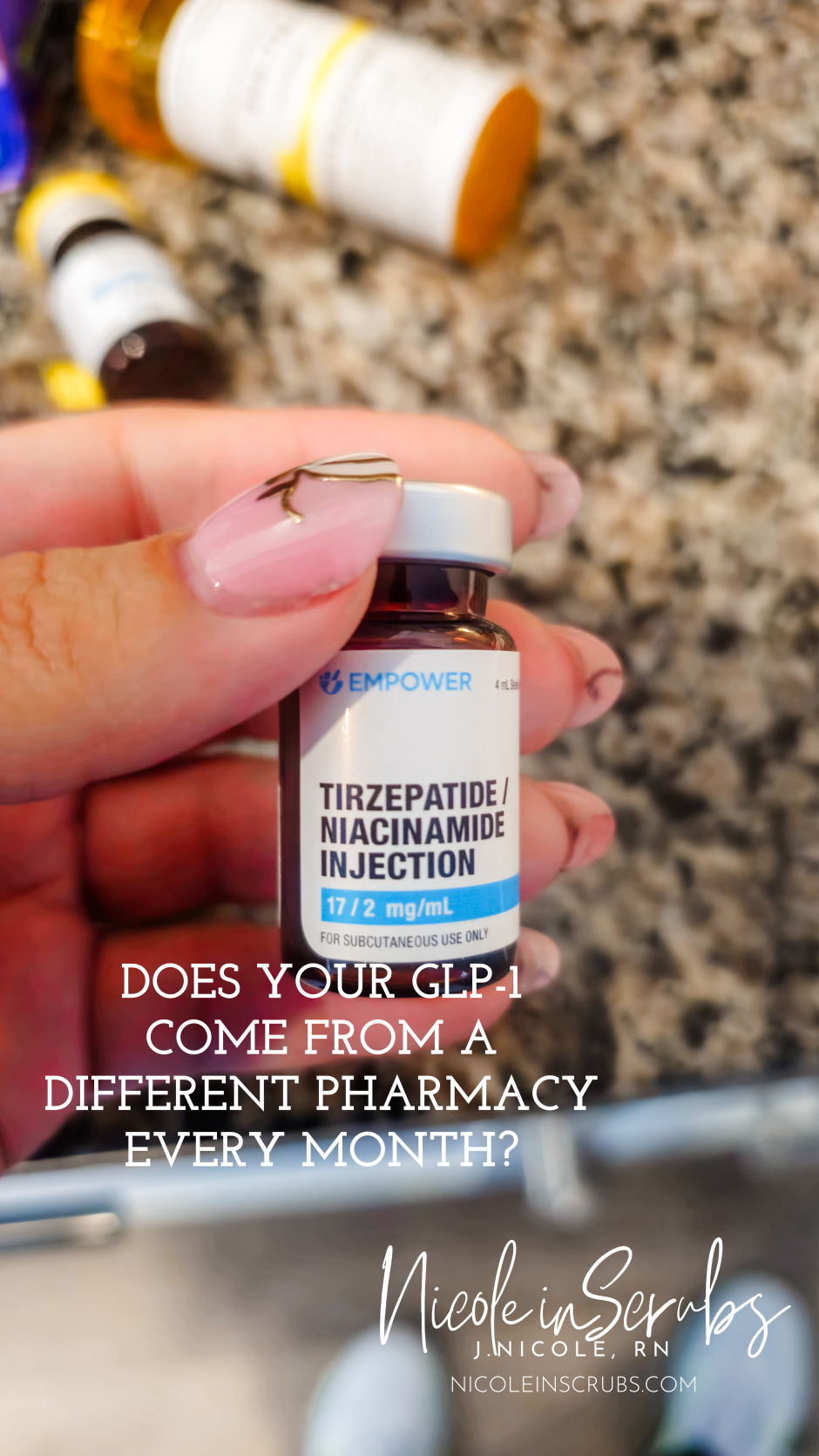
Hand holding an Empower compounding pharmacy tirzepatide niacinamide injection vial at 17/2 mg/mL with multiple other compounded GLP-1 vials visible in the background showing pharmacy variation
Different concentrations. Same prescription. This is what pharmacy hopping actually looks like.

What the FDA Is Actually Saying About This

This isn’t just my opinion as a nurse. The FDA has been raising the alarm on compounded GLP-1 safety for a while now.

As of April 2025, the FDA had received over 500 adverse event reports related to compounded semaglutide and nearly 500 reports concerning compounded tirzepatide. And that number is almost certainly higher because most state-licensed compounding pharmacies aren’t even required to submit adverse event reports.

The FDA has received multiple reports of adverse events, some requiring hospitalization, linked to dosing errors associated with compounded injectable semaglutide. These weren’t errors because people were careless. Many of them were errors because the concentration changed, and nobody clearly explained that.

The FDA estimates that 10 deaths and 100 hospitalizations may be linked to the use of compounded GLP-1 medications. And their responses are often reactive, meaning action is usually taken only after something has already gone wrong.

That last part is the part that keeps me up at night as a nurse.

A Real Example of What Can Go Wrong

I know someone personally who accidentally took four times her dose. Four times. It happened because her pharmacy changed, and she drew up the volume exactly the same as what she was used to… but the concentration was completely different. She felt absolutely awful.

And here’s the thing that really got me. I’m a NICU nurse. Dosage calculations are literally what I do every single day. Tiny babies depend on my accuracy. And I STILL panicked after my own pharmacy changed. I had to go back to my written notes to confirm I’d taken the right dose. I had gone over it so many times in my head that I couldn’t remember what I’d actually done.

If it can happen to me… it can happen to anyone.

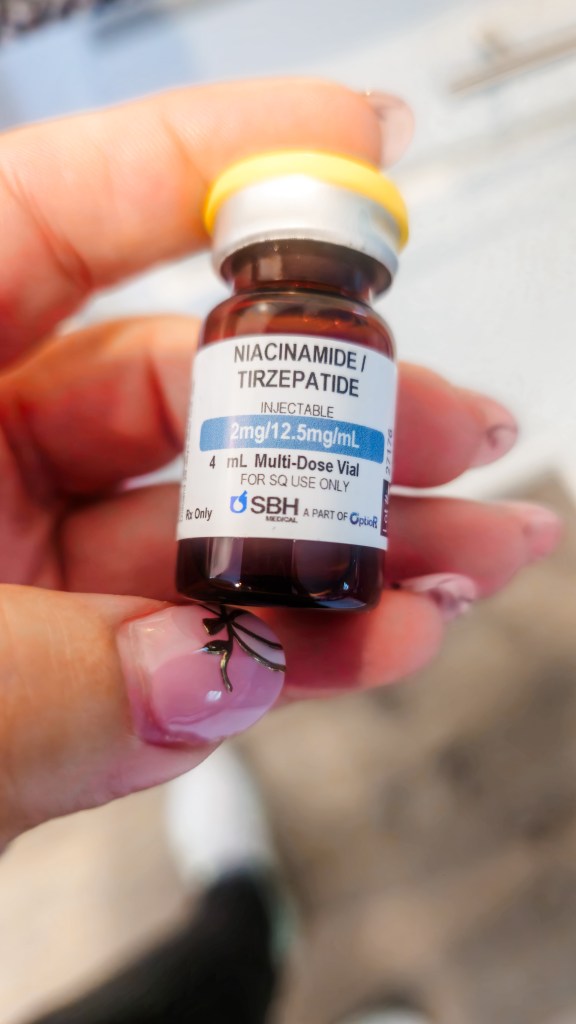
Hand holding an SBH Medical niacinamide tirzepatide injectable vial at 2mg/12.5mg/mL showing a different compounding pharmacy concentration than other providers
Same medication. Different pharmacy. Different concentration. This is exactly what pharmacy hopping looks like in real life.

What to Look For in a Compounded GLP-1 Provider

Not all telehealth companies operate the same way. Here’s what actually matters when it comes to safety:

Pharmacy consistency. Your medication should come from the same pharmacy every single month. No exceptions. If your provider can’t tell you exactly which pharmacy fills your prescription, that’s a red flag worth paying attention to.

Standardized dosing. As your dose increases, your units should stay the same. Simple, consistent, easy to follow instructions reduce the risk of errors. If the math changes every time your dose changes, that’s unnecessary confusion and unnecessary risk.

Transparency. A trustworthy provider will tell you where your meds come from, how they’re compounded, and what quality standards their pharmacy follows. You have every right to ask those questions.

Why I Made the Switch

This is a big part of why I moved to EllieMD. One pharmacy, always the same one, every single month. Standardized dosing so the units stay consistent no matter what milligram you’re on. Simple. Clear. And a whole lot less room for the kind of errors that send people to the hospital.

Cheaper isn’t always better y’all. Sometimes what you’re actually paying for is consistency, safety, and peace of mind. And when it comes to injectable medications… that is absolutely worth it.

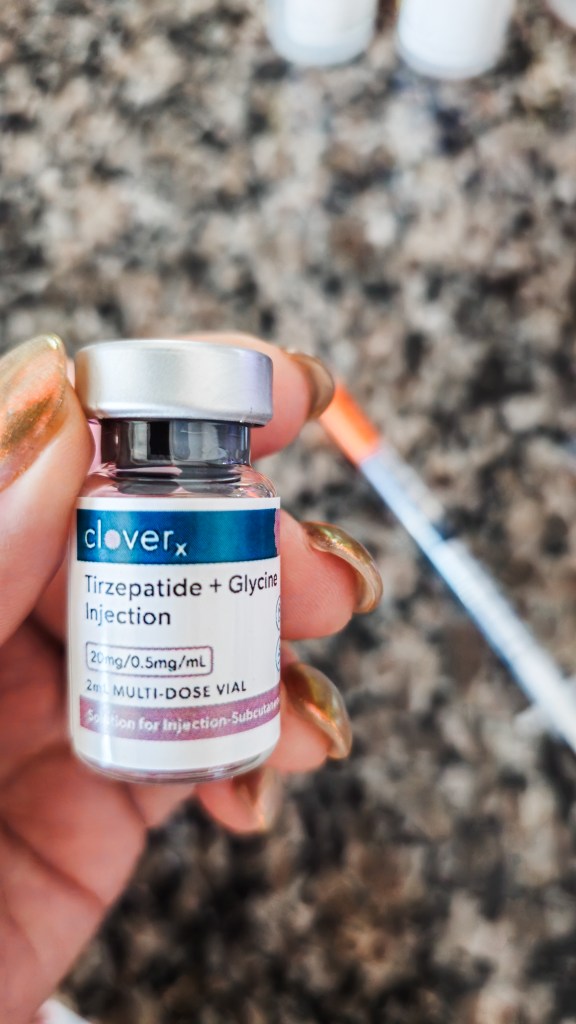
Hand holding a CloverRx compounding pharmacy tirzepatide plus glycine injection vial at 20mg/0.5mg/mL with a syringe visible in the background — EllieMD's dedicated compounding pharmacy
This is what consistency looks like. Same pharmacy. Every single month.

Questions to Ask Your Telehealth Provider Right Now

Before your next injection, it’s worth picking up the phone or sending a message to ask:

Where is my prescription being filled? Is it always the same pharmacy? How is my dosing calculated and does that change if my concentration changes? What quality standards does your compounding pharmacy follow?

You deserve clear answers. If you’re not getting them, that tells you something too.

From 209lbs to 115lbs: My 3 Year Weight Loss Journey with GLP-1 and EllieMD

Some links on my site are affiliate and brand partner links. I may earn a commission at no extra cost to you. Nothing here is medical advice.
JUMP TO:: MEDICAL, BRAND PARTNER, & AFFILIATE LINK DISCLOSURES

🌟 3 Years, 94 Pounds, and a Whole New Me 🌟

Three years ago, I stood on the scale and saw 209 lbs staring back at me. That number was more than just a reflection of my weight. It was a reflection of how much I’d been struggling in silence. My body wasn’t just unhappy. It was literally screaming for help, and I was doing my absolute best to ignore it.

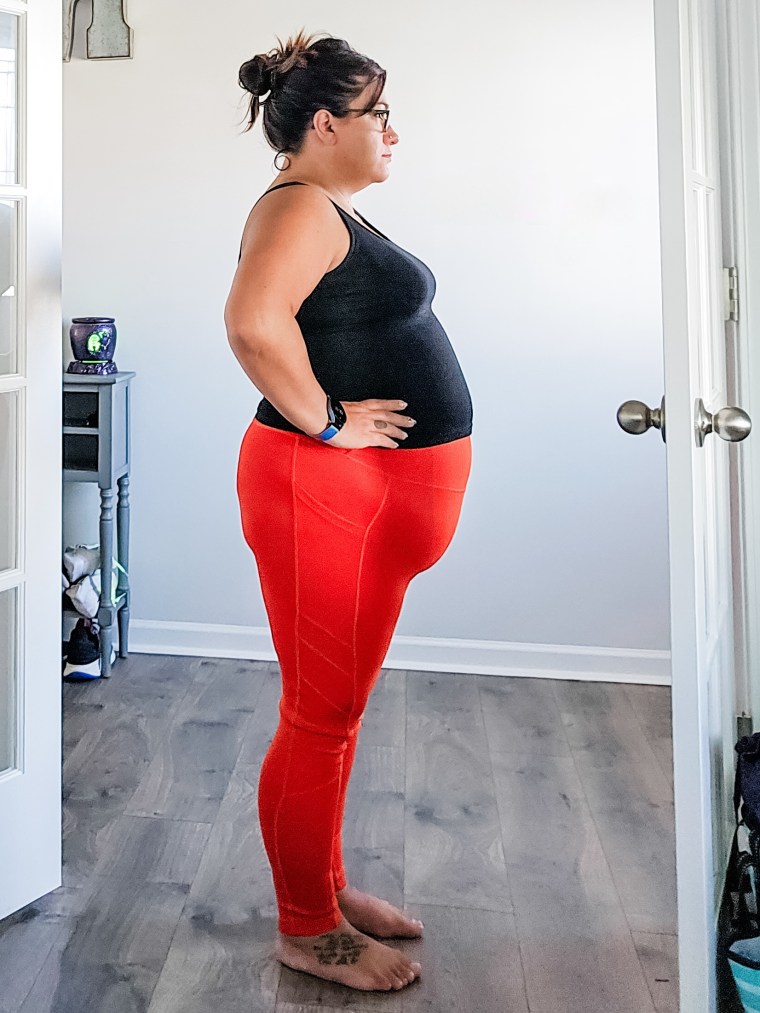
Niki Lamie at 209 lbs before starting a GLP-1 weight loss journey with Ellie MD to address health and weight gain.
This was me at 209lbs. I was in total denial about how bad it had actually gotten. My health was suffering, and I was just trying to ignore the truth.

Let me set the stage for you. My blood pressure was completely out of control. Honestly, it was at stroke level dangerous. As a nurse who started out on a neurosurgical unit in the “stroke capital of the world,” I knew exactly what those numbers meant. To be frank, it freaked me the eff out. My cholesterol levels weren’t much better, and then I was hit with a sleep apnea diagnosis that I tried to pretend wasn’t a thing. Spoiler alert: denial doesn’t magically make the snoring stop. Who knew? 😅

On top of all that, my energy was gone, my confidence was shattered, and I felt like I was stuck in a never-ending loop of “lose 5lbs, gain 10 back.”

This photo is such a great "bridge" in your story! Being at 192 lbs right before that big leap into your GLP-1 journey is a moment so many people can relate to. It is that "breaking point" where the denial finally starts to crack.Here is the SEO-rich metadata for your WordPress site and a hook that hits that Shannon Mckinstrie vibe you love.WordPress Image MetadataFieldSEO Optimized & Authentic ContentAlt TextNiki Lamie at 192 lbs right before starting a GLP-1 weight loss journey with Ellie MD for a 94 lb total transformation.
192 lbs and right on the edge of a total life change. This was the moment I stopped making excuses.

When the “Math Didn’t Math”

Fast forward to about 2.5 years ago. My doctor and I finally said, “enough is enough.” I had managed to lose 30lbs on my own, but with the tiniest change of adding just one regular soda back to my diet once a month, I quickly gained 20lbs back. My doctor agreed with me that my math just didn’t math. My calories in were not equaling my calories out, which is something so many women with PCOS struggle with!

At 192 lbs, I began my GLP-1 weight loss journey. Let me tell you, it was one of the best decisions I’ve ever made for my longevity. Thanks to my incredible telehealth team at EllieMD, I finally had the tools, guidance, and accountability to turn things around. They monitored my progress and kept my wellness plan on point. The community was there to cheer me on, even when I was tempted to drown my frustrations in chips. Because, let’s be honest, sometimes the snacks really do call your name! 🍟🙈

Niki Lamie on October 3, 2023, at 192.6 lbs, starting her first day of GLP-1 injections with Ellie MD.
October 3, 2023. 192.6 lbs. This was the day I finally stopped talking about it and started my first GLP-1 injection.

I remember standing there on October 3, 2023, taking a side-profile photo at 192.6 lbs. I was terrified, but I knew I needed that ‘before’ because this time, I was actually going to change my life with GLP-1

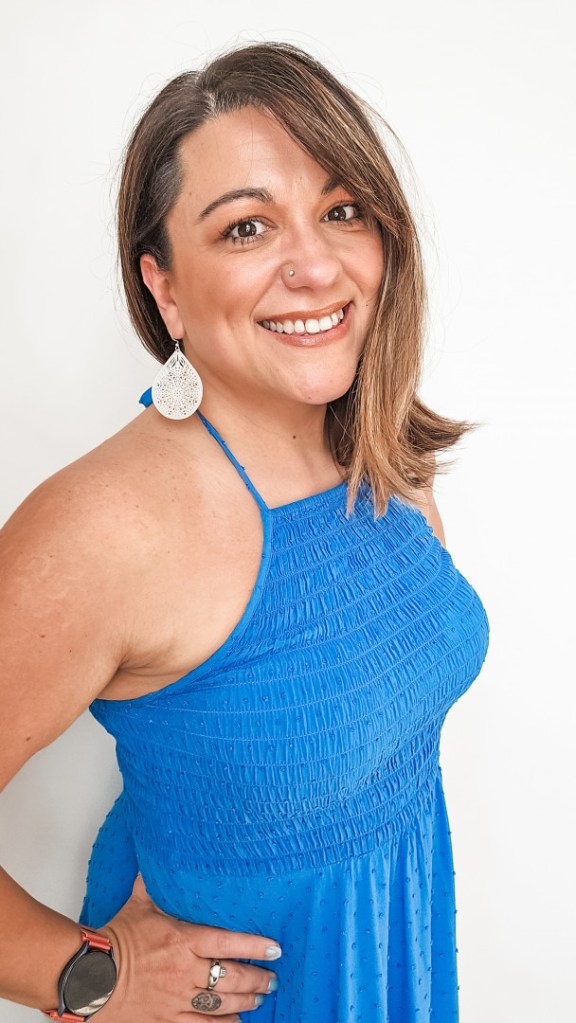
Niki Lamie at 150 lbs during her GLP-1 weight loss journey with Ellie MD seeing results in clothing and photos.

There’s a specific milestone around 150 lbs where the ‘paper towel effect’ kicked in. Suddenly, the clothes I was wearing, like this bright blue dress I finally felt confident in, started fitting differently, and for the first time, I didn’t want to hide from the camera.

Pushing Past 135 lbs

I really thought 135 lbs was my absolute “ceiling” because, for my entire adult life, my body had drawn a line in the sand right there.

To understand why that number felt like a dead end, we have to go back to when I was 19. I was 115 lbs and decided to go on the Depo-Provera shot. Little did I know, I had undiagnosed PCOS, and that medication threw my hormones into a literal tailspin. I gained 15 lbs in just 72 hours. Let that sink in! Over the next few months, while that medication was still in my system, I gained another 15 lbs.

Niki Lamie at 135 lbs pushing past a weight loss plateau with GLP-1 and Ellie MD to reach a normal BMI.
135 lbs. The weight I thought was my “finish line” because I hadn’t been lower since I was 19. I was so wrong!

For the longest time, 150 lbs became my frustrating “baseline.” I had managed to drop down near that initial 15 lb gain once before, but I could never, ever break below it. Every other time I tried to lose weight, I hit a wall at that second 15 lb mark and stayed stuck.

But I have to be real with you: the times in my past when I did get down to 150, or even when I was 115 at nineteen, I did NOT get there the healthy way. I was struggling, my habits weren’t sustainable, and my body wasn’t actually thriving.

Niki Lamie at 120 lbs near the end of her 94 lb GLP-1 weight loss journey with EllieMD.
120 lbs and feeling more like “me” than ever before. This journey has been worth every single second.

This is the first time in my life that I have been at a healthy weight and actually done it the healthy way. Reaching a normal BMI and pushing past that 135 lb hurdle with EllieMD wasn’t just a weight loss win. It was a metabolic breakthrough. For the first time since I was a teenager, my hormones aren’t running the show in a negative way. I finally have the medical support to keep my PCOS in check and the tools to maintain this 94 lb loss for the long haul.

The Results: 94 Pounds Down

Here I am today, 94 pounds lighter, rocking a normal BMI for the first time since I was 19 years old.

What has changed since reaching 115 lbs?

  • Sleep Apnea: Completely gone.
  • Blood Pressure: Controlled and healthy.
  • Cholesterol: Finally playing nice.
  • Confidence: Through the roof!
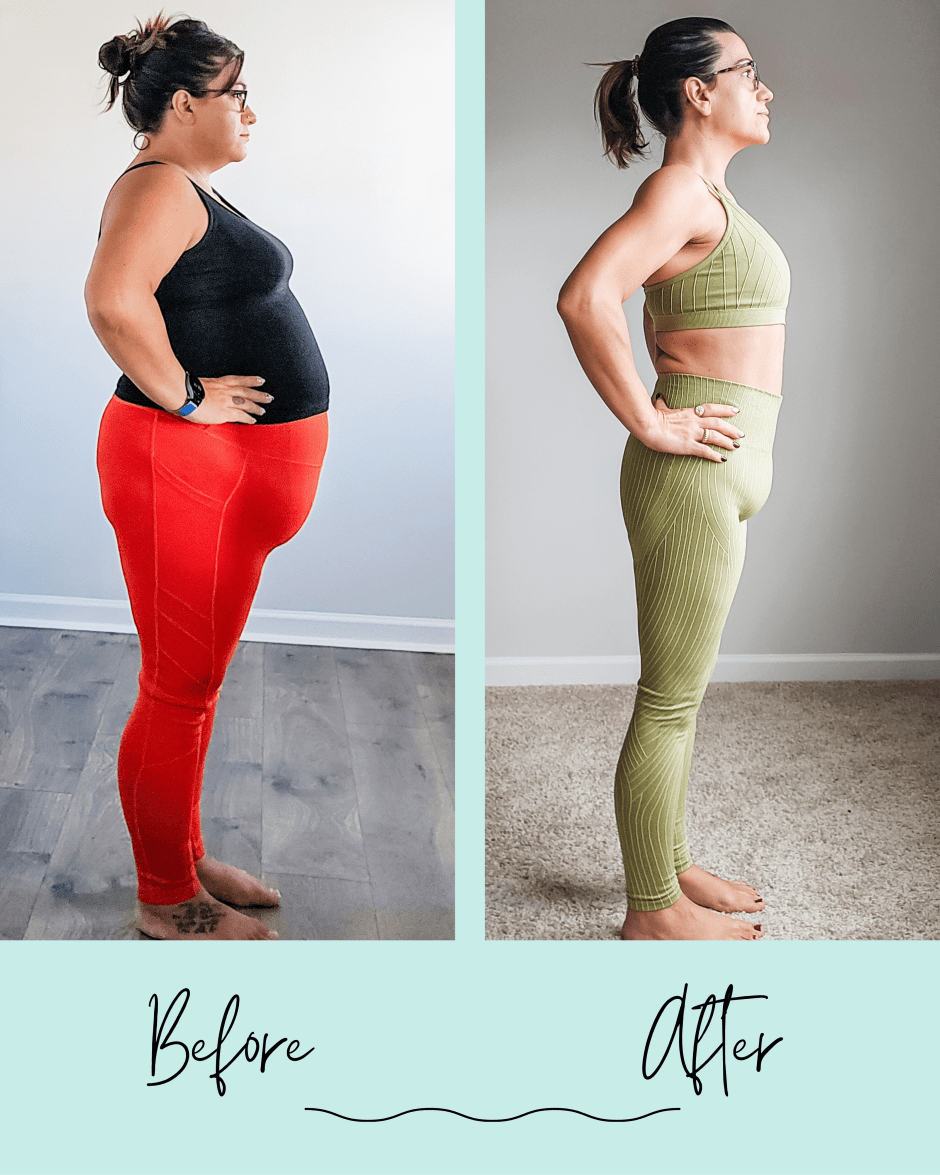
Side-by-side weight loss before and after of Niki Lamie from 192 lbs to 115 lbs using GLP-1 and EllieMD.
From 192 lbs to 115 lbs. This is what happens when you stop guessing and start a real wellness plan with EllieMD.

But let me be real for a second. This journey has not been all rainbows and glitter. 🌈✨ There were tough days, tears, and moments when I questioned if I could actually do it. There were times when progress felt slow, and I had to remind myself that every small victory added up to something bigger. This transformation didn’t happen overnight, and it certainly didn’t happen without effort. But oh, was it worth it.

Niki Lamie at 115 lbs living her best life after a 94 lb GLP-1 weight loss journey with EllieMD.
Living my life again at 115 lbs! I finally have the energy and confidence to show up for every moment.

Learning to Live Again

I’ve learned so much over these three years. I’ve learned to celebrate the little wins, like fitting into a smaller size and having more energy to play with my bulldog Rossi. She was very happy about this, by the way 🐶. And oh yeah… I ran a freakin 5K!

Most importantly, I’ve learned that taking care of myself isn’t selfish. It is necessary. This journey wasn’t just about weight loss results. It was about saving my life. It was about proving to myself that I am resilient and worth the effort.

Let me tell you, you are worth it!

Ready to Start Your Own Journey with EllieMD?

If you’re sitting there feeling stuck, overwhelmed, or like it’s just too hard, I want you to know something. You can do this. One step, one choice, and one day at a time. It’s not about perfection, it’s about progress.

What You Get When You Start Your Journey

Starting your transformation with EllieMD means you are never just a number on a scale. You are getting a comprehensive, medically-backed wellness plan designed to help the “math finally math” for your body!

  • Medical Provider Consults: You’ll work with a telehealth team that actually listens to your history, including things like PCOS or perimenopause struggles.
  • GLP-1 Medication Support: Access to the tools that helped me break through my 135 lb plateau and reach a normal BMI.
  • Monthly Wellness Plans: No more guessing games. You get a clear roadmap for your nutrition and health goals.
  • Ongoing Lab Monitoring: We keep it safe and clinical by keeping a close eye on your bloodwork and progress.

✨ THE BESTIE BONUS ✨

When you join through my link, you aren’t just getting a website. You are getting me in your corner! As a Registered Nurse with over a decade of healthcare experience (and 94 lbs lost myself), I’m here to help you navigate the real-life side of this journey.

Whether you are a night shift worker trying to figure out your injection schedule or you just need a hype-girl who understands the struggle, I’ve got you. No gatekeeping, just real support from someone who has been exactly where you are!

Maintenance is a beast of its own, and of course, I am sharing that whole process with y’all too. Whether you are a fellow nurse working the night shift or someone just looking to feel like themselves again, you are worth it! I am so grateful for the team at Ellie MD for helping me get my life back.

Beyond Weight Loss: The Nurse’s Guide to Microdosing GLP-1s and NAD+

Some links on my site are affiliate and brand partner links. I may earn a commission at no extra cost to you. Nothing here is medical advice.
JUMP TO:: MEDICAL, BRAND PARTNER, & AFFILIATE LINK DISCLOSURES

Are you tired of feeling tired?

I hear it every single day. You are exhausted, you are experiencing brain fog, and you feel like your body is fighting against you. You tell yourself you will prioritize your health “after the holidays” or “in January.”

But as a nurse, I am here to tell you that exhausted is not a personality trait. And accepting that feeling drained is “just a part of aging” is not an option.

If you have been curious about the buzz surrounding GLP-1s but are hesitant because you don’t want to just “lose weight”—or if you are in that perimenopause transition and looking for a way to feel like yourself again—it is time to look at the science of microdosing.

This isn’t about a quick fix. It is about longevity science. And right now, there is a special opportunity to start this protocol with a massive advantage (more on that at the end).

What is Microdosing?

When most people hear about GLP-1s, they think of aggressive weight loss. But there is a different approach: Microdosing.

Think of microdosing as whispering to your metabolism instead of screaming at it. We aren’t trying to completely silence your appetite or force rapid changes. We are supporting the body’s natural functions to correct metabolic dysfunction.

11 Benefits of Microdosing GLP-1s (That Have Nothing to Do with the Scale)

While weight management is a fantastic side effect, the systemic benefits of this peptide therapy are what truly excite me as a healthcare provider.

  1. 1mproved Insulin Sensitivity It helps regulate blood sugar levels, making it easier to support insulin sensitivity. This is vital for reducing the risk of metabolic syndrome, which becomes much more common during perimenopause.
  2. Hormonal Balance Support For my perimenopause and menopause ladies, this is huge. It can help manage the hormonal imbalances related to insulin and estrogen. It can also positively influence cortisol levels, reducing the toll chronic stress takes on your body.
  3. Brain Health & Cognitive Function Brain fog is one of the biggest complaints I hear from women in midlife. GLP-1s have neuroprotective benefits that support cognitive function and mental clarity.
  4. Cardiovascular Health It improves lipid profiles by supporting healthy cholesterol levels and reducing blood pressure by improving vascular function.
  5. Quiet the “Food Noise” Microdosing helps suppress that constant mental chatter about food. It promotes satiety so you can make conscious, healthy eating habits without feeling deprived.
  6. Gut Health By slowing gastric emptying, it improves digestion and nutrient absorption. A healthier gut microbiome is linked to better immunity and reduced inflammation.
  7. Anti-inflammatory Effects Systemic inflammation is a root cause of so many chronic issues, including arthritis and skin aging. Lowering inflammation supports your whole body.
  8. Muscle Maintenance Unlike aggressive dieting, microdosing helps preserve muscle mass. This is essential for longevity and strength as we age.
  9. Metabolic Health Boost It enhances overall metabolic function, teaching your body to use fat as an energy source more efficiently.
  10. Emotional Well-Being Stabilizing blood sugar levels has a direct impact on your mood. This can help reduce the anxiety and stress often associated with feeling out of control of your health.
  11. Long-Term Prevention This is a proactive tool. It supports longevity by addressing core health issues that become prevalent in midlife, promoting overall vitality.

Why You Should Pair It With NAD+

If the GLP-1 Microdose is the steering wheel keeping you on the road, NAD+ (Nicotinamide Adenine Dinucleotide) is the gas in the tank.

NAD+ is a vital coenzyme that fuels your cells. As we age, our natural levels drop, leading to fatigue and slower cellular repair. Supplementing with NAD+ provides a “cellular battery” boost.

  • It boosts energy by converting nutrients into ATP.
  • It supports DNA repair to slow the aging process.
  • It improves metabolism to assist with weight management.

The “Nurse’s RX” Synergy

Why do I recommend these two together? Because they solve the puzzle from two different angles.
A common struggle when changing your metabolism is temporary fatigue. NAD+ directly counteracts this by boosting your cellular energy. While the Microdose regulates your hormones and insulin, the NAD+ optimizes the cellular machinery that burns the fuel.
It is the ultimate “Metabolic Momentum.”

A Special Opportunity to Start

I am a big believer that the best time to start was yesterday, but the second-best time is right now.

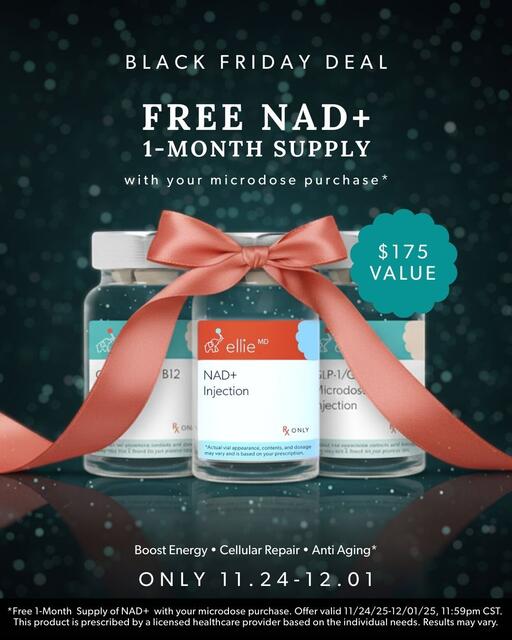
For a limited time, we are offering a special bundle to help you kickstart your longevity journey. When you purchase a Longevity Microdose kit, you will receive a 1-month supply of NAD+ for FREE. (This is a $175 value included at no cost.)

Black Friday Deal graphic showing a free 1-month supply of NAD+ Injection ($175 value) with an Ellie MD GLP-1 Microdose purchase. Three medical vials wrapped in a festive red bow.
Don’t miss the biggest wellness deal of the year: Get a free month of NAD+ ($175 value) when you start your longevity microdose protocol. Valid Nov 24 – Dec 1.

You do not have to go “all in” to see changes. You just have to start. This is your chance to get a massive boost while dipping your toes into a protocol that addresses the root causes of how you feel.

Six months from now, you will be so glad you didn’t wait for January.

Shop The Longevity Special