What Are Peptides? A Nurse Explains Why Everyone Is Suddenly Talking About Them

Some links on my site are affiliate and brand partner links. I may earn a commission at no extra cost to you. Nothing here is medical advice.
JUMP TO:: MEDICAL, BRAND PARTNER, & AFFILIATE LINK DISCLOSURES

If you’ve been seeing people talk about peptides, peps, peppers, pepper gardens, or some weird version of the word peptide typed like it came from a ransom note, and you’ve been wondering what in the actual wellness internet is going on, you aren’t alone. It’s come to my attention that a lot of people are watching us talk about peptides like we have two heads because they have no clue what we’re even talking about or why they seem to be everywhere right now. And honestly? Fair.

Before I became more involved in the wellness side of things, I understood the basic science of peptides, but I didn’t fully understand how they were being used in longevity, skin health, energy support, recovery, metabolic health, or the newer wellness conversations happening online. I knew peptides existed in the body. I knew they mattered. But I wasn’t sitting around casually talking about peptide therapy over coffee like that was a normal Tuesday.

Why is everyone talking in code about peptides?

Before we even get into what peptides are, we need to talk about why you might see people calling them peps, peppers, pepper garden, 🌶️🌊, or some bizarre character version like Pɛp+ḷꝺΣ. It can look ridiculous from the outside, and to be clear, sometimes it IS ridiculous. But there’s a reason for it.

Social media platforms are not great at telling the difference between someone in the healthcare or wellness space providing legitimate educational content and someone selling gray market research peptides like they’re selling illegal drugs on the corner. So the people who are trying to talk about this responsibly often end up getting creative with language because platform filters can flag the topic before even getting to the context.

That doesn’t mean every coded post is trustworthy, and it definitely doesn’t mean every person using normal wording is unsafe. It just means the online peptide conversation has gotten weird because the internet made it weird. Shocking, I know.

So what are peptides?

Peptides are already in your body. They’re not some random wellness invention someone cooked up because they ran out of collagen powder to sell. Peptides are short chains of amino acids, and amino acids are the building blocks your body uses to make proteins.

Think of it like language. Amino acids are the letters. Peptides are short words or phrases made from those letters. Proteins are the longer sentences, paragraphs, or full instruction manuals made from those same letters arranged in more complex ways. That’s the simplest way to understand the relationship without turning this into a biochemistry class, which I promise nobody asked for today.

Peptides can act like messengers in the body. Depending on the peptide, that message may relate to skin health, collagen support, recovery, metabolic signaling, appetite signaling, cognitive function, tissue support, immune signaling, or cellular repair. That’s why the phrase “I take peptides” is honestly not very specific. It’s kind of like saying, “I take medication.” Okay… which one? For what? Through what route? Under whose guidance? For what goal?

What Are Peptides Used For? It Depends on the Peptide

This is one of the biggest things people miss when they first start hearing about peptides. Peptides aren’t all the same. They don’t all do the same job, and they aren’t all used for the same reason.

Some peptides are talked about for energy and cellular function. Some are being explored for skin, collagen, and tissue support. Some come up in conversations around muscle recovery, joint comfort, or workout recovery. Some are discussed in cognitive wellness. Others are connected to metabolic health and appetite signaling. Even within the same general category, two different peptides may work through completely different mechanisms in the body.

That’s why I don’t love when people ask, “What peptide should I take?” as if there is one universal answer. The better question is, “What am I trying to support, and what does my health history actually look like?” Because the peptide conversation for a woman who’s exhausted but sleeping fine may look very different from the peptide conversation for a woman dealing with skin changes, hair thinning, workout recovery issues, brain fog, or metabolic changes.

Why Women Over 40 Are Interested in Peptide Therapy for Energy, Skin, and Recovery

A lot of women aren’t peptide curious because they want another trendy wellness thing. They’re curious because something changed, and the old tools aren’t working the way they used to.

Maybe your skincare routine used to be enough, and now your skin still looks tired no matter how consistent you are. Maybe the Botox still smooths the lines, but it doesn’t fix the dullness, the skin laxity, the crepey texture, the volume loss, or the fact that your face still looks tired underneath it all. Maybe you’re working out, eating well, sleeping okay, and still dragging by 2pm. Maybe your recovery from workouts feels slower than it used to. Maybe your hair feels thinner, your body composition is changing, your brain feels foggy, or maybe your skin just doesn’t bounce back the way it used to. It’s annoying as hell because you’re still doing the skincare, the SPF, the appointments, all of it.

Then you go to your doctor, get the usual labs, and hear, “Everything looks fine.” Which is frustrating because “fine” does not explain why you feel exhausted, your skin looks different, your workouts take longer to recover from, and your body responds differently, even though your routine hasn’t changed.

That is where a lot of women start researching peptides. Not because they’re trying to become one of the bodybuilding biohacker bros. Not because they want to chase every shiny wellness trend. They’re trying to understand what’s happening under the surface and whether there are smarter options than just doing more of the same.

Are peptides FDA approved?

This is where we need to be specific, because “peptides are not FDA approved” is too broad.

Some FDA approved medications are peptide based or peptide related, like GLP-1s. But many of the peptides being discussed online in the wellness, longevity, recovery, skin, and performance spaces are not FDA approved medications. Compounded medications are also not FDA approved, which means the FDA does not evaluate them for safety, effectiveness, or quality before use.

That can sound scary, but it doesn’t automatically mean something is bad or unsafe. It means the details matter a lot. It means you need to care about who is evaluating you, where the medication is coming from, whether the pharmacy is licensed and regulated, whether testing is being used to verify quality, whether the instructions are clear, and whether there is actual support if you have questions or concerns.

This isn’t the category where I want anyone playing mystery vial roulette because a website had sophisticated branding and a price that looked too good to be true.

I know “not FDA approved” can sound scary, so let’s put that phrase in context. Dietary supplements, including many vitamins, minerals, and wellness products people buy every day, are also not FDA approved for safety and effectiveness before they hit the market. That doesn’t automatically make them bad, but it does mean the quality, sourcing, claims, testing, and company behind them matter.

The same general idea applies here, but with an important distinction: many peptides being discussed in wellness are not supplements. They are often compounded medications, which means they belong in a more medically guided lane. Compounded medications are not FDA approved, and that is exactly why provider review, a licensed pharmacy, clear instructions, and testing standards matter so much.

How to Choose a Peptide Source: Provider Review, Licensed Pharmacies, and Quality Testing

You can find almost anything online. That doesn’t mean you should put it in your body.

One of the biggest issues with peptides right now is that a lot of people don’t understand the difference between medically guided options and research grade gray market products. Some websites look polished. Some use medical language. Some have branding that feels legitimate at first glance. But clean branding doesn’t automatically mean provider oversight, proper pharmacy standards, clear dosing instructions, sterility, potency, purity, or support.

My green flag list is boring on purpose. I want licensed provider review. I want a licensed and regulated compounding pharmacy. I want third party testing for potency and purity. I want clear instructions. I want actual support if I have questions or concerns. I want transparency around what is compounded and what isn’t FDA approved. I want the process to feel medically guided, not like someone tossed you into the internet wilderness with a vial and a prayer.

That is the difference between “this exists online” and “this is a source I’d actually be comfortable putting my name next to.”

Why I Use EllieMD for Provider-Reviewed Peptide and Wellness Options

I personally use EllieMD, and I’m also a brand partner with them. That means yes, I may earn from qualifying orders through my link. It also means I’m putting my name, my nursing background, and my personal standards next to the company I’m choosing to talk about publicly.

The reason I talk about EllieMD isn’t because peptides are trendy. It’s because I wanted a source that checked the boxes I care about as a nurse and as a woman using some of these tools myself. And I wanted to have a trusted source to be able to recommend when I’m asked questions about peptides. Licensed provider review matters. A regulated pharmacy process matters. Clear instructions matter. Support matters. Quality standards matter. And not making people feel like they have to decode this entire category alone matters too.

For the woman who is already investing in skincare, med spa treatments, wellness tools, supplements, fitness, and better health, this is not about finding the cheapest option. It’s about asking whether the next investment actually makes sense, whether it is medically guided, and whether it is addressing the thing you’re actually trying to support.

Do peptides replace your doctor, labs, skincare, nutrition, or strength training?

No. And anyone making it sound that simple is already making me nervous.

Peptides are not a replacement for medical care. They are not a replacement for appropriate labs, nutrition, strength training, sleep, hormone evaluation, skincare, or an actual provider who understands your health history. They are one category of tools that may be worth discussing depending on your goals, medications, history, labs, budget, and what you are actually willing to do consistently.

The right conversation depends on the person. One woman may be looking at peptides because she’s sleeping fine but still exhausted. Another may be more focused on skin changes, collagen support, hair thinning, slower workout recovery, brain fog, libido, sleep, or metabolic support.

And for some people, peptides may not be the right fit at all. That is exactly why provider review matters.

That is why provider review matters. That is why your health history matters. And that is why I will never be the person telling everyone on the internet to take the same thing because one person had a good experience.

How to Know Which Peptide Might Fit Your Wellness Goals

If you’re new to peptides, I wouldn’t start with, “What is the best peptide?” I’d start with, “What am I actually trying to support?”

Are you looking for help with energy? Skin texture? Collagen support? Hair changes? Workout recovery? Brain fog? Metabolic health? Sleep? Libido? Joint comfort? Inflammation? Are you already taking medications or supplements? Do you have recent labs? Do you have a medical history that needs to be reviewed? Are you willing to give yourself injections, or do you need a nasal spray, capsule, or troche option? What are you actually going to use consistently?

Those questions matter more than whatever peptide is getting the most attention online this week.

Peptide Therapy for Women: What to Understand Before You Start

Peptides are not new. They aren’t magic internet dust. They’re not all the same. And they are definitely not something I’d recommend buying from a random research use only website because the pricing looked shockingly good.

Peptides are short chains of amino acids that can act like messengers in the body. Different peptides have different jobs, and some are being used or studied in wellness areas like energy, skin health, collagen support, recovery, tissue support, metabolic health, and cognitive function.

But the source matters. The provider matters. Your health history matters. Your goals matter. And whether this actually makes sense for you matters more than whatever the internet is screaming about this week.

If you want help narrowing down what might fit your goals, start with this peptide quiz. It will give you a personalized plan based on your unique goals and history. And if you get your results and you still want to talk through your options in more detail with me, I’m always available to help.

Glycine and GLP-1: How Glycine Supports Sleep, Recovery, and Metabolic Health

Some links on my site are affiliate and brand partner links. I may earn a commission at no extra cost to you. Nothing here is medical advice.
JUMP TO:: MEDICAL, BRAND PARTNER, & AFFILIATE LINK DISCLOSURES

Before we even talk about glycine, we need to talk about amino acids.

Amino acids are your body’s basic building blocks. Think of them like individual beads on a necklace. One bead by itself does not look like much. But string enough of them together in the right order, and suddenly you have a necklace that actually does something.

That is how proteins work in your body. Proteins are long chains made from amino acids, and proteins are responsible for almost everything happening behind the scenes.

Hormones. Muscle repair. Healing. Immune support. Neurotransmitters that decide whether you feel calm or wired. Skin. Joints. Metabolism. All of it starts with these tiny building blocks.

Close-up of glycine amino acid powder on a measuring scoop in front of a glycine supplement container
Glycine as an oral amino acid supplement, often used for sleep and recovery support.

Glycine is one of those amino acids. It is small, simple in structure, and often underestimated, but it plays an important role in several systems that matter during weight loss, maintenance, and overall metabolic health.

Glycine is often used as part of GLP-1 treatment plans to support sleep, recovery, and overall metabolic health during weight loss and maintenance.

What Glycine Does in the Body (Sleep, Recovery, and Nervous System Support)

Glycine is classified as a non-essential amino acid, which means the body can produce it on its own. That does not mean the body always produces enough to meet demand, especially during periods of stress, calorie restriction, poor sleep, illness, or increased physical demands.

It plays a role in calming the nervous system. Glycine acts as an inhibitory neurotransmitter in the brain, which means it helps quiet things down rather than rev them up. That is one reason it is commonly associated with deeper, more restorative sleep.

It supports collagen production. Collagen is a major structural protein in skin, joints, connective tissue, and the gut lining. Glycine makes up a large portion of collagen’s amino acid structure, so having adequate levels matters for recovery and tissue health.

It contributes to recovery and repair. Glycine is involved in protein synthesis and cellular repair processes. These processes are especially important during weight loss, when the body is adapting to metabolic changes and repairing tissue while using stored energy.

It supports metabolic and inflammatory balance. Glycine has been studied for its role in supporting insulin sensitivity and reducing oxidative stress. These effects are supportive in nature and vary between individuals.

This is why glycine tends to feel subtle. You do not take it and feel a dramatic jolt of energy. Instead, people often notice better sleep quality, smoother recovery, and a calmer, more regulated nervous system over time.

Glycine as a Standalone Supplement

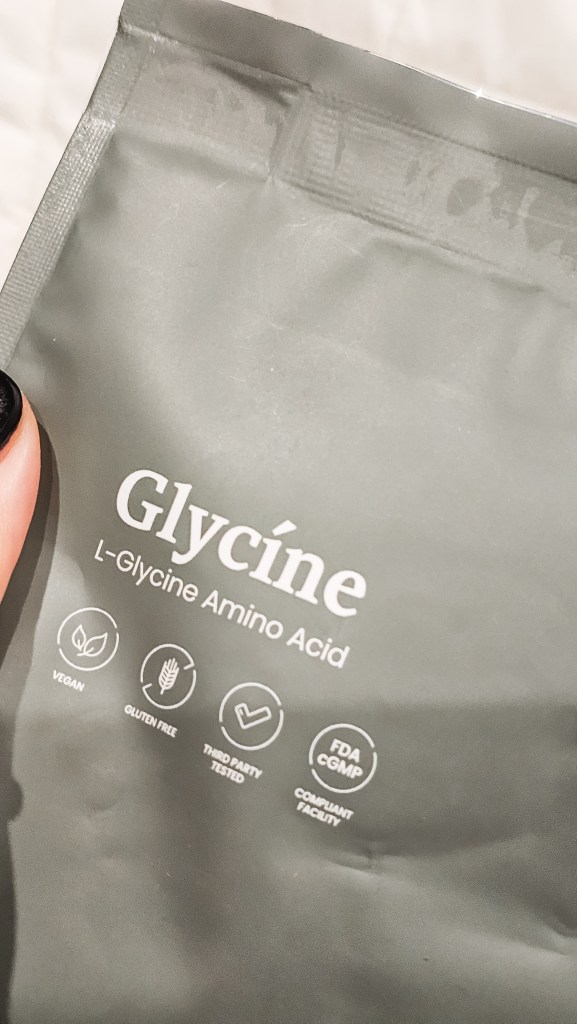
Bag of L-glycine amino acid supplement labeled vegan and gluten free
L-glycine supplement used as needed for sleep, stress, or recovery support.

When glycine is taken as an oral supplement, it is usually used on an as-needed basis. Most people reach for it in situations like:

  • difficulty sleeping
  • increased stress
  • feeling overstimulated
  • needing additional recovery support

Because glycine helps promote relaxation without acting as a sedative, it is often taken in the evening. Some people also use it during periods of increased physical or metabolic stress.

The key thing to understand here is flexibility. Oral glycine is something you can adjust based on how you feel. You can take it occasionally or more consistently, depending on your needs and your provider’s guidance.

It is supportive, not forceful. It works with your system rather than pushing it.

Glycine Added to a GLP-1 or GLP-1/GIP Injection

When glycine is compounded into a GLP-1 or GLP-1/GIP injection, it is not something you take “as needed.” It becomes part of a once-weekly dosing routine, providing consistent exposure over time rather than symptom-based use.

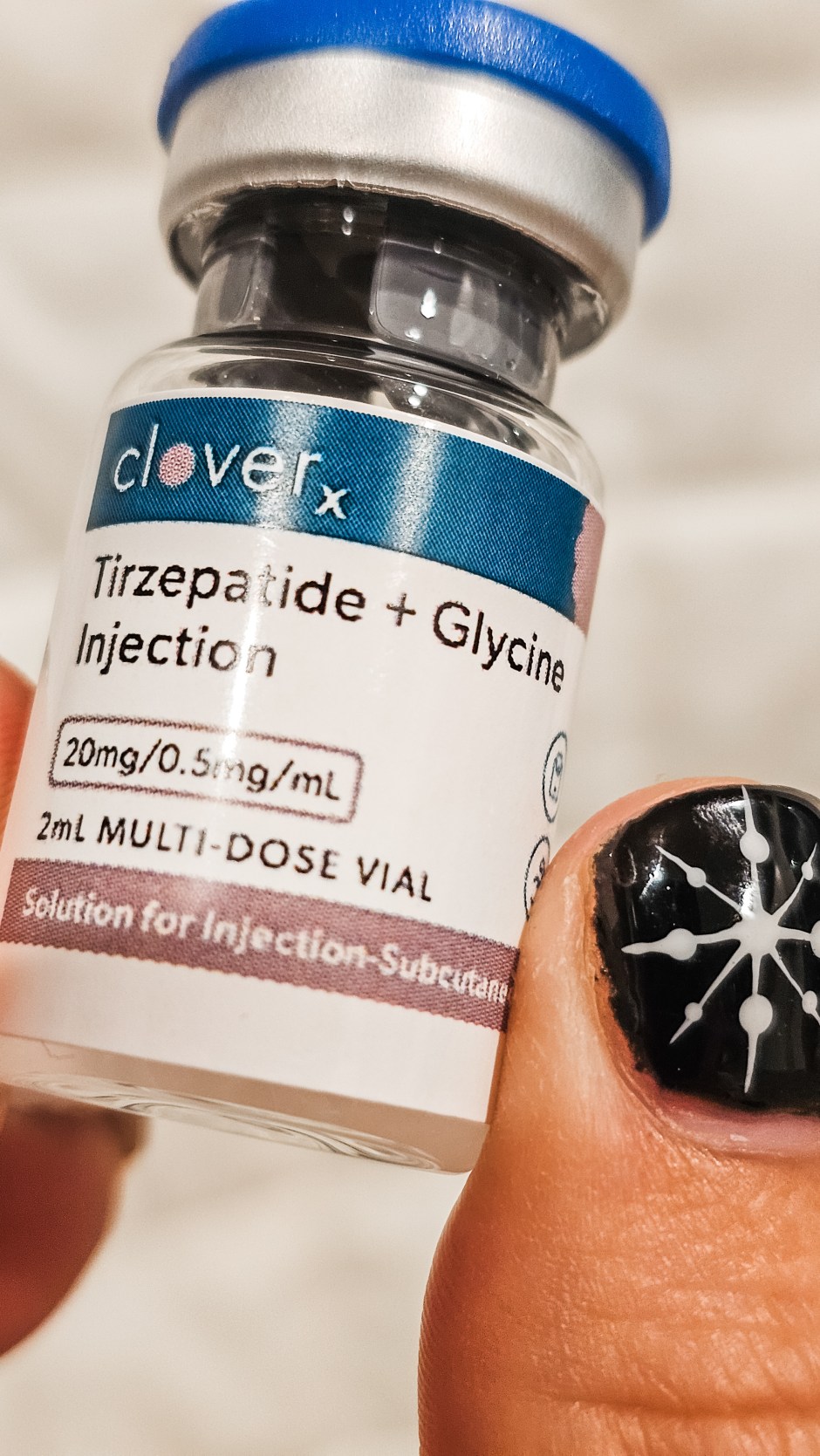
Compounded tirzepatide and glycine injection vial labeled for subcutaneous use
Compounded GLP-1/GIP medication with glycine added for supportive benefits.

Instead of responding to symptoms in the moment, this approach provides your body with a steady, predictable level of glycine week after week. That consistency allows your system to use it as background support rather than a quick fix.

This compounded formulation is prepared by licensed pharmacists and tailored based on provider guidance. It is not the same as taking an over-the-counter supplement, and it is not interchangeable with FDA-approved medications.

Glycine During Active Weight Loss

During active weight loss, the body is under increased physiological demand. Hormones are shifting. Metabolism is adapting. Tissues are repairing. Muscle needs support. Sleep quality often takes a hit. The nervous system can feel stressed even when weight loss is going well.

This is where glycine quietly earns its keep.

By supporting sleep quality and recovery, glycine helps your body handle the demands of weight loss more smoothly. Better sleep supports appetite regulation, stress hormones, and overall metabolic health. Recovery support matters when your body is pulling from stored energy and adapting to change.

Glycine does not directly cause weight loss. Instead, it supports the systems that help the body tolerate and sustain the process more effectively.

Glycine in Maintenance and Long-Term Regulation

Maintenance is where glycine often shines the most.

Once weight loss slows or stops, the goal shifts from change to stability. Nervous system regulation, sleep consistency, recovery, and metabolic steadiness become the priority.

Glycine supports these goals by promoting calmer nervous system activity, supporting recovery, and contributing to overall regulation rather than stimulation.

People in maintenance often care less about pushing and more about feeling regulated. Sleeping better. Recovering more easily. Feeling calmer in their body. Glycine supports those systems without adding stimulation or stress.

For many people, maintenance is where glycine’s steady, non-disruptive support becomes most noticeable.

Weekly Glycine vs As-Needed Glycine

Compounded GLP-1 injection vial containing tirzepatide and glycine
Weekly GLP-1 injection with glycine included for consistent background support.

This is where the two approaches can work together rather than compete.

The glycine in a weekly injection provides consistent baseline support. It is always there, quietly doing its job.

Oral glycine can be layered in as needed. Think of it as situational support for sleep disruptions, stressful weeks, or extra recovery needs.

One approach is structured and routine. The other is flexible and responsive. Together, they can support different needs at different times.

Both serve a purpose, depending on where you are in your journey and what your body is asking for.

The Takeaway

Glycine is not flashy. It does not promise overnight transformations. It does not come with dramatic sensations or instant feedback.

What it offers instead is steadiness.

Better sleep quality. Smoother recovery. Nervous system support. Structural support through collagen. Quiet metabolic assistance while your body does the heavy lifting.

Whether it is built into a weekly GLP-1 or GLP-1/GIP injection or used as an oral supplement when needed, glycine works best when you let it be what it is.

Consistent. Supportive. Calm.

NAD+ for Chronic Fatigue: Why Your System is Crashing

Tired of Running on Empty? The Cellular Key to Boosting Metabolism & Focus

That Energy Drink Crash is NOT Normal

You ever hit the point where your third Alani just feels like a very expensive can of fizzy disappointment? Were you relying on that quick jolt to get you through your day (or night if you’re like me), but the energy part packed up and left the building? SAME SIS, SAME!

That crashing feeling, that chronic metabolic fatigue, isn’t just about poor habits. The truth is, it might be a shortage of a critical molecule your body needs to function at its peak.

The Spark Plug (NAD+) Inside Every Cell

What is truly running the stage for The Greatest Show (which is you, girl)? It’s a molecule called NAD+ (Nicotinamide Adenine Dinucleotide).

NAD+ is basically the MVP molecule that helps your body turn food into actual, usable energy. Think of NAD+ as the spark plug for your cellular engine. You need a strong spark to ignite your fuel and get moving. The studies show that NAD+ helps keep your cells young and resilient and improves how your body’s Energy Factory works, which is the heart of your energy production. For me, it was like the five thousand tabs in my brain finally closed themselves.

It keeps everything running smoothly:

  • Focus
  • Metabolism
  • Mood

The Spark Plug runs all of it. When the spark plug is weak, every system reading, from your energy output to your focus, is compromised.

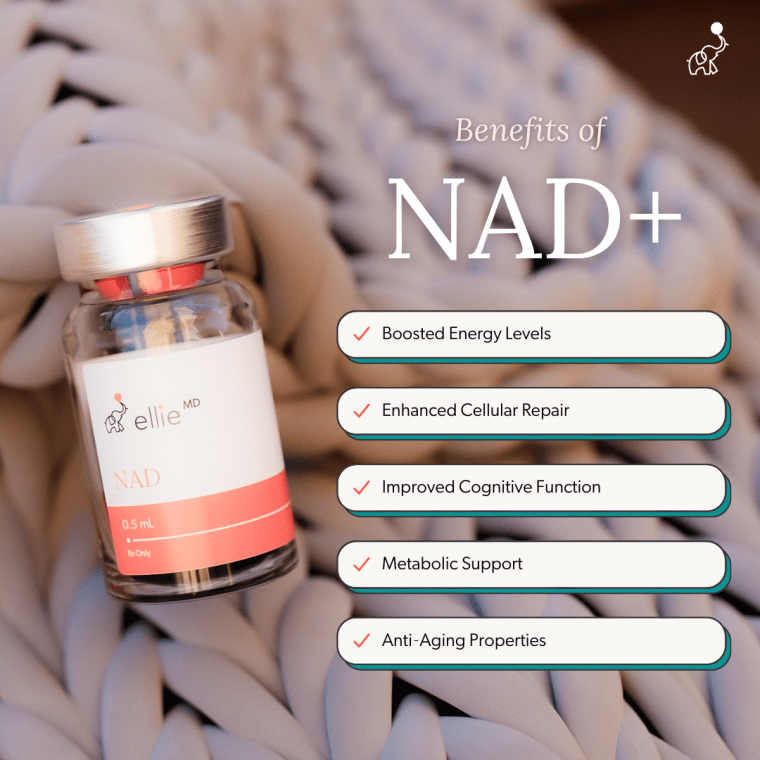
Ellie MD NAD+ vial bottle on a cozy blanket with a list of benefits: Boosted Energy Levels, Enhanced Cellular Repair, Improved Cognitive Function, Metabolic Support, and Anti-Aging Properties.
NAD+ is a vital coenzyme for cellular health. Learn how Ellie MD’s NAD+ formulation can help support your energy production, DNA repair, and overall metabolic function.

The Metabolic Stressors Aging Your Energy

So if NAD+ is so critical for cellular energy, why do we constantly feel so depleted?

NAD+ levels drop as we age. This is unavoidable. But those levels also drop due to chronic stress or when we are running on caffeine and vibes. You are surviving on pure grit, and your brain literally feels like TV static.

In my own experience, this is where I saw the biggest win. That overwhelming, chaotic ADHD haze I used to deal with started easing up; it was like the five thousand tabs stuck open in my brain finally closed themselves instead of crashing. I felt clearer and more “with it.”

The Glow Up is Real (Even the Awkward Part)

NAD+ plays a major role in cellular energy and turnover, which is great for your skin. I can tell you that my skin definitely had its own little purge moment at first—hello, surprise zits! But that initial reaction can be a normal part of the process.

Once that purge was over? Game changer. People were literally giving me compliments and asking what foundation I was wearing because my skin looked so good—and I wasn’t even wearing any! That’s when I knew the NAD+ was doing the dang thing and the cell turnover was happening!

The Difference Between Dragging and Doing

Supporting those NAD+ levels can help your body’s natural energy process stay on track. It’s not a miracle fix or a sudden jittery jolt; it’s a subtle, steady kind of clarity that coffee wishes it could give.

It’s the simple difference between dragging and doing. If you’re tired of guessing and you just want reliable energy, supporting this molecule is the most common sense, science-backed place to put your focus.

Want the Full Scoop on the Cellular Maintenance?

If you’re curious about the next-level science on cellular maintenance and DNA repair benefits of NAD+ that weren’t covered here, I have an exclusive NAD+ 101 note that is just for you!

To receive the NAD+ 101 Note
drop a comment below
or Text Me

P.S. If this post helped you finally understand your energy crash, share it with a friend who is also tired of relying on that third can of Alani!


Professional Disclosure: I provide BS-free metabolic education as a registered nurse and health coach for women navigating PCOS, perimenopause, and stubborn weight loss. While I share evidence-based research and nurse-informed support, please remember that I am not your nurse. The content shared here is for educational purposes only. It does not constitute medical advice, diagnosis, or treatment, and it does not establish a provider-patient relationship. Nothing on this site is a substitute for care from a licensed provider who knows your full health history. All opinions and content shared on this platform are my own and do not reflect the views or endorsements of my employer or the hospital where I am employed.

Scope of Practice and FDA: Per professional coaching guidelines, I may recommend over the counter (OTC) medications or supplements to support your wellness goals. However, I do not prescribe or recommend specific prescription medications. For prescription options, including GLP-1 tools, my role is to help you understand the available science so you can have an informed discussion with your licensed healthcare provider. These statements have not been evaluated by the Food and Drug Administration. Products discussed are not intended to diagnose, treat, cure, or prevent any disease, and medical treatments require professional oversight.

Trust and Transparency: I only recommend products I trust. Most are items I use personally, while others are shared based on my professional trust in the clinical standards of partners like Ellie MD. Some links are affiliate links or part of brand partnerships, which means I may earn a commission at no extra cost to you. As an Amazon Associate I earn from qualifying purchases.