HRT for Menopause Is Here: HRT Myths, WHI Study Fear, and Menopause Support Options

Some links on my site are affiliate and brand partner links. I may earn a commission at no extra cost to you. Nothing here is medical advice.
JUMP TO:: MEDICAL, BRAND PARTNER, & AFFILIATE LINK DISCLOSURES

HRT for Menopause Support: What Changed, What the HRT Scare Missed, and What Women Should Know Now

If you’ve ever brought up hot flashes, night sweats, sleep changes, brain fog, low libido, vaginal dryness, painful intimacy, or the general “why does my body feel like it changed the rules overnight?” situation and gotten the medical equivalent of a shrug, you’re absolutely not alone.

Menopause care has been largely neglected for something that literally affects half the population, and that’s absolutely wild. And when HRT does come up, a lot of women immediately remember the scary version of the conversation they heard years ago. Hormones are dangerous. HRT causes cancer. Just deal with menopause because that’s safer.

Except that should never have been the full conversation.

While menopause may be normal, being brushed off is not.

What Are Common Menopause Symptoms Besides Hot Flashes?

Hot flashes get all the attention, and honestly, fair. Randomly feeling like your internal thermostat has gone feral is hard to ignore. But menopause is not just hot flashes.

Menopause symptoms can include night sweats that wreck your sleep, mood changes that make you feel like you owe half your household an apology, brain fog, low libido, vaginal dryness, painful intimacy, urinary urgency, joint aches, fatigue, body composition changes, and sleep that suddenly acts like it no longer knows you personally.

And what makes this extra frustrating is that many women are told this is “just aging,” as if that’s an actual plan. It isn’t.

A symptom being common does not mean it’s automatically something you have to white-knuckle through. Menopause is a normal life transition, but symptoms that affect your sleep, mood, intimacy, cognition, energy, and quality of life deserve treatment.

Why Are Menopause Symptoms So Undertreated?

A Mayo Clinic study found that more than 3 out of 4 women ages 45 to 60 reported menopause symptoms, and more than 80% didn’t seek medical care for those symptoms. Only about 1 in 4 were receiving any treatment at the time of the survey. (Mayo Clinic)

That isn’t because women are fine.

That’s because too many women were never told there were real options, were dismissed when they asked, or were scared so badly by the hormone therapy conversation that they never felt safe bringing it up in the first place.

EllieMD HRT Program graphic with three women and the text: Menopause care as individual as you are. 1 in 3 women are experiencing menopause. 75 percent don’t get the care they need.
Menopause care should be individualized, not brushed off or treated like something women just have to deal with.

Why Did HRT Get Such a Scary Reputation?

A lot of the fear around hormone replacement therapy traces back to the Women’s Health Initiative (aka WHI). This was a large study from the early 2000s that looked at hormone therapy in postmenopausal women.

The part that made the biggest headlines followed more than 16,000 generally healthy postmenopausal women ages 50 to 79 who still had a uterus. The average age was about 63. This was not mostly newly menopausal women in their late 40s or early 50s who were asking for help with hot flashes, night sweats, sleep, mood, and quality of life.

That group was given a specific oral combination of estrogen + progestin. That arm of the study was stopped early because, in that group, using that specific hormone combination, researchers saw increased risks of coronary heart disease, stroke, pulmonary embolism, and invasive breast cancer. The original WHI report also noted that the risk-benefit profile didn’t support using that regimen for primary prevention of chronic disease. (PubMed)

And yes, those risks are serious.

Heart events, stroke, blood clots, and breast cancer aren’t tiny little side notes. We aren’t pretending they don’t matter. Absolutely not.

But what happened next is where the conversation got flattened into something that hurt a lot of women.
The public message became “HRT is dangerous.
PeRIOD.

No timing conversation. No route conversation. No dose conversation. No “who was actually in the study?” No “what exact hormones were used?” No “does this apply to every woman in every stage of menopause?” No “are we talking about symptom relief or trying to prevent chronic disease?”

Just fear.
And that fear shaped menopause care for decades.

What Did the Women’s Health Initiative Actually Show About HRT?

It gave providers real safety data. It changed how clinicians evaluate hormone therapy, especially when it comes to age, time since menopause, personal risk factors, and using hormones for symptom support versus chronic disease prevention.

A 63-year-old postmenopausal woman taking a specific oral estrogen plus progestin combination for chronic disease prevention isn’t the same clinical situation as a 49-year-old newly symptomatic woman who can’t sleep, is soaking through pajamas, has vaginal dryness, feels like her libido packed a bag and left town, and wants to know what her options are.

Timing matters. Route matters. Dose matters. Medical history matters. Whether someone has a uterus matters. Estrogen alone versus estrogen with progesterone matters. The reason someone is considering HRT matters.

HRT may be incredibly helpful for the right person, at the right time, with the right provider reviewing their health history. And yes, some people shouldn’t take it. That is exactly why this should be a real medical conversation, not a Facebook comment section.

Is HRT Still Recommended for Menopause Symptoms?

The Menopause Society’s 2022 position statement says hormone therapy remains the most effective treatment for vasomotor symptoms, which include hot flashes and night sweats, and genitourinary syndrome of menopause. It also states that for most healthy symptomatic women who are younger than 60 or within 10 years of menopause onset, the benefits outweigh the risks when there are no contraindications and treatment is individualized. (The Menopause Society)

The FDA has also been moving toward updated labeling language for menopausal hormone therapies to better clarify benefit and risk considerations. In 2025, the FDA requested labeling changes to remove broad risk statements about cardiovascular disease, breast cancer, and probable dementia from boxed warnings for many menopausal hormone therapy products, while still keeping the endometrial cancer boxed warning for systemic estrogen-alone products in women with a uterus. (U.S. Food and Drug Administration)

What Is EllieMD’s HRT Program for Menopause and Postmenopause Support?

EllieMD’s new HRT options include things like estradiol, progesterone, vaginal estradiol, DHEA, and pregnenolone, depending on what someone is looking into and what a licensed provider determines is appropriate.

The initial rollout is focused on menopause and postmenopause support, with perimenopause support coming in a later phase. If the current rollout doesn’t apply to you yet, that doesn’t mean the door is closed forever. EllieMD is rolling this out in phases, so provider review, safety, and appropriate prescribing stay front and center.

Hormones are not something to casually toss at everyone with a symptom and a credit card. Your history matters. Your uterus matters. Your age, symptoms, risk factors, and goals matter. That is the whole point of having a licensed provider review everything before prescribing if appropriate.

EllieMD HRT Program graphic with a smiling woman and the text: Menopause can feel unfamiliar. Support shouldn’t.
EllieMD’s HRT Program offers personalized, physician directed hormone care for menopause support.

What Does Estradiol Support During Menopause?

Estradiol is a form of estrogen, and estrogen was quietly involved in a lot more than most of us were taught. We usually think of estrogen as a period or fertility hormone, but it also plays a role in temperature regulation, vaginal and urinary tissue health, bone support, skin elasticity, mood, sleep, cognition, and metabolic function.

So when estrogen drops during menopause, symptoms can show up all over the body. Hot flashes and night sweats are the obvious ones, but estrogen changes can also be part of the bigger picture with sleep disruption, brain fog, mood changes, vaginal dryness, urinary symptoms, and body composition changes.

What Does Progesterone Support During Menopause?

Progesterone deserves its own spotlight because it isn’t just estrogen’s quiet coworker.

Progesterone often declines before estrogen fully drops, and a lot of women feel that shift in their sleep and nervous system. This is the kind of sleep disruption where you are exhausted, you want to sleep, you’ve tried the magnesium, the clean sheets, and the “no caffeine after noon” nonsense, and your body is still acting like sleep is an optional hobby.

Progesterone can interact with GABA pathways, which help calm the nervous system. That’s why progesterone is often discussed in relation to sleep quality and nighttime restlessness.

Progesterone also matters for uterine safety when systemic estrogen is used in someone who still has a uterus. If you have a uterus, systemic estrogen without adequate progesterone can stimulate the uterine lining.

What Does Vaginal Estradiol Support During Menopause?

Vaginal estradiol is different from systemic HRT because it is used locally for vaginal and urinary symptoms related to estrogen loss in those tissues.

Genitourinary syndrome of menopause, or GSM, is wildly under-discussed. It can include vaginal dryness, burning, irritation, painful intimacy, urinary urgency, urinary frequency, and discomfort that women often assume they just have to tolerate now.

Nope. We aren’t doing “painful intimacy is just what happens after 50” as the whole plan.

Local vaginal estrogen may help support vaginal tissue moisture, elasticity, and comfort where estrogen loss is evident. The Menopause Society notes that GSM can affect vaginal, vulvar, sexual, and urinary symptoms, and unlike hot flashes, these symptoms often don’t just fade away over time without treatment. (The Menopause Society)

That is why vaginal symptoms deserve a real conversation. Not whispering. Not embarrassment. Not “well, you’re not 25 anymore.”

Absolutely not.

What Does DHEA Support During Menopause?

DHEA is a hormone precursor, which means the body can use it as raw material to make other hormones, including estrogen and testosterone.

And because apparently this still needs to be said in 2026, testosterone is NOT just a “man hormone.” Women make and need testosterone, too. It plays a role in libido, lean muscle, motivation, energy, and metabolic function.

DHEA levels decline with age, so DHEA support may be part of the conversation for women dealing with low libido, lower motivation, energy changes, or changes in muscle tone.

What Does Pregnenolone Support During Menopause?

Pregnenolone is another hormone precursor. It sits upstream from several steroid hormones, which means it is part of the raw material conversation.

EllieMD includes pregnenolone capsules as one of its HRT-related options. This may be considered for women looking into hormone support for cognitive function, mental clarity, and neurological wellness.

Can HRT Help With HOT Flashes and Night Sweats?

Hormone therapy is considered the most effective treatment for vasomotor symptoms, which include hot flashes and night sweats. (The Menopause Society)

And hot flashes aren’t just “getting warm.” They are more like the brain’s temperature control system becoming overly reactive as estrogen changes. That is why a normal temperature shift can suddenly feel like your body is trying to host a small electrical fire.

Night sweats are basically hot flashes that waited until you were finally asleep and comfortable.

So if you are waking up drenched at 3am, peeling off your pajamas, flipping the pillow, and then trying to function the next day like you didn’t just spend the night fighting invisible lava, that deserves a conversation.

Can HRT Help With Brain Fog, Mood Changes, and Sleep?

HRT may support brain fog, mood changes, and sleep for some women, depending on what is driving the symptoms and whether hormone therapy is appropriate.

Estrogen receptors are found in areas of the brain involved in memory, mood, and focus. Estrogen also interacts with neurotransmitter systems that help regulate mood and temperature. Progesterone can also have calming effects through GABA pathways, which is one reason progesterone comes up so often in the sleep conversation.

This is why I get a little spicy when women are told, “You’re probably just stressed.”

Sure. You might be stressed. Most women in midlife are running a household, managing work, remembering everyone’s appointments, answering emails, feeding people, and trying not to lose their mind in the Target parking lot.

But if your mood suddenly feels hijacked, your sleep is wrecked, your patience is gone, and your brain feels like it has 47 tabs open with music playing from one of them, hormones deserve to be part of the discussion.

Can HRT Help With Low Libido, Vaginal Dryness, and Painful Intimacy?

For some women, hormone support may help with low libido, vaginal dryness, and painful intimacy, depending on the cause and the treatment option used.

Low libido can be complicated. Stress, sleep, relationship dynamics, medications, body image, pain, and hormones can all be involved. But hormones absolutely belong in the conversation.

Estrogen helps support vaginal tissue health, moisture, elasticity, and blood flow. DHEA may support androgen pathways, including testosterone, which can play a role in sexual desire. Vaginal estradiol may be considered when symptoms are more localized, like dryness, irritation, discomfort, or painful intimacy.

And if sex hurts, that is not something you should be expected to silently tolerate.

Painful intimacy is common in menopause, but common does not mean acceptable. It definitely does not mean “well, that’s your life now.”

Can HRT Help With Weight Gain, Muscle Changes, and Body Composition?

This is where we need to be honest and not turn HRT into something it is not. HRT is not a weight loss medication.

Menopause can absolutely change body composition. Estrogen changes can affect fat distribution, insulin sensitivity, muscle maintenance, inflammation, sleep, and energy regulation. So when a woman says, “I am doing the same things I have always done, but my body is not responding the same way,” I believe her.

Because menopause can change the rules.

That does not mean HRT is automatically the answer for weight changes or body composition. But it does mean women deserve a better explanation than “eat less and walk more,” especially when they are already doing the things and still feel like their body has moved the goalpost.

Who Is EllieMD HRT For Right Now?

EllieMD’s initial HRT rollout is focused on menopause and postmenopause support. Perimenopause support is coming in a later phase.

That means the current HRT options may not apply to everyone yet. It also means eligibility is not determined by vibes, TikTok comments, or whether your friend said something worked for her.

A licensed provider reviews your medical intake and determines whether prescribing is appropriate based on your individual history, symptoms, risk factors, and goals.

That is exactly how it should be.

Is EllieMD HRT Compounded?

EllieMD’s HRT options are compounded medications. Compounded medications aren’t FDA-approved, and the FDA does not evaluate them for safety, effectiveness, or quality before use.

That matters, and I’m not going to gloss over it, because “compounded” doesn’t mean “the exact same thing with a different label.” It means a licensed provider can prescribe a customized medication when appropriate, and that medication is prepared by a licensed compounding pharmacy.

For EllieMD, the pharmacy side matters. These medications are dispensed through state-licensed, 503A-compliant compounding pharmacies, which means they are prepared for individual patients based on a valid prescription. EllieMD also states that its medical-grade formulations undergo testing for identity, purity, and potency, and that its pharmacy partners source ingredients from FDA-registered suppliers.

Translation: this isn’t the same thing as ordering research-grade or gray-market products from a site that looks official but doesn’t include real provider review, appropriate prescribing, or pharmacy-level accountability.

Because that’s the part that gets people. Not everything sketchy looks sketchy anymore.

Some of these websites look polished. They have nice branding, medical-looking language, and product pages that feel very “wellness clinic adjacent.” But if there is no actual provider oversight, no valid prescription, no licensed compounding pharmacy preparing medication for you as an individual patient, and no clear quality testing standards, that is a very different situation.

EllieMD’s options are compounded. While they aren’t FDA-approved, they still require provider review, appropriate prescribing, and individual medical decision-making.

But there is a very big difference between compounded medication through a licensed pharmacy with quality standards and provider oversight, and something that only looks legitimate because the website got a Canva upgrade.

Compounded options can be valuable in personalized care, but they require appropriate prescribing, quality standards, and provider oversight. This is why I am picky about where I point people.

FAQ: HRT, Menopause Symptoms, and Hormone Therapy

Is HRT only for hot flashes?

No. Hot flashes and night sweats are some of the most well-known menopause symptoms, but hormone therapy may also be discussed for sleep disruption, mood changes, vaginal dryness, painful intimacy, urinary symptoms, and other symptoms depending on the individual person.

Is HRT safe for everyone?

No. HRT is not appropriate for everyone. Age, time since menopause, personal medical history, family history, uterus status, symptoms, and risk factors all matter. This is why provider review is required.

What is the difference between systemic HRT and vaginal estrogen?

Systemic HRT is intended to affect the body more broadly. Vaginal estrogen is more localized and is often discussed for vaginal and urinary symptoms related to estrogen loss.

Do you need progesterone with estrogen?

If someone still has a uterus and is using systemic estrogen, progesterone is commonly part of the conversation because it helps protect the uterine lining. A provider determines what’s appropriate.

Is perimenopause support available through EllieMD?

EllieMD’s initial rollout is focused on menopause and postmenopause support. Perimenopause support is coming in a later phase.

Is EllieMD HRT FDA-approved?

No. EllieMD’s HRT options are compounded medications, so they aren’t FDA-approved, and the FDA doesn’t evaluate compounded medications for safety, effectiveness, or quality before use.

That said, “not FDA-approved” doesn’t automatically mean “random gray-market website with nice branding.” EllieMD’s HRT options are prescribed after provider review and prepared through licensed, 503A-compliant compounding pharmacies, with quality standards like testing for identity, purity, and potency.

So yes, it’s still compounded. No, it isn’t FDA-approved. But it’s also not the same thing as ordering research-grade products from a polished website with no real medical oversight or pharmacy-level accountability.

How do I know if EllieMD HRT is right for me?

Start by reviewing the available options and completing the medical intake. A licensed provider determines whether prescribing is appropriate based on your health history, symptoms, and goals.

Final Thoughts on HRT and Menopause Care

What makes me excited about EllieMD adding HRT isn’t just that there is a new option on the menu. It’s that more women may finally get to have a real conversation about symptoms they have been told to tolerate for way too long.

The goal isn’t to pretend menopause is a disease. The goal is to stop pretending symptoms that affect your sleep, mood, intimacy, cognition, energy, and quality of life are just some cute little midlife inconvenience you are supposed to white-knuckle through while still running the whole household and remembering the orthodontist appointment.

Absolutely not.

Common doesn’t mean “you just have to deal with it.” Normal aging doesn’t mean “sorry, no options.” And fear-based medical information shouldn’t be the reason women spend years suffering silently without ever getting the full conversation.

If the doctors you have local access to don’t want to have this conversation, EllieMD providers will.

CHECK OUT ELLIEMD’S MENOPAUSE SUPPORT HERE
Or reach out to me and I’ll help point you in the right direction.

Why is my pee blue? The “OG” Secret for Brain Fog and Energy

Some links on my site are affiliate and brand partner links. I may earn a commission at no extra cost to you. Nothing here is medical advice.
JUMP TO:: MEDICAL, BRAND PARTNER, & AFFILIATE LINK DISCLOSURES

Let’s be real for a second. If you looked down and saw blue or blue-green pee in the toilet, you’d probably freak out just a little, right? But what if I told you that “blue pee” is actually the latest buzz in the wellness world for kicking brain fog to the curb?

We’re talking about Methylene Blue.

If you’ve been feeling like your brain is stuck in a permanent mid-afternoon slump, or if perimenopause has invited “brain fog” to live in your head rent-free, you’re going to want to read this.

What is Methylene Blue? (And no, it’s not a TikTok trend)

While it might be trending on social media, Methylene Blue is actually the “OG” of medicine. It’s a pharmaceutical-grade compounded dye that has been used by doctors and hospitals for over 150 years.

Unlike those random supplements you find in a late-night scrolling session on an online marketplace, the version I’m obsessed with is prescribed and overseen by licensed medical providers through EllieMD.

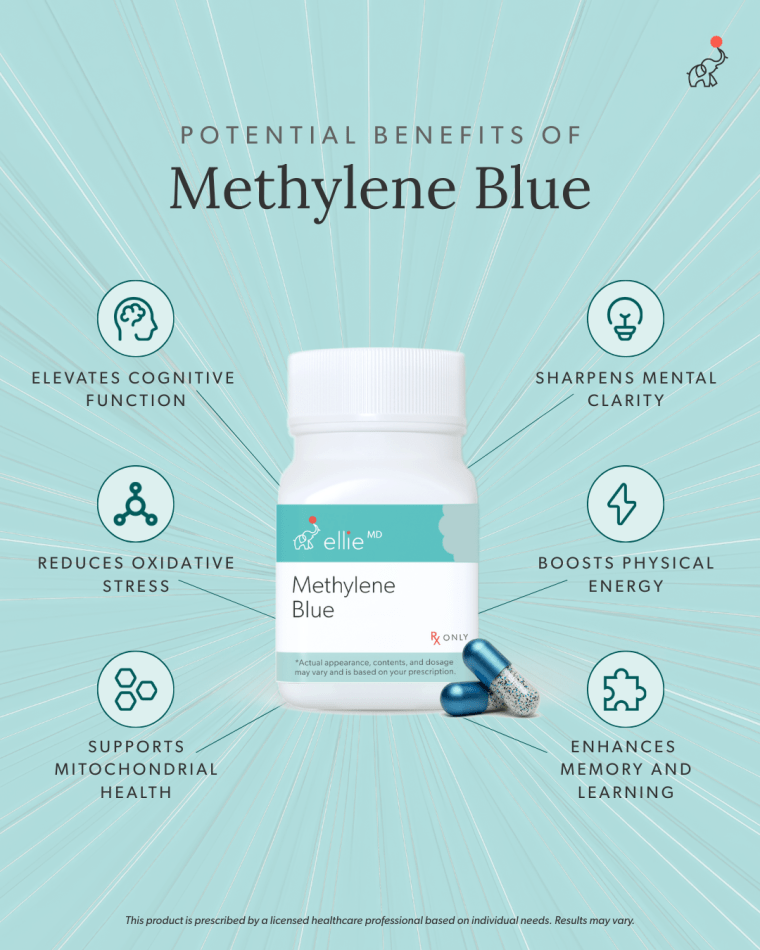
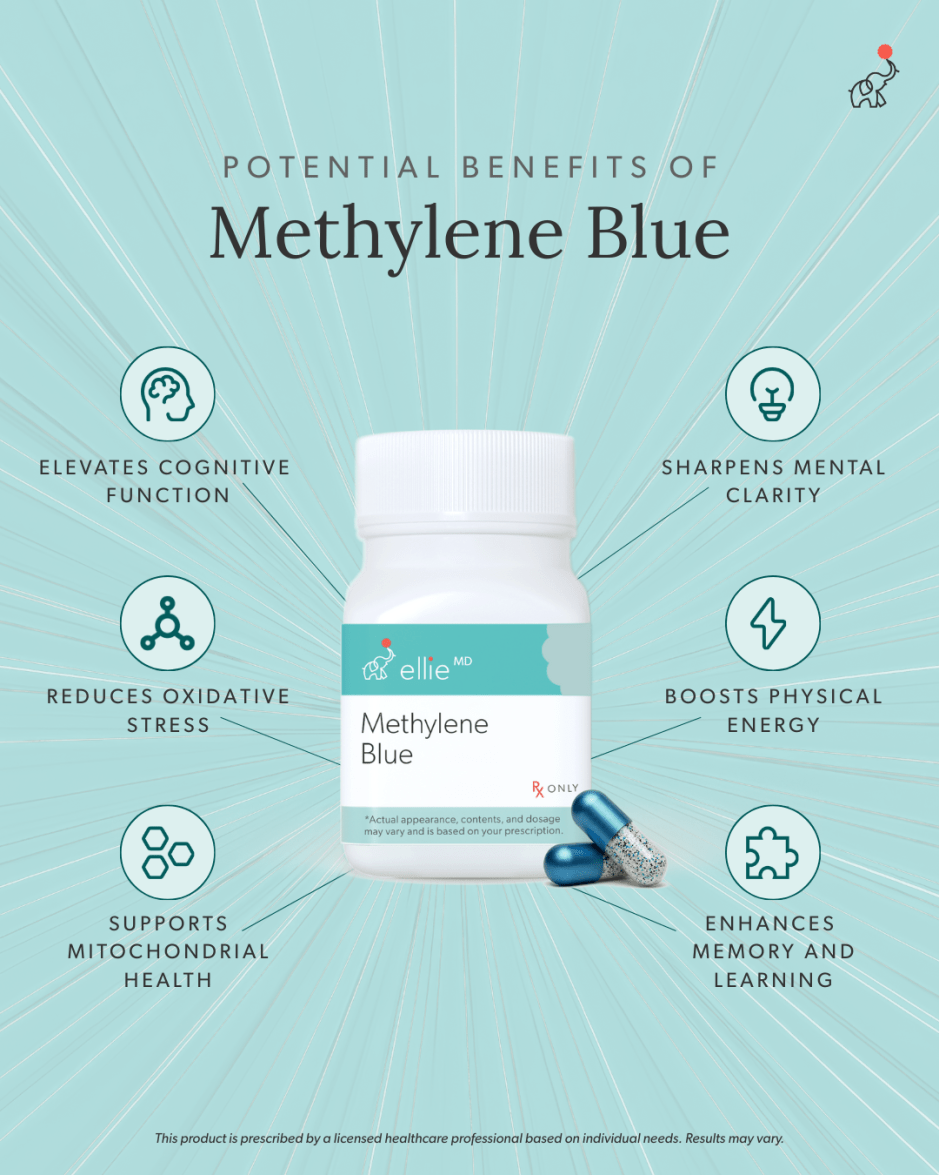
Infographic showing potential benefits of pharmaceutical-grade methylene blue, including cognitive function, mental clarity, cellular energy, and mitochondrial support.
Methylene blue is being studied for its potential role in supporting cognitive function, cellular energy, and mitochondrial health.

The “Blue Pee” Mystery Solved

First things first: the blue pee. It’s totally normal! It’s just a sign that your body is processing the Methylene Blue exactly how it should. Your system takes what it needs for cellular energy and flushes out the rest.

Pro-Tip: If your 💩 turns blue, that’s a different story. That’s a “call your provider” moment because it means your body isn’t breaking it down quite right.

Why Women are Reaching for Methylene Blue for Brain Fog

If you are in the perimenopause trenches, you know that energy isn’t exactly predictable anymore. One minute you’re fine, the next you’re hitting a wall that even an Alani can’t fix.

Methylene Blue is being studied for its potential to support:

  • Mental Clarity: Helping you find your keys (and your train of thought).
  • Physical Energy: Boosting how your cells turn oxygen into fuel.
  • Cognitive Function: Supporting long-term brain health and memory.

Steady Support, Not a Caffeine Crash

The best part? This isn’t a stimulant. You won’t get those shaky, “I had too much espresso” jitters. Think of it less like a quick caffeine spike and more like a slow, steady stream of support for your cells.

It’s all about mitochondrial health. When your “cellular batteries” are running low, it doesn’t just feel like you’re tired. It feels like a total lack of motivation and true mental fatigue.

Why the “Pill” Version is a Game Changer

I know a lot of us in the wellness space are used to injections, but let’s be honest: sometimes we just want things to be simple.

If you’ve been looking for ways to increase energy without more shots, you are going to love this. Our version is a simple pill. No needles, no fuss, just pharmaceutical-grade support tailored to your individual needs.

Is Methylene Blue Right for You?

There is so much nuance to this conversation, especially since it’s even being studied in relation to Alzheimer’s and long-term cognitive care. Because it’s so unique (and because it turns your pee blue!), it’s hard for scientists to do “blind” studies, which is why it stays such a hot topic for research.

If you’re ready to stop guessing and start supporting your brain health with something backed by science, let’s chat about adding this to your routine.

CLICK HERE TO BOOK A FREE 15 MIN CALL WITH ME

OR YOU CAN JUST TEXT ME YOUR QUESTIONS

Beyond Weight Loss: The Nurse’s Guide to Microdosing GLP-1s and NAD+

Some links on my site are affiliate and brand partner links. I may earn a commission at no extra cost to you. Nothing here is medical advice.
JUMP TO:: MEDICAL, BRAND PARTNER, & AFFILIATE LINK DISCLOSURES

Are you tired of feeling tired?

I hear it every single day. You are exhausted, you are experiencing brain fog, and you feel like your body is fighting against you. You tell yourself you will prioritize your health “after the holidays” or “in January.”

But as a nurse, I am here to tell you that exhausted is not a personality trait. And accepting that feeling drained is “just a part of aging” is not an option.

If you have been curious about the buzz surrounding GLP-1s but are hesitant because you don’t want to just “lose weight”—or if you are in that perimenopause transition and looking for a way to feel like yourself again—it is time to look at the science of microdosing.

This isn’t about a quick fix. It is about longevity science. And right now, there is a special opportunity to start this protocol with a massive advantage (more on that at the end).

What is Microdosing?

When most people hear about GLP-1s, they think of aggressive weight loss. But there is a different approach: Microdosing.

Think of microdosing as whispering to your metabolism instead of screaming at it. We aren’t trying to completely silence your appetite or force rapid changes. We are supporting the body’s natural functions to correct metabolic dysfunction.

11 Benefits of Microdosing GLP-1s (That Have Nothing to Do with the Scale)

While weight management is a fantastic side effect, the systemic benefits of this peptide therapy are what truly excite me as a healthcare provider.

  1. 1mproved Insulin Sensitivity It helps regulate blood sugar levels, making it easier to support insulin sensitivity. This is vital for reducing the risk of metabolic syndrome, which becomes much more common during perimenopause.
  2. Hormonal Balance Support For my perimenopause and menopause ladies, this is huge. It can help manage the hormonal imbalances related to insulin and estrogen. It can also positively influence cortisol levels, reducing the toll chronic stress takes on your body.
  3. Brain Health & Cognitive Function Brain fog is one of the biggest complaints I hear from women in midlife. GLP-1s have neuroprotective benefits that support cognitive function and mental clarity.
  4. Cardiovascular Health It improves lipid profiles by supporting healthy cholesterol levels and reducing blood pressure by improving vascular function.
  5. Quiet the “Food Noise” Microdosing helps suppress that constant mental chatter about food. It promotes satiety so you can make conscious, healthy eating habits without feeling deprived.
  6. Gut Health By slowing gastric emptying, it improves digestion and nutrient absorption. A healthier gut microbiome is linked to better immunity and reduced inflammation.
  7. Anti-inflammatory Effects Systemic inflammation is a root cause of so many chronic issues, including arthritis and skin aging. Lowering inflammation supports your whole body.
  8. Muscle Maintenance Unlike aggressive dieting, microdosing helps preserve muscle mass. This is essential for longevity and strength as we age.
  9. Metabolic Health Boost It enhances overall metabolic function, teaching your body to use fat as an energy source more efficiently.
  10. Emotional Well-Being Stabilizing blood sugar levels has a direct impact on your mood. This can help reduce the anxiety and stress often associated with feeling out of control of your health.
  11. Long-Term Prevention This is a proactive tool. It supports longevity by addressing core health issues that become prevalent in midlife, promoting overall vitality.

Why You Should Pair It With NAD+

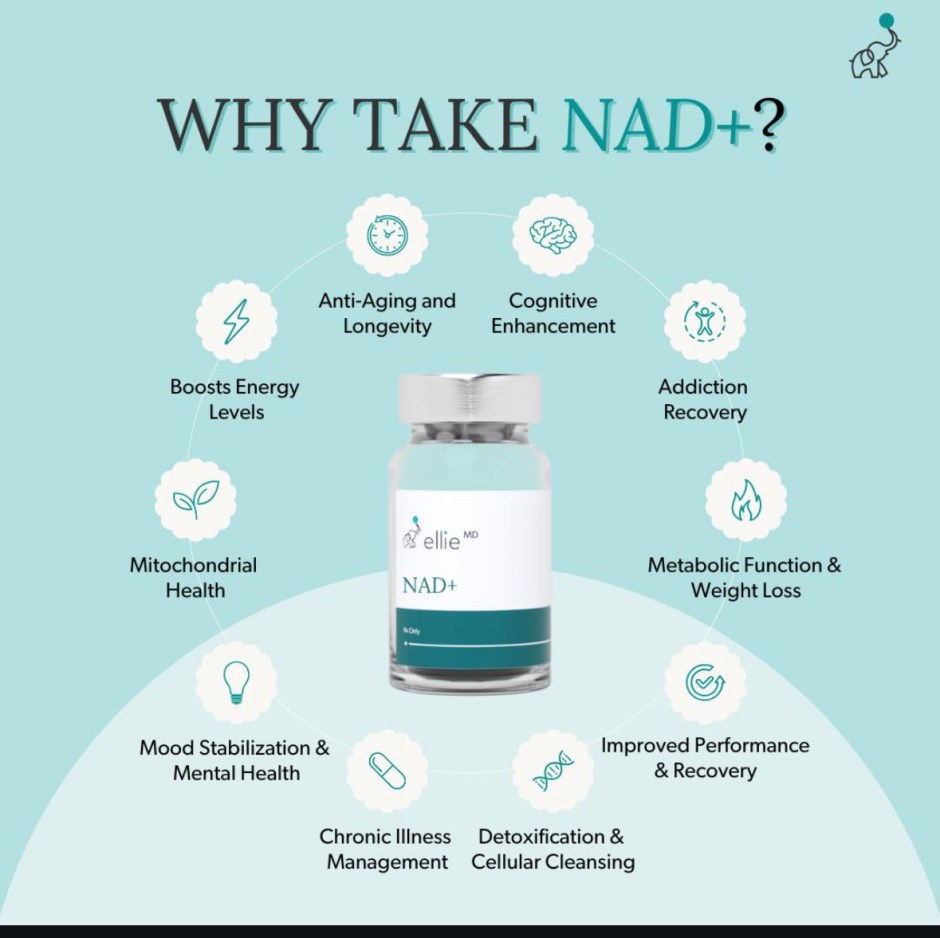
If the GLP-1 Microdose is the steering wheel keeping you on the road, NAD+ (Nicotinamide Adenine Dinucleotide) is the gas in the tank.

NAD+ is a vital coenzyme that fuels your cells. As we age, our natural levels drop, leading to fatigue and slower cellular repair. Supplementing with NAD+ provides a “cellular battery” boost.

  • It boosts energy by converting nutrients into ATP.
  • It supports DNA repair to slow the aging process.
  • It improves metabolism to assist with weight management.

The “Nurse’s RX” Synergy

Why do I recommend these two together? Because they solve the puzzle from two different angles.
A common struggle when changing your metabolism is temporary fatigue. NAD+ directly counteracts this by boosting your cellular energy. While the Microdose regulates your hormones and insulin, the NAD+ optimizes the cellular machinery that burns the fuel.
It is the ultimate “Metabolic Momentum.”

A Special Opportunity to Start

I am a big believer that the best time to start was yesterday, but the second-best time is right now.

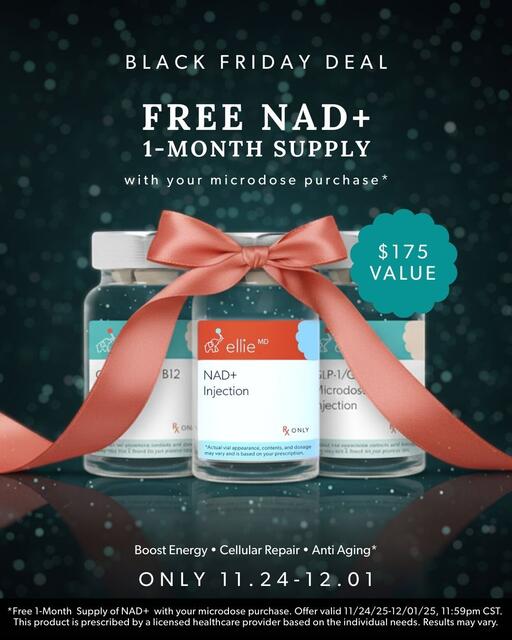
For a limited time, we are offering a special bundle to help you kickstart your longevity journey. When you purchase a Longevity Microdose kit, you will receive a 1-month supply of NAD+ for FREE. (This is a $175 value included at no cost.)

Black Friday Deal graphic showing a free 1-month supply of NAD+ Injection ($175 value) with an Ellie MD GLP-1 Microdose purchase. Three medical vials wrapped in a festive red bow.
Don’t miss the biggest wellness deal of the year: Get a free month of NAD+ ($175 value) when you start your longevity microdose protocol. Valid Nov 24 – Dec 1.

You do not have to go “all in” to see changes. You just have to start. This is your chance to get a massive boost while dipping your toes into a protocol that addresses the root causes of how you feel.

Six months from now, you will be so glad you didn’t wait for January.

Shop The Longevity Special