
JUMP TO:: MEDICAL + AFFILIATE LINK DISCLOSURES
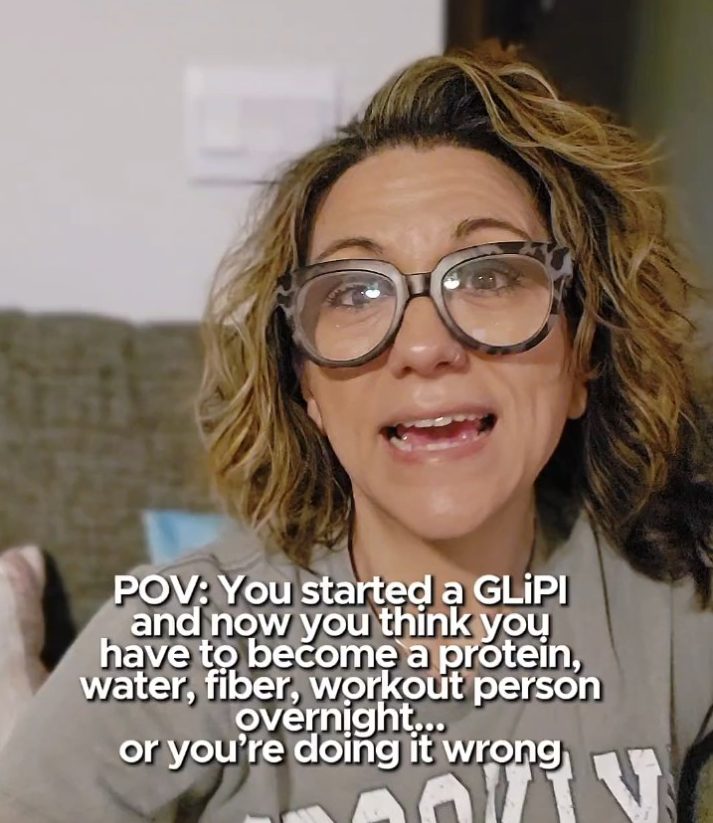
You’ve just started a GLP-1, and now it feels like you have to get your protein, water, fiber, and movement perfect right away, or you’re not doing it correctly.
Trying to do everything at once is a quick way to feel overwhelmed.
I’m a nurse who’s been on these medications for over two years and lost 94 pounds. If you’re starting a GLP-1, my main advice is this: you don’t have to fix everything right away. Start by choosing one area to work on first.
Focus on one habit at a time. Pick one area to improve. Make one realistic change you know you can stick with.
Aiming for perfection often makes people feel like they’ve failed before they even get started.
And I get why this happens. Starting a GLP-1 can feel like a fresh start, especially if you’ve spent years feeling like your body wasn’t responding the way everyone said it should. Suddenly you’re trying to hit a protein goal, drink a gallon of water, eat more fiber, move every day, meal prep, sleep better, track everything, and somehow become a calm, organized person who remembers to thaw chicken.
It sounds like a good plan, but it’s a lot to take on and hard to keep up.
You don’t need to become a brand-new person overnight.
You need to ask yourself one honest question: where am I weakest right now?
If you’re already getting enough protein,you don’t have to focus on it first just because the internet is yelling about it. If you’re barely drinking water, start with that. If you’re dealing with constipation, your fiber and fluids probably need attention. If movement has been nonexistent, start with something small enough that you’ll actually do it.
The other areas can wait for now.
Good enough counts, especially when you’re trying to build habits that need to last longer than your first burst of motivation.
Why Trying to Do Everything Right Away Makes GLP-1s Feel Overwhelming
Protein, water, fiber, and movement are all important. The real issue is trying to get consistent with all of them at once, especially if they’re not already part of your routine.
This is where so many people get stuck. They start a GLP-1 and immediately think, “Okay, now I need to do this perfectly.” So they create a plan that looks amazing on paper but feels miserable by day four.
They try to eat differently, drink more water, increase fiber, exercise more, avoid side effects, track their progress, understand changes in appetite, and not get discouraged when the scale doesn’t move as expected.
That’s simply too much to handle all at once.
When it gets too hard, people start thinking they’re the problem and blame themselves. They think they’re not disciplined enough. They think they’re already failing. They think maybe they’re not using the medication correctly.
But most of the time, it’s not failure. It’s just trying to take on too many new habits at once.
Progress over perfection sounds great on Instagram, I know. But with GLP-1s, it’s actually practical. If you try to change everything overnight, you make it harder to figure out what’s helping and what’s making you feel worse. If you change one area at a time, you can actually pay attention and really notice how your body responds.
That’s the part people skip.
The Better GLP-1 Beginner Question: Where Am I Weakest Right Now?
Before you start adding more rules, ask yourself where you need the most support.
Not where you think you’re supposed to start. Not what someone else said worked for them. Not what sounds most impressive. Where are you honestly weakest right now?
That answer is where you should begin.
If you’re getting enough protein most days but you’re barely drinking water, hydration may need your attention first. If you’re drinking water but constipation is a problem, fiber and fluids may need more focus. If your food is solid but you barely move your body, movement may be the place to begin.
This doesn’t mean the other habits don’t matter. It means they may be good enough for now while you work on the weakest area first.
That’s how you make this less overwhelming. You stop trying to fix everything and start improving one thing.
If Protein Is Your Weakest Area on a GLP-1
If protein is your weakest area, it’s worth paying attention to because GLP-1 medications can lower your appetite. When you’re eating less overall, it’s easy to eat less protein without realizing it.
For me, protein made a huge difference. When I wasn’t getting enough, I felt it. My energy wasn’t great, I didn’t feel as steady, and I didn’t feel like I was supporting my body well while losing weight.
When you lose weight, your body doesn’t only pull from fat. Muscle can be affected too, especially if you’re not eating enough protein or doing any kind of strength-supporting movement. And muscle matters for metabolism, strength, and long-term maintenance.
That does not mean you need to suddenly become a grilled chicken influencer. Please no. We’ve all been through enough.
It means you may need to look at your actual intake and ask whether you’re getting enough protein for your body right now.
And if the answer is no, start simple. Add protein in a way you can actually repeat. That might mean Greek yogurt in the morning, a protein shake when solid food feels like too much, cottage cheese, eggs, tuna, rotisserie chicken, protein coffee, or whatever sits well with your stomach.
The goal isn’t to make your meals look impressive. The goal is to give your body what it needs in a way that works in your real life.
If Fiber Is Your Weakest Area on a GLP-1
If fiber is your weakest area, there’s a good chance your bathroom habits have already made that very clear. GLP-1s can slow digestion, and when digestion slows down, constipation can become a real issue.
Most people don’t talk about it until they’re uncomfortable, and then suddenly fiber becomes important. It’s interesting how things change when you really need a solution.
Fiber helps support digestion and keeps things moving, but this is not your sign to go from zero fiber to chia pudding, lentils, beans, raw vegetables, and three supplements overnight. That’s how you end up bloated and mad at everyone.
Ease into it.
You can add more fiber from foods like beans, berries, oats, vegetables you tolerate well, or whole grains that sit well with your stomach. Some people also use supplemental fiber because it’s easier to stay consistent, but fiber works best when you increase it gradually and drink enough fluids with it.
That’s important. Adding fiber without enough water can make things worse, and no one wants that.
So if constipation is your weakest area, don’t ignore it and assume the medication just isn’t working. Your digestive system may need support before you decide anything else needs to change.
If Water Is Your Weakest Area on a GLP-1
Hydration sounds basic, which is probably why so many people overlook it.
But if you’re on a GLP-1 and you feel tired, headachy, dizzy, foggy, nauseated, or just off, it’s worth asking how much water you’ve actually had. Not how much you planned to drink. Not how much your emotional support water bottle was carrying around for decoration. How much actually made it into your body?
When your appetite drops, you may naturally drink less, too. You may also get less fluid from food because you’re eating less overall. And if you’re dealing with nausea, vomiting, diarrhea, or constipation, hydration becomes even more important.
You don’t have to make drinking water your main focus. Just find ways to make it easier to get enough fluids.
Plain water counts. Flavored water counts. Electrolytes may help some people, especially if they’re eating less or losing more fluid through digestive side effects. Coffee still counts toward fluid intake, too, despite what diet culture has screamed into the void for years.
If water is your weakest area, start there. Don’t build a complicated meal plan while your body is running on iced coffee, half a bottle of water, and determination.
That’s not a good hydration plan.
If Movement Is Your Weakest Area on a GLP-1
If movement is your weakest area, that doesn’t mean you need to start an intense workout plan.
Movement does not have to be impressive to count. It doesn’t have to be an hour. It doesn’t have to be sweaty. It doesn’t have to involve matching activewear, a gym mirror, or a playlist called “beast mode” that makes everyone uncomfortable.
It just has to be something you’ll actually do.
Movement on a GLP-1 isn’t only about burning calories. It can help support digestion, muscle, metabolism, mood, and long-term maintenance. And when you’re losing weight, protecting muscle matters.
But again, start where you are.
Maybe that means walking more. Maybe it’s stretching. Maybe it’s a few minutes of strength training. Maybe it’s doing squats while the dog takes forever outside, which is ridiculous but effective. Maybe it’s dancing around your kitchen for ten minutes because that’s what you can realistically fit into your day.
The best movement plan isn’t the one that looks good online. It’s the one you’ll actually keep doing.
Before You Assume You Need a GLP-1 Dose Increase
If you’re already on a GLP-1 and wondering if it’s time to talk to your provider about a dose increase, I don’t want you to automatically assume the answer is yes or no.
I want you to have better information before that conversation.
Sometimes a dose adjustment really may be the next step. But sometimes the issue is that you’re not getting enough protein, barely drinking water, constipated, or not moving much at all. And no judgment, because I’ve absolutely had moments where I had to look at my own habits and go, “Well. That explains a few things.”
That’s not about blaming yourself. It’s about being honest enough to know what’s actually going on.
Before you assume the medication isn’t working, ask yourself if you’re giving it enough support to do its job. Protein, fiber, water, and movement are not magic, but they are the basics that can change how you feel on these meds.
And when you know where you’re weakest, your provider conversation gets a lot clearer.
Progress Over Perfection on a GLP-1
If you’re starting a GLP-1, you don’t have to change everything in your life right away.
You don’t need to be perfect at protein, water, fiber, and movement by the end of the week. You need one honest starting point.
Ask yourself where you’re weakest right now, and start there.
This isn’t forever, and it’s not because the other areas aren’t important. It’s just easier to build one new habit at a time than to try four at once.
That’s how you make this sustainable. Not by doing everything perfectly, but by doing one thing consistently enough that it becomes part of your real life. Then you build from there.
One habit at a time. One area of improvement at a time. One realistic change you can keep doing.
That’s the goal.
Free GLP-1 Guide: Is It Me, or the Med?
If you’re already on a GLP-1 and wondering whether it might be time to talk to your provider about a dose increase, I made a free guide for exactly that.
It’s called Is It Me, or the Med?
Inside, I walk you through the four questions I asked myself before every dose increase conversation with my doctor. I looked at whether I was getting enough protein, enough fiber, enough water, and enough movement before assuming my dose wasn’t enough.
This is the same real-life checklist I used to figure out whether the issue was my habits or my milligrams.
It’s not about judging yourself. It’s about walking into your next provider conversation with more clarity.
FAQ: Starting a GLP-1 Medication
What should I focus on first when starting a GLP-1?
When you’re starting a GLP-1, focus on the area where you’re weakest right now. For some people, that’s protein. For others, it’s water, fiber, or movement. You don’t have to fix everything at once.
Why does protein matter on a GLP-1?
Protein matters on a GLP-1 because your appetite may be lower, which can make it easier to eat less protein without meaning to. Getting enough protein helps support your body while you’re losing weight.
Why does fiber matter on a GLP-1?
Fiber matters because GLP-1s can slow digestion, and slower digestion can contribute to constipation. Adding fiber slowly and drinking enough fluids can help support digestion.
Why is water important on a GLP-1?
Water is important because eating less may also mean drinking less. Hydration can affect how you feel, especially if you’re dealing with headaches, dizziness, fatigue, nausea, constipation, or digestive side effects.
Should I increase my GLP-1 dose if progress slows down?
A GLP-1 dose increase should be a conversation with your provider. Before assuming your dose needs to change, it helps to look honestly at your protein, fiber, water, and movement so you understand what may need support first.
Want to Know Who I Trust for GLP-1 Support?
If you’ve been wondering where I get my GLP-1 medication, who I trust, or what kind of telehealth option I’d actually feel comfortable sharing, I keep that info in one place.
After being on these meds for over 2 years, I’m pretty picky about this part. I want medically guided care, a real intake process, provider review, and no sketchy “wellness shortcut” nonsense dressed up with pretty branding.
As a Brand Partner with EllieMD, I share the option I personally use and trust so you can read through it, see how it works, and decide if it’s something you want to explore.
START HERE: Explore EllieMD through NicoleInScrubs
This post contains affiliate links and/or brand partnership content. I may earn a commission at no extra cost to you.
LET’S BE CLEAR ABOUT WHO I AM (AND WHO I’M NOT).
I’m a registered nurse and health coach who shares real, BS-free information about metabolic health, PCOS, perimenopause, and weight loss, because y’all deserve better than vague wellness fluff. But here’s what I need you to know: I am not YOUR nurse. Everything I share here is for educational purposes only. It is not medical advice, it’s not a diagnosis, and it doesn’t create a provider-patient relationship between us. Nothing on this site replaces the care of a licensed provider who actually knows your full health history. The opinions and content here are my own and do not reflect the views of my employer or the hospital where I work.
SCOPE OF PRACTICE.
As a nurse health coach, I can recommend over-the-counter products and supplements that may support your wellness goals. I don’t prescribe specific prescription medications. When it comes to GLP-1s and peptides, what I can do is talk about the science, what’s available, and what may be beneficial, so you can have an informed conversation with your licensed medical provider. The decision about what’s right for your body always belongs to you and your provider. Always consult your licensed provider before starting any prescription treatment — this is not something that should be DIY’d. These statements have not been evaluated by the FDA. Products discussed on this site are not intended to diagnose, treat, cure, or prevent any disease.
TRANSPARENCY.
I only recommend things I actually trust. Most are products I personally use, some are from partners whose clinical standards I believe in. I will always let you know when it’s something I haven’t tried personally. Some links on this site are affiliate links or part of brand partnerships, which means I may earn a commission at no extra cost to you. As an Amazon Associate I earn from qualifying purchases.
RESULTS + TESTIMONIALS.
Any testimonials or results shared on this site reflect individual experiences only. Results are not guaranteed and will vary based on individual circumstances.
 nicoleinscrubs.com