
JUMP TO:: MEDICAL + AFFILIATE LINK DISCLOSURES
If you’re on a compounded GLP-1 medication through a telehealth company, there’s something you need to know… and most people have no idea it’s even happening.
It’s called pharmacy hopping. And it could be putting you at risk.
What Is GLP-1 Pharmacy Hopping?
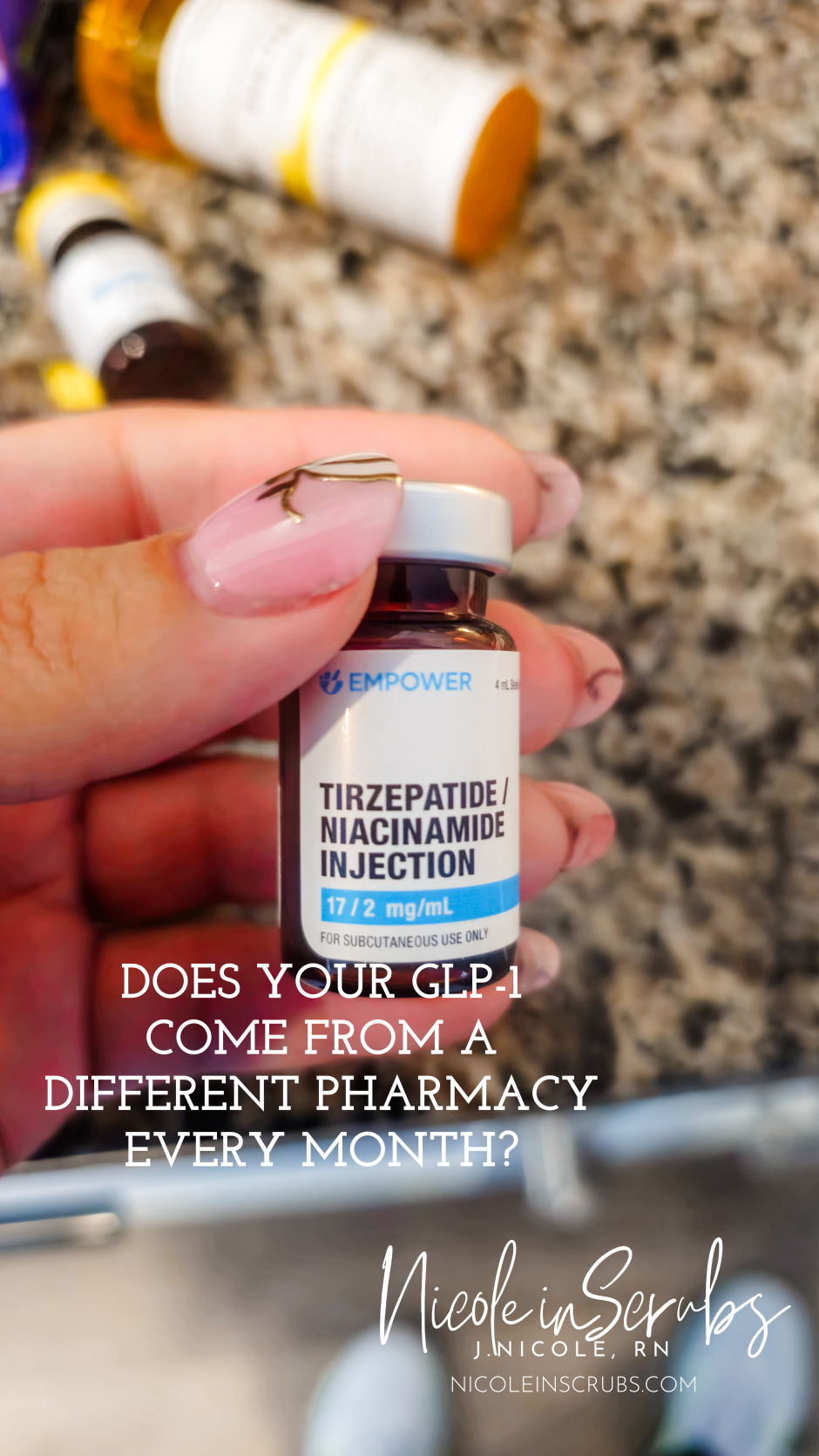
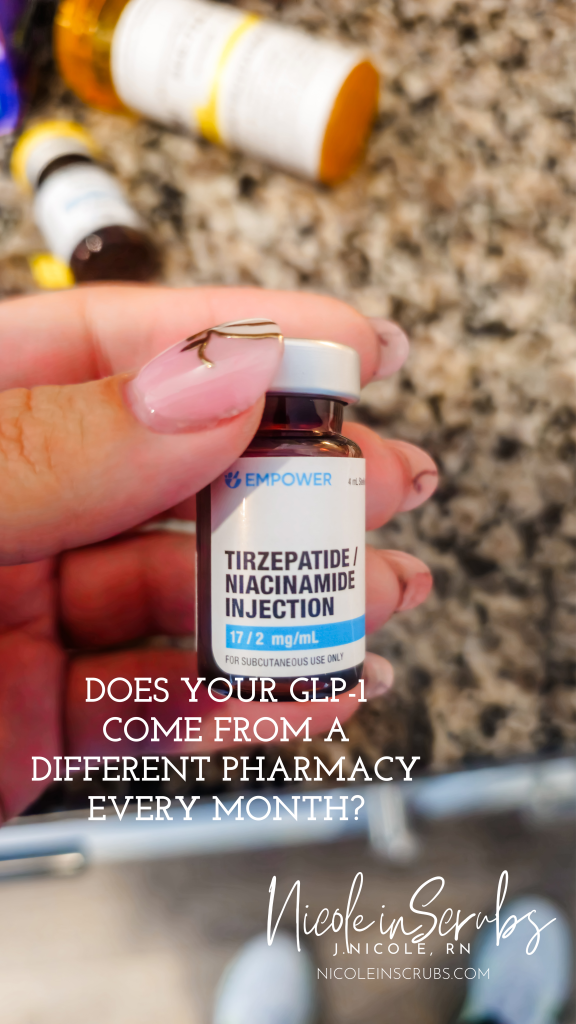
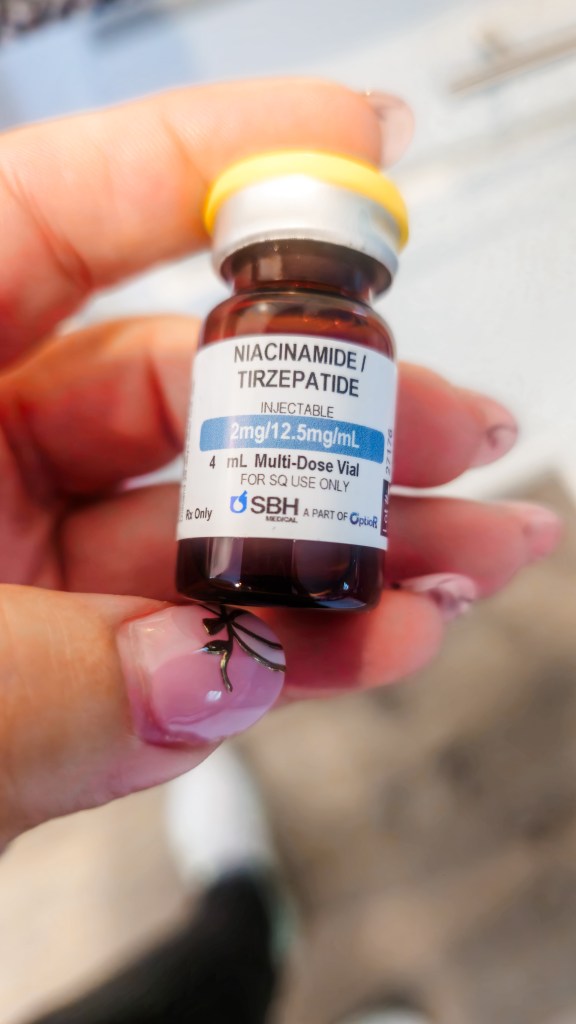
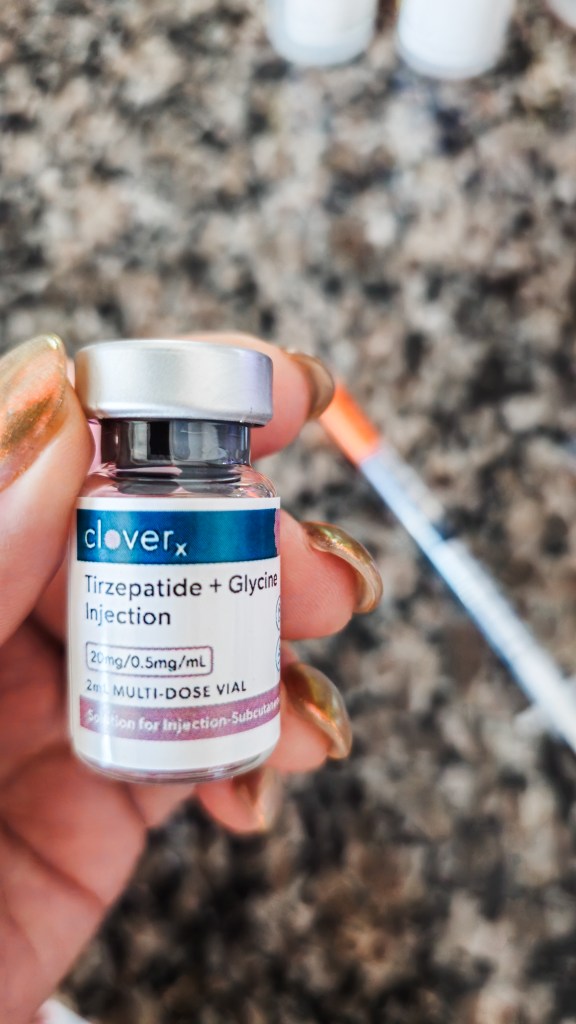
Pharmacy hopping is when your telehealth company sends your prescription to a different compounding pharmacy each month. Not because anything is wrong with your prescription. Not because your dose changed. Just because of whatever deal or arrangement they have going on that month.
Here’s why that’s a problem. Every compounding pharmacy concentrates their GLP-1 medications differently. So even if your prescription says the exact same milligrams from one month to the next, the units, or volume, you draw up in your syringe could be completely different. Same dose on paper. Completely different injection in reality.
That’s exactly how dosing errors happen.
What the FDA Is Actually Saying About This
This isn’t just my opinion as a nurse. The FDA has been raising the alarm on compounded GLP-1 safety for a while now.
As of April 2025, the FDA had received over 500 adverse event reports related to compounded semaglutide and nearly 500 reports concerning compounded tirzepatide. And that number is almost certainly higher because most state-licensed compounding pharmacies aren’t even required to submit adverse event reports.
The FDA has received multiple reports of adverse events, some requiring hospitalization, linked to dosing errors associated with compounded injectable semaglutide. These weren’t errors because people were careless. Many of them were errors because the concentration changed, and nobody clearly explained that.
The FDA estimates that 10 deaths and 100 hospitalizations may be linked to the use of compounded GLP-1 medications. And their responses are often reactive, meaning action is usually taken only after something has already gone wrong.
That last part is the part that keeps me up at night as a nurse.
A Real Example of What Can Go Wrong
I know someone personally who accidentally took four times her dose. Four times. It happened because her pharmacy changed, and she drew up the volume exactly the same as what she was used to… but the concentration was completely different. She felt absolutely awful.
And here’s the thing that really got me. I’m a NICU nurse. Dosage calculations are literally what I do every single day. Tiny babies depend on my accuracy. And I STILL panicked after my own pharmacy changed. I had to go back to my written notes to confirm I’d taken the right dose. I had gone over it so many times in my head that I couldn’t remember what I’d actually done.
If it can happen to me… it can happen to anyone.
What to Look For in a Compounded GLP-1 Provider
Not all telehealth companies operate the same way. Here’s what actually matters when it comes to safety:
Pharmacy consistency. Your medication should come from the same pharmacy every single month. No exceptions. If your provider can’t tell you exactly which pharmacy fills your prescription, that’s a red flag worth paying attention to.
Standardized dosing. As your dose increases, your units should stay the same. Simple, consistent, easy to follow instructions reduce the risk of errors. If the math changes every time your dose changes, that’s unnecessary confusion and unnecessary risk.
Transparency. A trustworthy provider will tell you where your meds come from, how they’re compounded, and what quality standards their pharmacy follows. You have every right to ask those questions.
Why I Made the Switch
This is a big part of why I moved to EllieMD. One pharmacy, always the same one, every single month. Standardized dosing so the units stay consistent no matter what milligram you’re on. Simple. Clear. And a whole lot less room for the kind of errors that send people to the hospital.
Cheaper isn’t always better y’all. Sometimes what you’re actually paying for is consistency, safety, and peace of mind. And when it comes to injectable medications… that is absolutely worth it.
Questions to Ask Your Telehealth Provider Right Now
Before your next injection, it’s worth picking up the phone or sending a message to ask:
Where is my prescription being filled? Is it always the same pharmacy? How is my dosing calculated and does that change if my concentration changes? What quality standards does your compounding pharmacy follow?
You deserve clear answers. If you’re not getting them, that tells you something too.
This post contains affiliate links and/or brand partnership content. I may earn a commission at no extra cost to you.
LET’S BE CLEAR ABOUT WHO I AM (AND WHO I’M NOT).
I’m a registered nurse and health coach who shares real, BS-free information about metabolic health, PCOS, perimenopause, and weight loss, because y’all deserve better than vague wellness fluff. But here’s what I need you to know: I am not YOUR nurse. Everything I share here is for educational purposes only. It is not medical advice, it’s not a diagnosis, and it doesn’t create a provider-patient relationship between us. Nothing on this site replaces the care of a licensed provider who actually knows your full health history. The opinions and content here are my own and do not reflect the views of my employer or the hospital where I work.
SCOPE OF PRACTICE.
As a nurse health coach, I can recommend over-the-counter products and supplements that may support your wellness goals. I don’t prescribe specific prescription medications. When it comes to GLP-1s and peptides, what I can do is talk about the science, what’s available, and what may be beneficial, so you can have an informed conversation with your licensed medical provider. The decision about what’s right for your body always belongs to you and your provider. Always consult your licensed provider before starting any prescription treatment — this is not something that should be DIY’d. These statements have not been evaluated by the FDA. Products discussed on this site are not intended to diagnose, treat, cure, or prevent any disease.
TRANSPARENCY.
I only recommend things I actually trust. Most are products I personally use, some are from partners whose clinical standards I believe in. I will always let you know when it’s something I haven’t tried personally. Some links on this site are affiliate links or part of brand partnerships, which means I may earn a commission at no extra cost to you. As an Amazon Associate I earn from qualifying purchases.
RESULTS + TESTIMONIALS.
Any testimonials or results shared on this site reflect individual experiences only. Results are not guaranteed and will vary based on individual circumstances.
 nicoleinscrubs.com